Key Takeaways:
The U.S. Securities and Exchange Commission (SEC) has made a major rule change which will soon benefit crypto holders. The move is hoped to cut costs, increase pricing efficiency and encourage increased institutional participation in crypto ETFs, particularly those that track Bitcoin and Ether.
Read More: SEC Pushes Crypto ETF Decisions Again, $100B Market Waits on Truth Social and Grayscale Rulings
So far, any crypto ETP was limited to handle only cash-based creation and redemption, i.e., authorized participants (APs) of a crypto ETP were obliged to cash-in crypto assets when creating or redeeming an ETF share. This was not only time consuming, costly but also subject to pricing discrepancy problems.
On July 29, 2025, the SEC officially approved in-kind creation and redemption mechanisms for crypto ETFs, allowing market makers to directly deposit or withdraw cryptocurrencies like Bitcoin (BTC) or Ether (ETH) without cash conversion. This rule brings crypto ETPs closer to traditional commodity ETFs that already benefit from in-kind flexibility.
“It’s a new day at the SEC,” said Chairman Paul S. Atkins. “These orders will make crypto-based products less costly and more efficient.”
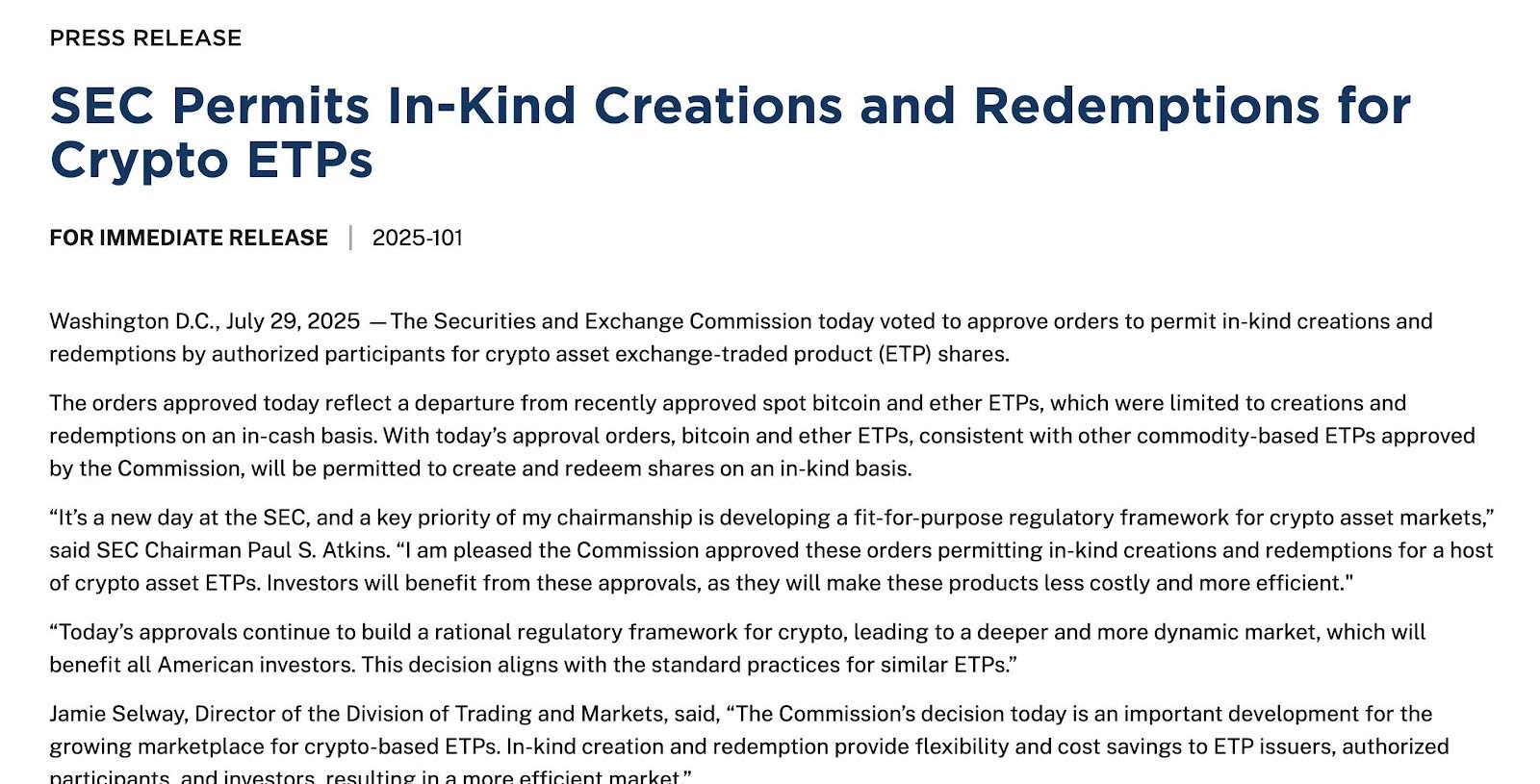
According to the SEC’s press release, the new framework aims to build a rational, long-term regulatory structure that treats crypto more like established asset classes. It also reflects a “merit-neutral” approach, evaluating crypto ETPs using the same standards applied to non-crypto commodities.
Read More: SEC Pauses Bitwise Crypto ETF Just After Approval; What’s Behind the Shock Decision?

In-kind mechanism is not a technical change; it is a paradigm change. It opens up operational benefits which makes ETFs more appealing to both issuers and investors.
These benefits reflect the dynamics of gold or commodity ETFs, wherein duly authorized participants are able to sell physical commodities relative to ETFs shares. Crypto ETFs are falling into that league, more or less on equal terms.
Many analysts view this change as the “last major hurdle” before widespread institutional adoption of crypto ETPs.
According to Jamie Selway, Director of the SEC’s Division of Trading and Markets, in-kind transactions provide “flexibility and cost savings” for all market participants. That would cover big banks, hedge funds and pension funds who would fear to tread because of the inefficiencies in the cash model.
ETF issuers such as BlackRock, Fidelity, and Grayscale have been advocating this update by some of the institutional investors long. They state that at the time of their launch, crypto ETFs were structurally at a disadvantage to their equity and commodity opposites due to the absence of in-kind functionality.
“In-kind redemptions close the gap between the ETF’s price and its net asset value,” said MartyParty, a well-known crypto analyst. “It’s the missing piece that brings real scale.”
In parallel, the SEC approved other rule changes, such as:
Such a wide regulatory wave indicates that SEC is eager to mainstream crypto financial products into the financial markets as a whole.
To the issuers, this shift will translate to enhanced flexibility and competitiveness of operations. To investors that means reduced spreads, reduced inefficiencies and even expense ratio reductions in the long run.
Although in kind contributions may not be directly visible in price charts, it adds to the structure and longevity of the broader crypto ETF ecosystem. The decision is also symbolic, an indication that the SEC is prepared to consider digital assets as part of the modern financial system, not outside of it.
The post SEC Greenlights In-Kind Crypto ETF Transactions, Major Game Changer for Bitcoin & Ether Funds appeared first on CryptoNinjas.





