A massive selloff in technology stocks that vaporized more than $1.3 trillion in market value over just two trading sessions drove investors toward the safety of the U.S. dollar on Wednesday, propelling America’s currency to its loftiest level in over twelve months.
The benchmark U.S. Dollar Index reached 101.63 during trading hours, representing a 0.2% increase for the session. Year-to-date, the index has climbed roughly 3.3%. The currency touched an even higher mark of 101.69 on Tuesday, establishing the strongest level recorded since May 2025.
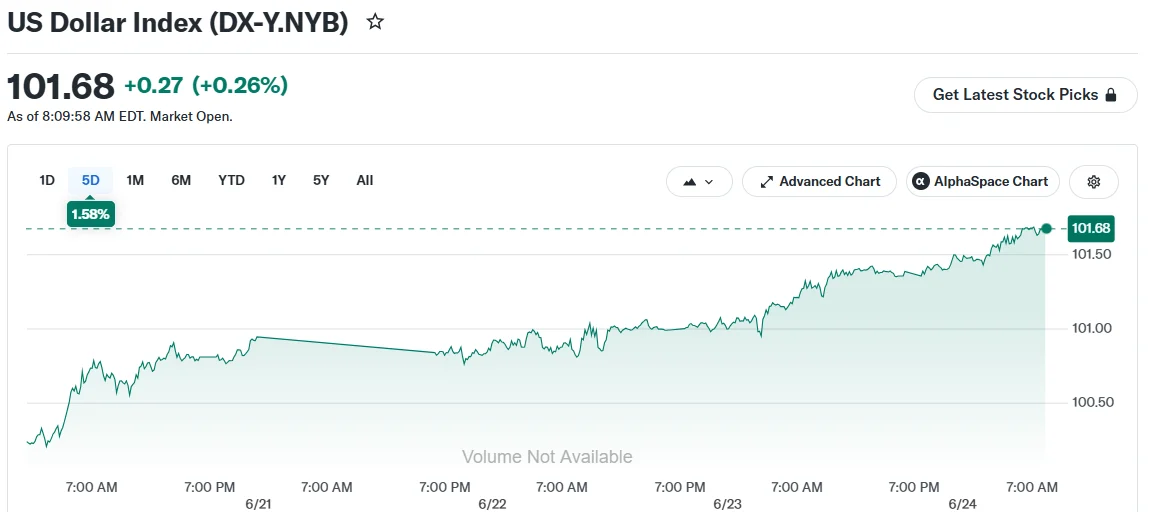
The greenback’s advance persisted even as U.S. equity markets showed signs of stabilization and recovery in early Wednesday trading. This persistence suggests the currency rally has momentum beyond merely reacting to the technology sector’s troubles.
Financial markets are now incorporating expectations for at least two additional Federal Reserve interest rate increases before year-end. Futures contracts indicate a 60% probability of a rate hike materializing in September, with nearly 40% odds pointing to action as soon as July.
Kevin Warsh, recently appointed as Fed Chair, has consistently communicated a hawkish monetary policy approach. This messaging has driven speculative dollar positioning to some of the most elevated levels observed since the beginning of last year, according to research from LPL Financial.
Technical market analysts suggest that a decisive break above the 100.64 threshold could propel the index toward the 105 level. Downside support appears solid near the 20-day moving average, currently positioned around 99.75.
Persistent inflation pressures combined with robust domestic economic demand continue supporting the case for additional rate increases, enhancing the dollar’s appeal to international investors searching for higher yields.
The euro declined for a third consecutive trading session, dropping to its weakest position in more than twelve months versus the dollar. The European Central Bank finds itself navigating between persistent inflationary pressures stemming from a recent three-month regional conflict and emerging indicators of economic deceleration.
The Japanese yen continued trading near its weakest levels in four decades. The dollar-yen exchange rate climbed 0.1% to reach 161.70. Japan’s Ministry of Finance has deployed approximately $72 billion in foreign exchange market interventions. This week, Japan’s finance minister conducted discussions with U.S. Treasury Secretary Scott Bessent.
The Bank of Japan implemented a rate increase to 1.0% last week, establishing the highest policy rate since the mid-1990s, yet the yen has failed to mount a meaningful recovery.
China’s yuan also experienced depreciation after the People’s Bank of China established its daily reference rate weaker for the fourth consecutive session. The Australian dollar held steady despite inflation readings that exceeded market forecasts.
A strengthening dollar presents headwinds for American corporations generating substantial international revenues. Approximately one-third of S&P 500 aggregate revenues originate from markets outside the United States.
For the Magnificent Seven technology behemoths, that proportion escalates to approximately 50%. Nvidia derives 53% of its revenue from international operations. Meta generates nearly two-thirds of its revenue beyond U.S. borders.
When foreign-earned profits undergo conversion back into dollars, a more robust greenback diminishes their reported value. This currency dynamic could exert downward pressure on earnings projections, which presently anticipate second-quarter earnings expansion of 23% and full-year growth exceeding 25%.
The post Dollar Surges to 12-Month Peak Amid Tech Market Turmoil and Flight to Safety appeared first on Blockonomi.





