The Producer Price Index for final demand was unchanged in July, missing expectations for a 0.2% monthly increase. The annual rate stood at 4.7%.
The softer headline follows Wednesday’s CPI report, which showed consumer inflation easing in July, and closes the immediate inflation test outlined in our earlier Bitcoin and PPI analysis.
Together, the two reports leave the Fed with a weaker case for another rate increase. July PPI was not uniformly soft, however, with several service categories showing that underlying price pressure has not disappeared.
For crypto, that shifts the next question from inflation alone to whether economic growth can hold up as price pressures cool.
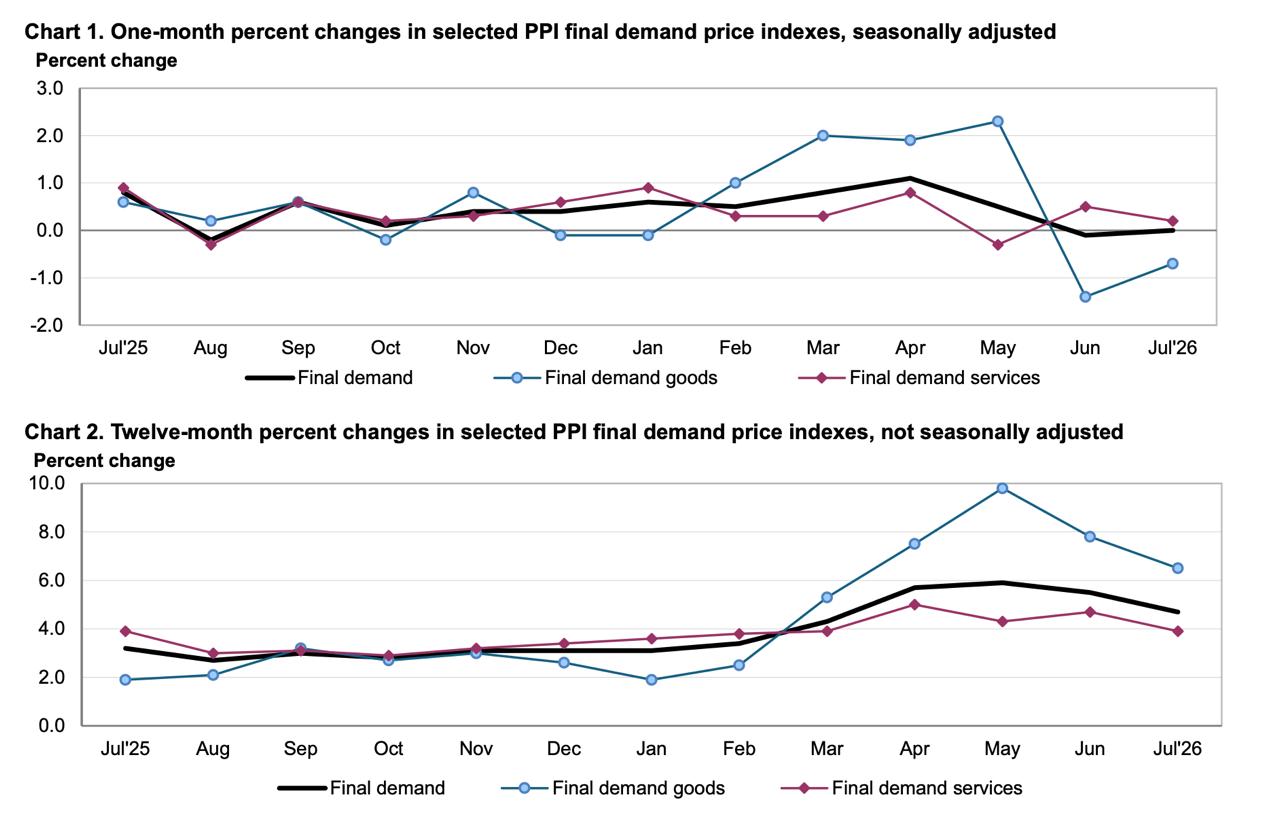
Final demand goods fell 0.7% in July, led by a 3.1% drop in energy and a 0.9% decline in food prices. Gasoline prices fell 5.7%.
Services moved in the opposite direction, rising 0.2%. Final demand excluding food, energy and trade services increased 0.4% after a 0.1% gain in June and was up 4.7% from a year earlier.
Portfolio management prices climbed 6.5%, a notable move because some producer-price components are used in calculating the PCE inflation measures followed closely by the Federal Reserve.
The result is therefore less dovish than the flat headline alone suggests. Falling goods and energy prices kept overall producer inflation unchanged, while parts of the services sector remained firm.
Even so, the combination of softer CPI and a weaker-than-expected headline PPI makes another Fed hike harder to justify. Officials still concerned about persistent inflation can point to the stronger underlying PPI reading, but the latest data offer little evidence that price pressures are accelerating again.
That leaves the burden increasingly on upcoming data. A renewed inflation pickup could reopen the argument for tighter policy, while continued cooling would strengthen the case for leaving rates unchanged.
The next three releases should show whether softer inflation is arriving alongside a resilient economy or a sharper slowdown. For crypto, the cleaner backdrop would be cooling prices without a major deterioration in growth.
July retail sales will provide the next test of consumer demand after months of restrictive interest rates.
A solid reading would support the idea that inflation can cool without the economy losing momentum. A sharp miss would raise more questions about the strength of household spending and the broader growth outlook.
The July 28-29 meeting ended with a 9-3 vote to keep rates unchanged, while Beth Hammack, Neel Kashkari and Lorie Logan preferred a 25-basis-point increase.
The minutes should give investors a clearer sense of how much support that hawkish position had beyond the three dissenters.
If several other officials also saw a strong case for higher rates but preferred to wait for more data, this week’s CPI and PPI reports may reduce, rather than completely remove, the risk of another hike. A more patient discussion would reinforce expectations that the Fed can remain on hold.
July PCE inflation and the second estimate of second-quarter GDP arrive on the same day, bringing the inflation and growth sides of the outlook together.
PCE will be especially important after the mixed details inside the PPI report, including the strength in portfolio management prices and other service components.
The GDP revision will provide the other half of the picture. Continued disinflation alongside resilient growth would give the Fed more room to stay patient, while a weaker growth reading would shift more attention toward the durability of the economy.
The post US PPI Flat in July: What Crypto Investors Should Monitor Now appeared first on Coindoo.