The fintech industry is getting a lot of money from investors.
Every month we see startups that want to change the way we make payments lend money do digital banking manage our wealth and use crypto.
Even with all the money and new ideas most fintech startups still fail.
This is not because the people who start these companies are not smart.
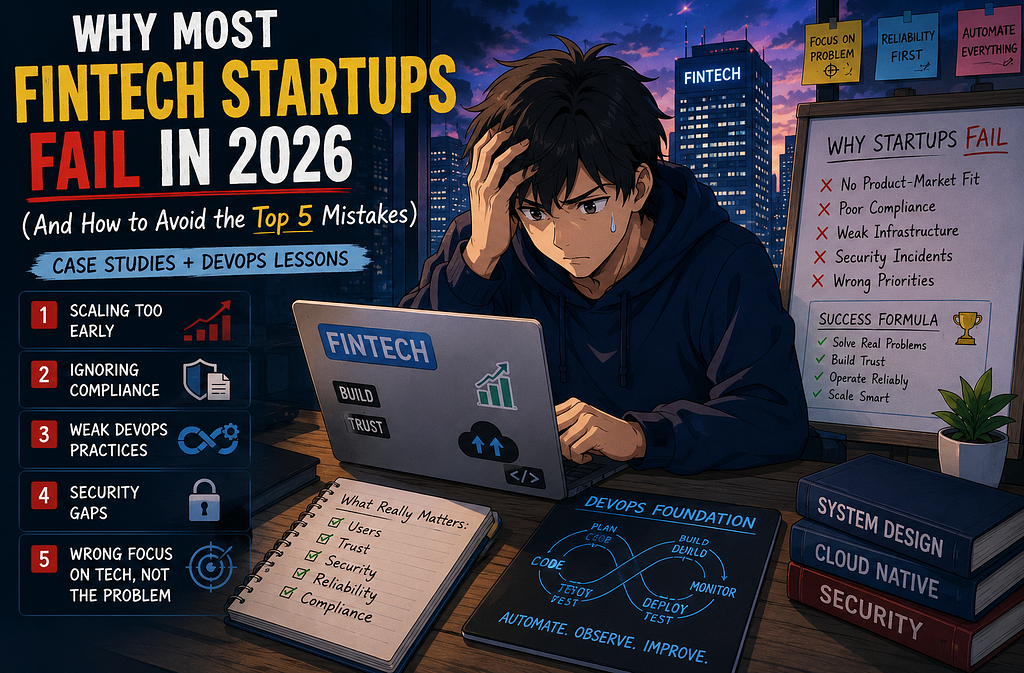
After looking at companies that have done well and those that have not we can see a pattern.
Many startups are not failing because of companies competing with them.
They are failing because they make mistakes that add up over time.
Lets look at the five common mistakes that fintech startups make. And how they can avoid them.
Mistake number one is growing fast before making sure people really want their product.
One of the expensive mistakes founders make is thinking that just because their company is growing it means people really like their product.
A fintech startup gets some money from investors.
Under the surface they are not keeping their customers.
Users sign up. Then leave.
Transactions go up for a while but then stop.
Eventually the company stops growing and starts spending money.
Many digital banking and payment startups have spent a lot of money to get customers before they knew if people would stay.
The result is that they spend much money and have to ask for more.
To fix this teams should focus on keeping their customers making money from each customer and making sure people use their product a lot.
Growth is good. It can also make problems worse.
Mistake number two is not thinking about following the rules until it’s too late.

In fintech following the rules is not something you do it is part of your product.
Many founders focus on making their product easy to use and growing their company. They put off spending money on things like knowing who their customers are protecting peoples money and making sure they are doing what the government says.
This works until the government starts paying attention.
Then growing fast becomes a problem.
Several growing fintech platforms have had problems with the government because they did not follow the rules.
To fix this companies should build following the rules into their product from the start.
The successful fintech companies think of the people who make sure they follow the rules as important partners, not just people who cost them money.
Trust is what makes businesses grow.
Following the rules is what makes people trust you.
As the company grows things get more complicated.
Common problems are deploying versions of their product by hand having downtime when they release new versions not being able to see what is going on responding poorly to problems and having one person who knows how everything works.
Every minute that a fintech company is down affects their money what customers think of them who they work with and what the government says they have to do.
Modern fintech companies need to have systems that can handle all of this.
They need to be able to make versions of their product automatically make their systems work well test everything watch what is going on in real time and have a plan for when things go wrong.
In 2026 there are real threats to fintech companies like people attacking their systems using fake passwords taking over accounts and stealing money.
If a company gets hacked it is not about money it is about what people think of them.
Customers might forgive a company if they are down for a while.
They do not forgive a company if they lose their data.
To fix this security should be part of every stage of making a product.
This includes making sure only the right people can get in testing for problems and always looking for vulnerabilities.
The strongest fintech companies think of security as something that makes them better than others.
But customers do not buy technology they buy things that solve their problems.
Many fintech startups have made cool technical platforms that nobody actually needed.
Meanwhile simpler solutions have quietly taken market share because they solve problems.
To fix this founders should always ask themselves what problem are we solving?
If they do not know no amount of technology will save them.
The things that all fintech founders should learn are about making their companies work well.
Looking at fintech companies we can see some things that they all do.
They make sure their product works well.
Customers would rather have a product that works all the time than one that has a lot of features but does not work well.
They use machines to do things of people.
If a company's systems only work because one person knows how everything works they are already in trouble.
They watch what is going on and do not just guess.
You cannot fix something if you do not know it is broken.
They make sure they are secure of just going fast.
Growing fast is good. It means nothing if a security problem makes customers lose trust.
They can handle problems of trying to be perfect.
Outages will happen.
The best companies are not the ones that never have problems they are the ones that can fix them quickly.
It is hard to get money from investors.
Customers have a lot of choices.
Great fintech businesses are built on trust.
Trust requires security.
Security requires making sure everything works well.
Making sure everything works well starts long before a company has a big problem.
Finally doing well in fintech is not about making a great product.
It is about building a company that can support that product when it is big.
The founders who win in 2026 will understand that growing and being stable are not opposites.
In fintech the basics still matter more, than anything else.
What do you think is the reason fintech startups fail today?
Share your thoughts. The valuable lessons often come from real experiences.
Why Most Fintech Startups Fail in 2026 (And How to Avoid the Top 5 Mistakes) was originally published in Coinmonks on Medium, where people are continuing the conversation by highlighting and responding to this story.





