
Mantle has introduced governance proposal MIP-34, aiming to extend up to 30,000 ETH as a structured loan to Aave DAO following the rsETH bridge exploit. The incident on April 18 disrupted looped restaking positions and triggered one of the most significant liquidity stress events across Aave V3 markets in 2026.
Following the KelpDAO’s rsETH bridge exploit, Aave has faced around $292 million leveraged restaking losses. While not a direct loss to Aave’s core treasury, the cascading unwind of collateral positions created systemic liquidity strain, forcing protocols and market participants to reassess interconnected DeFi risk structures.

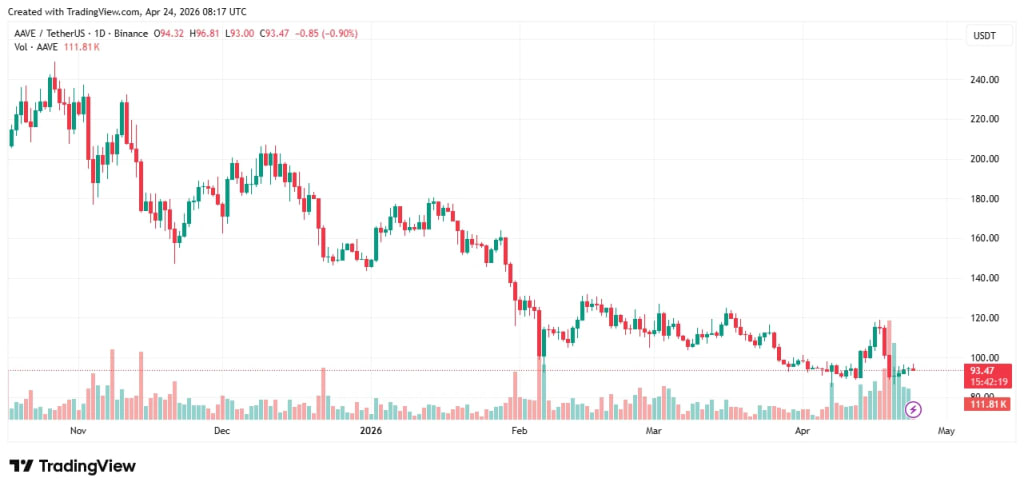
Currently, AAVE is trading at $93.25, reflecting a modest upward movement in the broader decentralized finance (DeFi) market. The token recorded a 1.68% increase over the last 24 hours, supported by sustained trading activity and renewed investor interest across lending protocols. Market sentiment remains cautiously optimistic amid stable crypto conditions.
Also Read | Strategy Holds More BTC Than IBIT, Targets Top Spot in 2 Years
With the current price of ETH being close to $2,334, the 30,000 ETH loan proposed by Mantle would be valued at around $70 million. While it does not fully offset the estimated shortfall, it is designed as a liquidity stabilizer rather than a complete rescue package, working alongside Aave’s reserve buffers, insurance mechanisms, and ongoing position liquidations.
According to the proposal, the loan would carry a maximum duration of 36 months, offering flexible repayment conditions. Interest is expected to be set at a rate equivalent to Lido staking yield plus an additional 1% APR, making it economically aligned with ETH-denominated yield conditions rather than fixed fiat-style borrowing costs.
To minimize potential losses from the loan, Mantle has proposed collateralization with 5% of Aave protocol revenue and $11 million worth of AAVE tokens. Alongside the previous proposal, Mantle will receive a governance delegation with 130,000 tokens during the loan term, which increases their power in Aave DAO’s decision-making process.
Such governance delegation has become an increasingly popular trend in DeFi due to the financial needs of some projects. However, it brings up the debate whether the assistance methods used by DeFi projects gradually lead to the centralization of decision-making in their hands.
Currently, the MIP-34 proposal remains in the draft format, and there is no vote scheduled yet. The community is discussing the feasibility of the terms of the deal and deciding whether the risk has been appropriately mitigated with the proposal.
More generally, the incident raises important questions for the design of liquidity risk architecture for Ethereum-based protocols. Even if the problem occurs in the bridge and restaking layers of the ecosystem, it might affect the lending and borrowing markets significantly, forcing protocols to seek additional assistance through the external balance sheet capacity of other DeFi ecosystems.
Also Read | Bitcoin (BTC), Ethereum (ETH) Face $80M Leveraged Short From Cryptocurrency Whale





