March 8, 2026: Consider a startup that grew from $5 billion to $70 billion. Most of the largest gains went to insiders who invested with minimum checks of around $250,000. Retail access to such private deals has been limited. IPO Genie ($IPO) states it aims to increase access.
But in 2026, many new crypto projects make similar claims. So let’s look at the facts, not the hype. On one side, you have IPO Genie, a new crypto token in an early sale phase. On the other side, you have FET and RENDER two established AI coins with real users, live products, and billions in trading history.
Can an early token sale project realistically compete?
FET and RENDER are live AI networks you can use today. IPO Genie is in an early token sale phase and targets a different goal: providing retail access to tokenized private-market pre-IPO deals that traditionally required large minimum investments. They are not directly comparable and serve different investor needs.
How We Checked the Facts:
The Established Giants (FET & RENDER) FET and RENDER have live networks and tradable tokens available on major exchanges. FET supports machine-to-machine coordination for AI agents. RENDER provides distributed GPU rendering services for graphics workloads. Both projects have operational products and a longer track record relative to newer token offerings.
The New Kid (IPO Genie) IPO Genie is not an established company yet. It is in an early token sale phase, which can be comparable to a pre-order or fundraising round before a product is live.
IPO Genie $IPO calls itself the world’s first AI Layer-1 blockchain for private-market investing. Its stated goal is to allow smaller retail investments in tokenized pre-IPO opportunities, with minimum contributions reportedly around $10.
The platform uses an AI system called Sentient Signal Agents (SSA). This system scans startup data, funding activity, founder history, financials, and risk signals and scores each opportunity. It does not make decisions for you. It surfaces information so you can decide yourself.
The team has presented a timestamped instance in which SSA flagged Redwood AI Corp. (CSE: AIRX) prior to its public listing on February 6, 2026; this is an item that can be independently checked.
| Feature | FET (ASI) | RENDER | IPO Genie ($IPO) |
| Can I buy it on big apps? | Yes (Binance/Coinbase) | Yes (Major Apps) | No (early token sale link) |
| Does it have a real tool? | Yes, AI Store | Yes, Graphics Power | Not yet (Building) |
| What is it for? | AI Robots | Computer Power | Access to tokenized private deals |
| Is the code safe? | Reported audit reports available | Reported audit reports available | Reportedly checked by CertiK |
Before putting money into any early token sale, run it through these checks. Here is how IPO Genie scores on each one.

Risk disclosure included?
Does the project include a risk disclosure?
The whitepaper includes a risk disclosure section.
IPO Genie is not directly comparable to FET or RENDER, which focus on AI infrastructure and rendering. IPO Genie targets access to tokenized private deals. The project reports a CertiK audit listing, documented token rules including a two-year team lock, and the SSA signal for Redwood AI as an example. Missing elements include a working product and verifiable team identities. This remains a high-risk, early-stage offering; outcomes depend on future development and execution.
No. As of March 5, 2026, $IPO is only available in its early token sale phase. It has not been listed on any centralised or decentralised exchange. FET and RENDER, by contrast, trade on dozens of major exchanges including Binance and Coinbase.
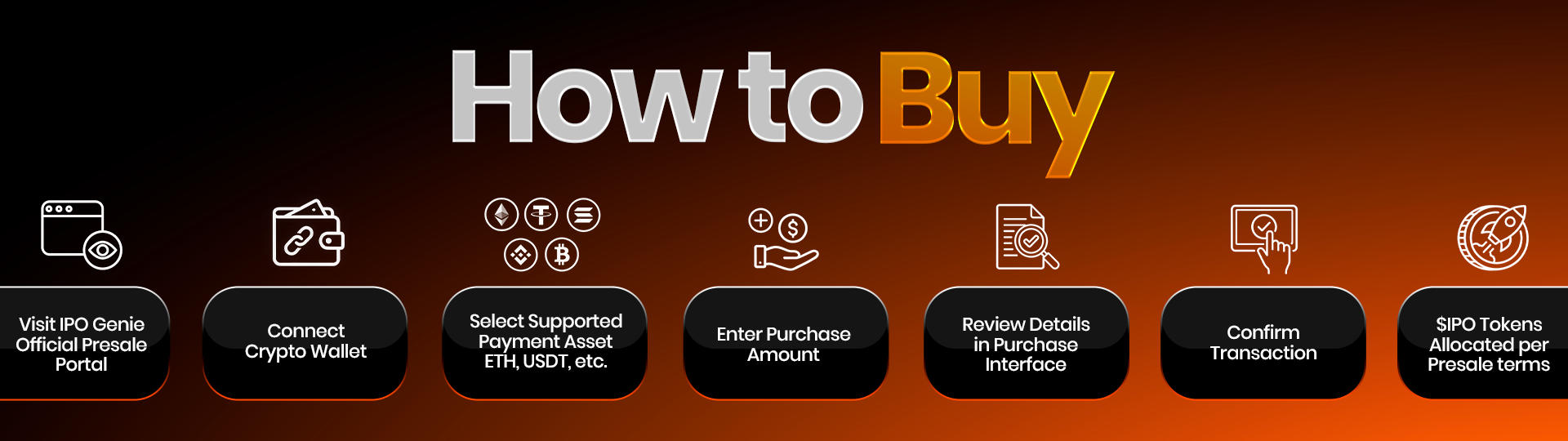
It means turning ownership of a private startup not yet on the stock market into digital tokens on a blockchain. According to the project, this could reduce the minimum investment size compared with traditional private rounds, potentially allowing much smaller contributions. The token represents access or a claim structured by the project’s terms.
FET’s AI agents are designed to automate tasks, manage DeFi positions, and run cross-chain operations. IPO Genie’s Sentient Signal Agents are described as designed specifically to score and flag pre-IPO investment opportunities. One is an AI operating layer for blockchain tasks. The other is an AI research tool for deal sourcing. They serve different use cases.
This is the core risk for early token sales. If the platform does not launch, early token sale investors may not have a live product to use their tokens on. Neither audits nor tokenomics can eliminate this risk entirely. Always invest only what you can afford to lose completely.
Yes, and this is significant. Tokenized equity structures face active scrutiny from regulators in the US, EU, and Asia. Whether a tokenized pre-IPO deal qualifies as a regulated security depends on the jurisdiction.
IPO Genie’s whitepaper includes KYC and AML frameworks, but regulatory approval in major markets is not yet confirmed. FET and RENDER operate as utility tokens, a more established regulatory category.
According to cryptopolitan, new buyers receive 20% additional tokens on their purchase. A $1,000 allocation that would otherwise correspond to a given number of tokens at current pricing would instead yield approximately 20% more tokens according to that report.
These are additional token allocations not cash bonuses and their value depends entirely on what the token is worth after launch.
Official Links: IPO Genie token sale page | Telegram | X Community
This article contains information about a cryptocurrency presale. Crypto Economy is not associated with the project. As with any initiative within the crypto ecosystem, we encourage users to do their own research before participating, carefully considering both the potential and the risks involved. This content is for informational purposes only and does not constitute investment advice.





