
May was not a month where one huge network upgrade took over the whole blockchain conversation. It was quieter than that. But quieter does not mean empty.
What we mostly saw in May was major chains working on the practical parts of crypto infrastructure: cheaper payments, easier stablecoin transfers, better client software, safer wallets, more flexible scaling, and a few repairs after things had gone wrong earlier. In other words, not always the sort of news that sends everyone into a frenzy for a week, but the kind of news that tells you what the networks are actually trying to become.
And if we step back a little, the pattern is fairly clear. A lot of the May stories were about making blockchains less annoying to use. Less gas friction. Less fee uncertainty. Better account design. More reliable validators. Easier stablecoin movement. More room for automated systems and AI agents, although that part still needs to be treated carefully, because “agents” can become a very easy word to overuse.
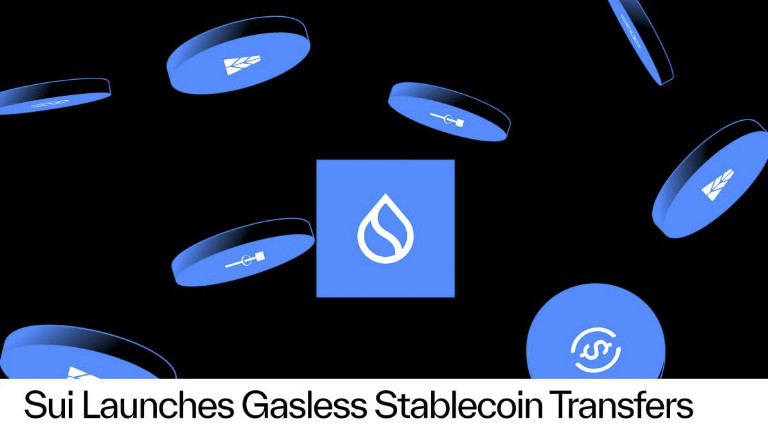
The strongest May story was probably Sui. The network introduced gasless stablecoin transfers, which means users can send supported stablecoins without needing to hold SUI separately just to pay gas. That sounds simple, but it fixes one of the dumbest everyday problems in crypto. Someone can have the asset they want to send, understand the transaction they want to make, and still get blocked because they do not have a tiny amount of the chain’s native token in the wallet. For payments, that is bad design.
So Sui’s May update mattered because it went straight at that friction. No need to pretend this suddenly makes Sui the payment chain of the future or anything like that. The fairer point is simpler: if stablecoins are going to behave more like normal money, users should not have to think about gas every time they move them. Sui also talked up programmable payments and introduced Sui Spheres, which are controlled execution environments for multi-party workflows. That sounds more technical, but it fits the same direction. Sui is trying to make its infrastructure useful for payments and coordinated financial activity, not just token trading.
Polygon had a similar kind of month, though from a different angle. Its Lisovo upgrade was tied to more predictable fee controls and a $1 million gas subsidy for agent payments. Now, “agent payments” is one of those phrases that can easily drift into hype, so it is worth keeping the tone sober. What matters here is that Polygon is trying to make transaction costs more manageable for automated, high-volume payments. Whether those payments come from AI agents, apps, merchants, or backend systems, the basic problem is the same: if fees are unstable or awkward to manage, the chain becomes harder to use as payment infrastructure.
That is the real news. Polygon is still pushing itself into the payments lane. It wants to be judged less as a general cheap EVM chain and more as infrastructure for stablecoins, settlement, and repeated low-cost transactions. The May upgrade did not magically settle that ambition, but it did move the chain further in that direction.
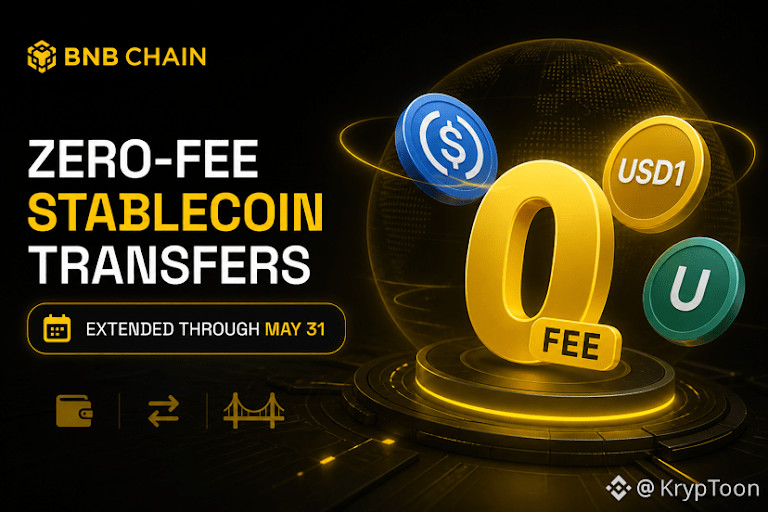
BNB Chain was also circling the same theme. It extended zero-fee transfers for selected stablecoins through the end of May and launched the BNBAgent SDK on mainnet. Again, the agent part should be handled with care. Every ecosystem now wants a clean story around AI agents, and some of that will age badly. But the stablecoin-fee part is concrete. BNB Chain has always been strongest when it makes on-chain activity cheap and easy for a very large user base. Extending gas-free stablecoin transfers is exactly the sort of move that fits its usual playbook.
The SDK launch is more of a developer story. It gives builders a framework for agent identity, payments, commerce, and memory. That may matter if automated on-chain activity becomes a real category. For now, it is more useful to read it as positioning. BNB Chain is preparing for a world where apps and bots transact more directly on-chain. Whether that world arrives in the shape people imagine is still open.
NEAR had a more roadmap-heavy May. It pushed two big ideas: post-quantum-safe signing and dynamic resharding. The first one is about future security. Quantum computing is not an immediate day-to-day problem for most users, but serious chains do need to think about what happens if today’s signing schemes become weaker over time. NEAR’s work on post-quantum signing is therefore less of a market story and more of a long-term protocol safety story.
Dynamic resharding is easier to understand from a scaling perspective. The idea is that the network can add shards automatically as demand grows. That matters because traffic on blockchains does not grow in a neat, polite way. It spikes. It rotates between apps. It follows narratives. If a chain wants to support heavier usage, especially around intents and automated activity, it needs a scaling model that can respond without too much manual coordination. NEAR’s May news was still mostly about the road ahead, but it was loud enough to move the conversation around the project.
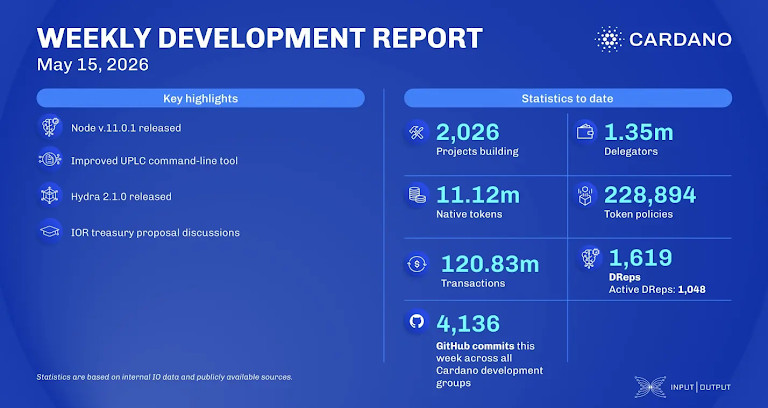
Cardano’s May was less dramatic, but there was substance there. Cardano node v11.0.1 moved the network toward the protocol-version-11 hard fork path, while Leios prototype work added first voting capability. Put more simply: Cardano spent May preparing the next stage of its protocol work rather than launching a big user-facing feature.
That is often how Cardano looks from the outside. Slow, formal, sometimes a bit too procedural for people who want quick headlines. But this kind of preparation does matter. Node releases, governance steps, and scaling prototypes are the unglamorous middle part between a roadmap and a live network change. The thing to watch is whether all this preparation turns into visible performance and usability gains later. May gave Cardano a credible infrastructure update, not a finished “new era” moment.

Aptos had a mixed but important month. The network talked about ecosystem growth, including Tria bringing 500,000 users to Aptos, and announced a commitment of over $50 million around its “markets and machines” push. But the more important technical detail was the v1.44.9 hotfix. That update addressed the circular dependency in the randomness pipeline that had caused a temporary mainnet stall in April.
That matters more than the marketing language. When a chain stalls, the follow-up is important. Users and builders want to see whether the team can identify the issue, ship the fix, and harden the network. Aptos did have a real May repair story, and that is worth including. The ecosystem funding is also relevant, but it should not be treated as proof of success. It is a bet. The test is whether that money produces applications and liquidity that stick around after the campaign energy fades.
Ethereum’s May was more research and protocol-process than headline upgrade. The Ethereum Foundation’s Protocol Cluster update pointed to work around Hegotá groundwork, FOCIL prototypes, native account abstraction, and a coming multi-client devnet. There was also a clear-signing push to make wallet approvals safer.
The main point is this: Ethereum was not trying to win May with one shiny launch. It was working on the deep pieces that affect inclusion, wallet UX, account design, and transaction safety. Native account abstraction is especially important because Ethereum still has a wallet experience problem. Clear signing also matters because users are still asked to approve transactions they cannot properly understand. So yes, this was a quiet Ethereum month. But the work was aimed at real problems.
Solana had no major May “wow” upgrade; its May story was mainly client releases, including Jito-Solana mainnet v4.0.0-jito and Agave v4.1.0-beta.1. That sounds dry because it sort of is. But for Solana, dry client work is not irrelevant.
Solana’s long-term credibility depends on the quality and diversity of its validator software. The chain has already won the market’s attention on speed and activity. The harder job is making the network feel boring under pressure. Client releases, validator software improvements, and steady engineering are part of that. So Solana’s May was more “keep improving the machine” than “announce a new story.”
Cosmos was also in a maintenance-and-coordination mode. The most visible May items were CometBFT and Cosmos SDK releases, plus renewed public discussion around the Cosmos Hub roadmap and tokenomics. That is useful, but we should be honest about what it is. It was not a big Hub upgrade. It was more about the stack and the direction of the Hub.
Cosmos always has this strange split personality. The technology stack matters across many chains, while ATOM and the Hub still need a cleaner story about value capture and centrality. May did not solve that. It did, however, show continued work on the core stack and a renewed attempt to talk more clearly about the Hub’s roadmap. For builders, that is relevant. For investors, it probably still leaves a lot of questions open.
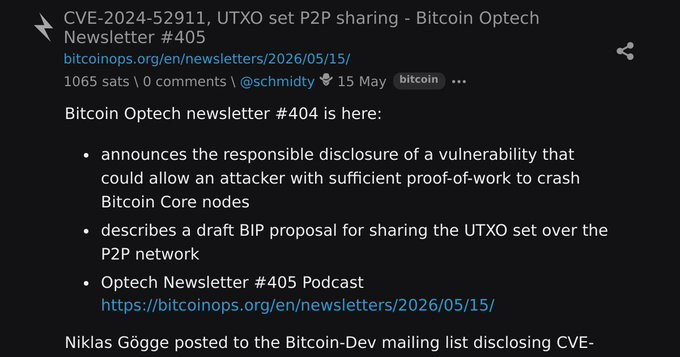
Bitcoin’s May item was a security disclosure rather than an upgrade. Bitcoin Core disclosed CVE-2024-52911, a script-interpreter remote crash issue affecting older versions. That is not a new feature, and it is not the sort of thing that belongs in a hype cycle. But for Bitcoin, security maintenance is part of the product.
Bitcoin does not need to ship monthly features to remain important. Its development culture is conservative by design. So a May Bitcoin story can look very narrow compared with what happens on smart contract chains. Here, the point was simple: node software needs to stay robust, operators need to upgrade, and the network’s credibility depends on this kind of maintenance being handled carefully.
So, all in all May’s not been a bad month. It was just a less theatrical one. The industry keeps talking about mass adoption, AI agents, stablecoins, and real-world payments. May showed that the better networks understand at least one thing: before any of that becomes normal, the basic infrastructure has to stop getting in the way.
The post Blockchain Digest, May 2026: Major Networks Worked On Fees, UX, Security And Real-World Rails appeared first on Metaverse Post.





