Over 40 million users across 170+ countries use MEXC Exchange for one main reason, it consistently lists new tokens faster than almost any other platform, often at zero trading fees.
Founded in 2018 in the Seychelles, the platform has grown from a mid-tier CEX into one of the top 5 to 9 global exchanges by trading volume. The 24-hour spot volume regularly crosses $1 billion to $2 billion, with derivatives volume running significantly higher.
That kind of scale makes MEXC worth understanding properly, not just as a listing venue, but as a full trading infrastructure.

The MEXC platform covers far more ground than basic spot trading. Here is what is currently live across the exchange:
Spot trading — 2,000 to 3,000+ cryptocurrencies, 0% maker fees, 0.05% taker fees (further reduced via MX token or VIP tiers)
Futures and perpetuals — up to 500x leverage on select pairs, 0% maker and 0.01–0.02% taker fees, deep liquidity in major contracts
RealStocks — launched mid-2026, allowing eligible users to trade 7,000+ real U.S.-listed stocks and ETFs using USDT, with real ownership, dividend eligibility, and Nasdaq market hours — all inside the MEXC-exchange interface
Earn Event — staking, savings, and yield products
Copy trading — follow and replicate experienced traders automatically
Pre-Market trading — early access to tokens before official listing
P2P, loans, Convert — zero-fee instant swaps and peer-to-peer options
Launchpad and Kickstarter — early entry into new token projects
RealStocks is the biggest new addition. It removes the need for a separate brokerage account to access U.S. equities, traders can hold crypto and real stocks in a single interface, settled in USDT.
The MEXC exchange details look different depending on what a trader prioritizes. Here is how it stacks up against the main competitors:
Vs Binance — Binance leads in overall volume, regulatory coverage, and ecosystem depth. MEXC competes on lower fees, faster altcoin listings, and access to more obscure tokens that Binance has not listed yet.
Vs Bybit and OKX — Both platforms run strong derivatives desks with polished interfaces. MEXC frequently undercuts them on fees and carries a broader spot selection, though Bybit and OKX may hold edges in certain liquidity pools or advanced trading tools.
Vs Gate.io and KuCoin — All three focus heavily on altcoins. MEXC-exchange tends to move faster on new listings and runs more aggressive zero-fee promotions across longer periods.
The MEXC-Exchange benefits that stand out most consistently: near-zero fees for active traders, early access to trending tokens, and a combined crypto-plus-equities interface that no pure CEX or DEX currently matches.
The platform listed 130+ new tokens in March 2026 alone. That listing pace, dozens to over 100 tokens per month, puts it ahead of most top-tier exchanges in raw listing speed.
New tokens typically land in the Innovation Zone, which carries a higher-risk warning but also draws significant early attention and volume.
The exchange's price influence on newly listed tokens is real and documented. Historical listings of tokens like PEPE, BONK, and WIF showed sharp short-term price gains driven by new visibility and liquidity access.
However, the period after listing often brings a sell-the-news correction for tokens that lack strong fundamentals, so listing momentum and long-term performance are two separate conversations.
Pre-Market trading on MEXC-Exchange lets users take early positions before a token's official spot listing, giving active traders a window that most top crypto exchanges do not offer at this scale.
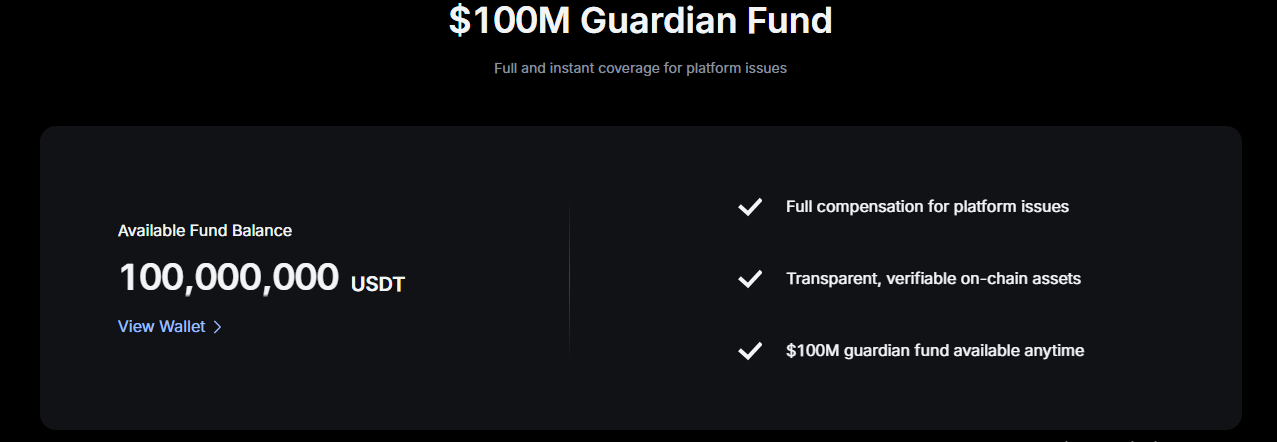
MEXC-Exchange publishes monthly Proof of Reserves reports audited by Hacken. The platform also maintains a $100 million Guardian Fund for platform-related issues, uses cold and hot wallet separation, and supports 2FA and anti-phishing tools.
In terms of market position,
The platform consistently ranks among the top 10 best crypto exchanges globally by volume. Its perpetuals market share has reached around 16% in certain periods, a significant slice for a platform that also runs one of the most active spot markets outside the top three.
Fiat on-ramp options are limited in certain regions. The platform is restricted in the US, UK, Canada, Iran and Mainland China. High leverage and rapid altcoin listings also raise the risk profile for newer traders who are not yet familiar with volatile early-stage tokens.
For active traders who prioritize fee savings, early token access, and now cross-asset trading that bridges crypto and real equities, the exchange sits in a position that few platforms currently occupy at the same price point.
Disclaimer: This article is for informational purposes only and does not constitute financial or investment advice. Crypto markets carry significant risk. Always do your own research before making any investment decisions.





