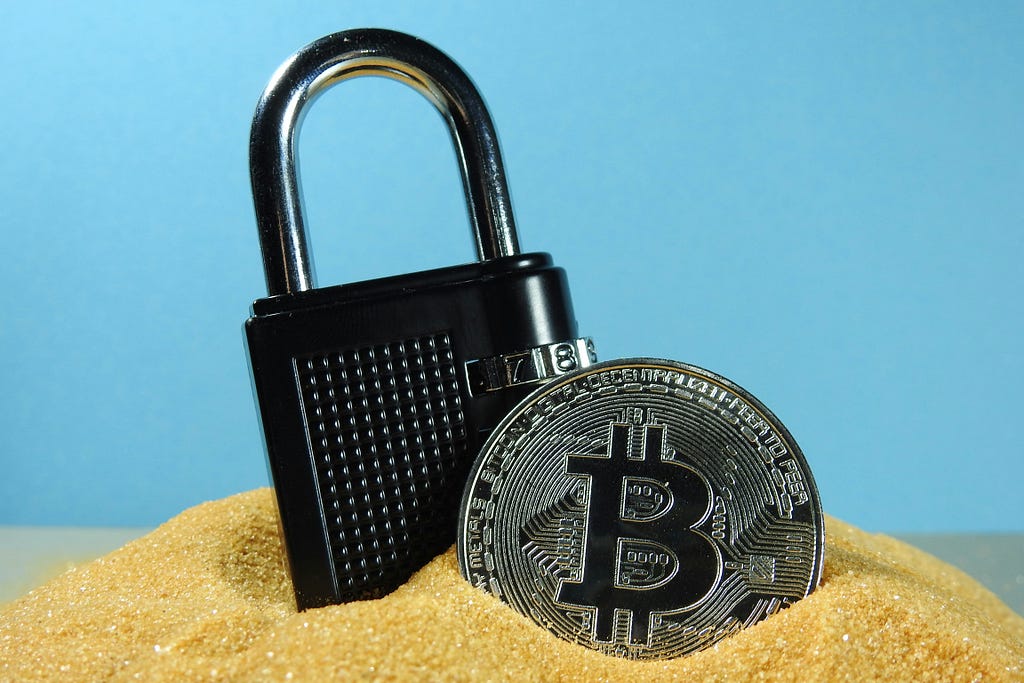
Most people I know who lost money on Bitcoin were treating it like a stock.
They bought when the price was moving. They watched it every hour. They sold when it dropped 20% because it felt wrong to hold something going down. Then it went back up and they bought again — higher than before.
That’s not investing. That’s gambling with extra steps.
I don’t trade Bitcoin. I hold it. Same way I hold real estate. You don’t check the price of your apartment every morning and think about whether to sell.
Bitcoin is savings technology. That’s the frame. If you have that frame, almost everything else about how to handle it becomes obvious.
You don’t trade savings. You add to them. You hold them through uncomfortable periods. You measure them in years, not days.
The people who made money on Bitcoin long-term are boring. They bought, they held, they didn’t move. The people who lost money were active. They had opinions about the chart. They found reasons to sell.
Now, altcoins are a different conversation entirely. Different risk profile, different liquidity, different thesis. Some people make money on them. Some people lose everything. The game is completely different — shorter, more speculative, more dependent on timing. I’m not saying altcoins are wrong. I’m saying don’t confuse them with Bitcoin.
Bitcoin has one thesis: it’s a fixed-supply store of value in a world that keeps printing money. That thesis either holds or it doesn’t. If it holds, you want to own some and not sell it. If it doesn’t, nothing else matters anyway.
I made a decision a few years ago to hold Bitcoin the way I hold savings. Put a fixed amount in every month. Don’t touch it. Don’t watch the price daily. Review it quarterly at most.
My portfolio got simpler. My stress went down. My returns got better.
The noise around Bitcoin is enormous — predictions, price targets, macro arguments, ETF flows. Most of it is irrelevant to the question of whether you should hold it long-term. The noise is for traders. Traders need reasons to move. You don’t have to move.
If you’re a founder, the savings angle matters even more. You don’t have a pension. You don’t have a company match. You have whatever you build and whatever you put away. Inflation eats the cash. Bitcoin doesn’t guarantee anything, but at least the supply is fixed.
I’m not telling you to put your runway in Bitcoin. That would be stupid.
But if you have money you won’t need for 5 years — the question is worth asking.
— -
*Reinhold is the co-founder of swipesign, an e-signature platform for high-trust use cases. He writes about building companies, investing, and what he got wrong.*
Bitcoin is not a trade. It’s a savings account. was originally published in Coinmonks on Medium, where people are continuing the conversation by highlighting and responding to this story.





