Oil has crashed roughly 38% from its war-driven peak, hitting a 3.5-month low near $74 per barrel. It now sits just about $7 away from $67 — the level it traded at before the US-Iran war even started. In other words, the entire conflict premium that inflated energy prices for months has almost completely drained out of the market.
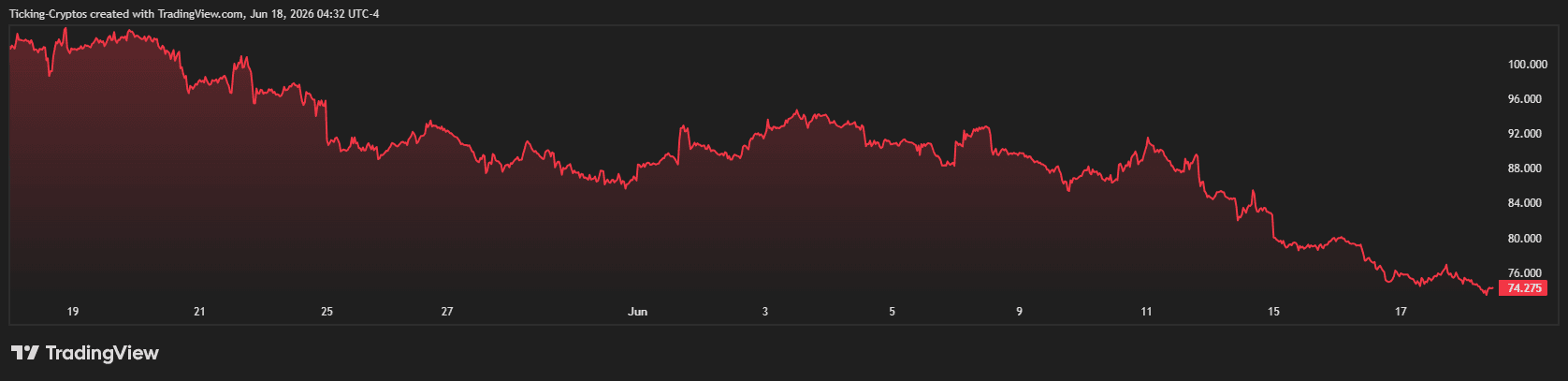
That matters far beyond the energy sector. Cheap oil sits upstream of nearly everything in the economy, and the chain reaction it sets off runs straight into the macro conditions that drive $Bitcoin and the broader crypto market. Here's why this oil crash could be one of the more underrated tailwinds for crypto right now.
The collapse traces back to one catalyst: de-escalation. With the US and Iran signing an interim peace agreement that reopens the Strait of Hormuz and clears the way for Iranian oil exports to return, the supply fears that drove crude toward triple digits during the war have evaporated.
Several forces are now compounding the downside:
The result is gasoline slipping back below politically sensitive levels and energy costs broadly resetting toward where they sat before the war.
This is the heart of why crypto investors should care. Oil is a foundational input cost across the entire economy, and when it falls, the effects ripple outward:
That final point is the bridge from a barrel of oil to your crypto portfolio.
Crypto is among the most rate-sensitive asset classes in the market. The logic runs through liquidity and risk appetite:
The recent crypto drawdown was driven in large part by the opposite of all this: a hot labor market, sticky inflation, and rate-cut hopes getting pushed further out. An oil-driven disinflation impulse flips that script.
Put the pieces together and a clear macro tailwind emerges. The single biggest geopolitical overhang on markets is lifting, energy prices are resetting toward pre-war levels, inflation pressure is easing, and the door to rate cuts is creaking back open. For an asset class that thrives on liquidity and risk appetite, that's a constructive backdrop.
A few caveats keep it honest:
The oil crash is more than an energy story — it's a macro signal. Lower oil means lower input costs, cooler inflation, and a clearer runway toward the rate cuts that have historically fueled crypto rallies. While nothing in markets is guaranteed, the chain of cause and effect points in a direction crypto holders have been waiting for: easing inflation, returning liquidity, and a macro environment that finally leans risk-on rather than risk-off.
After months of geopolitical fear weighing on Bitcoin and the broader market, a 38% oil crash toward pre-war levels is exactly the kind of quiet, fundamental tailwind that tends to matter more than the headlines suggest.





