On May 3, 2026, the cryptocurrency market witnessed one of the most drastic "u-turn" price movements of the year. LAB token, the native asset of the Lab Network, experienced a catastrophic 70% decline within 24 hours of reaching its all-time high.
After a relentless 364% rally that propelled the token from under $0.70 to a peak of $3.64, the multi-chain trading terminal's ecosystem suddenly buckled under intense selling pressure. For many retail investors who entered during the peak of the hype, the rapid descent has sparked urgent questions regarding the project's long-term viability and the mechanics behind the crash.
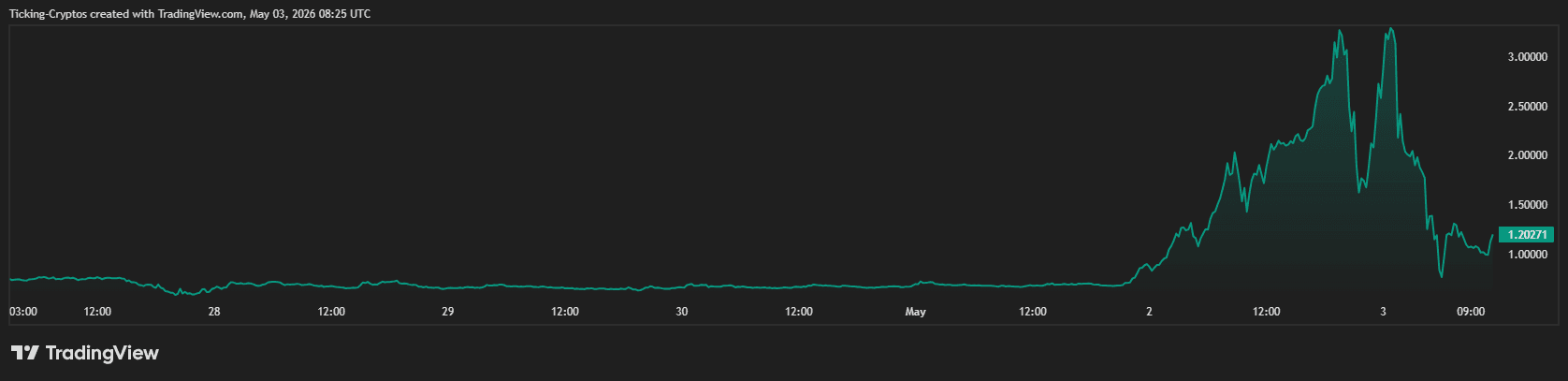
The primary reason for the $LAB token crash was a textbook "sell the news" event triggered by the launch of the Lab Network mobile application. Investors had been accumulating the token in anticipation of the May 3 release, but once the product went live, large holders (whales) began liquidating their positions to realize profits, overwhelming the remaining buy orders.
"LAB reached an all-time high of $3.64 before a flash crash plunged the price by over 80% in specific trading pairs, with 24-hour contract liquidations surpassing major platforms."
The Lab Network is a browser-based and mobile trading terminal designed to aggregate execution across multiple blockchains, including Solana, Ethereum, and BNB Chain.
Founded by Dubai-based entrepreneur Vova Sadkov, the project aims to simplify the DeFi experience. Instead of switching between Raydium, Uniswap, and PancakeSwap, users can execute spot, limit, and perpetual trades from a single interface. The LAB token serves as the utility backbone, offering:
The crash was not a single event but a sequence of technical and psychological triggers that decimated the token's market cap in hours.
The 364% surge leading up to the crash pushed the Relative Strength Index (RSI) into extreme overbought territory. Technical analysts often view an RSI above 80 as a signal that a correction is imminent. As the price hit $3.64, the lack of fresh capital to sustain the vertical move made the "glass floor" extremely fragile.
On-chain data tracked by analysts suggested that institutional backers, including those from earlier funding rounds involving Amber Group and Cypher Capital, may have been moving assets. While the team advocates for a "deflationary flywheel," the sudden influx of millions of tokens onto exchanges provided the necessary exit liquidity for early participants at the expense of late-coming retail buyers.
Because LAB offers perpetual futures with up to 40x leverage, the initial price dip triggered a "liquidation cascade." Long positions were forced to sell automatically as prices dropped, creating a self-reinforcing downward spiral that was further exacerbated by the token's relatively low circulating supply of 230.4 million.
| Metric | Peak Performance (May 2) | Post-Crash (May 3) |
|---|---|---|
| Price | $3.64 | $1.08 |
| 24h Volume | $253 Million | $410 Million (Sell-side) |
| RSI (7D) | 85.25 | 32.10 |
| Market Cap Rank | #245 | #512 |
Vova Sadkov and the Lab Network team have remained active on social media, claiming that the crash is a "natural market correction" and that the protocol's fundamentals remain strong with over $800M in lifetime volume.
However, the "pump and dump" optics are difficult to shake. For the token to recover, the project must prove that its AI-driven transaction optimization and fee-sharing models can generate enough organic demand to offset the massive supply of 1 billion tokens.





