
Standard procedures like hardware wallets, multisignature configurations, and encrypted backups offer robust baseline security in bitcoin self-custody. But some really paranoid users experiment with extreme, non-traditional approaches that combine steganography, cryptography, physical security, and old-fashioned espionage measures. These strategies frequently rely on adding layers of obscurity and resistance to both physical and digital dangers, or on concealing assets in plain sight.
These techniques provide innovative approaches to safeguard seed phrases (BIP-39 mnemonics) and private keys, even if they are primarily experimental, instructional, or artistic — and pose considerable risks of irreversible fund loss. Never forget that professional-grade solutions are necessary for large holdings and that no technique can substitute robust operational security (OpSec).
For the vast majority of cryptocurrency users, the unusual and extremely paranoid methods covered in this article (such as skin tattoos, sophisticated steganography, microdots, and intricate physical decoy setups) are not required and are typically not advised, even though they may be intellectually fascinating or serve specialized educational purposes.
When paired with fundamental operational security procedures, choosing a reliable hot wallet (for easy daily usage and lesser amounts) or a safe cold/hardware wallet (highly favored for greater holdings and long-term storage) is more than adequate for the majority of individuals. Compared to experimental or high-friction approaches, these tried-and-true solutions offer a far better combination of usability, security, and recoverability with a much reduced danger of permanent cash loss.
To make an informed choice, we recommend using transparent, community-driven comparison tools such as: beta.walletbeat.eth.limo
Extreme techniques come with significant dangers, such as irreversible access loss, bodily harm, chemical hazards, or attacker detection. Only highly skilled users who have mastered basic self-custody procedures should take them into consideration, if at all.
Check out wallet rating: walletscrutiny.com
Ultimately, no wallet or technique is 100% secure. The responsibility for protecting your funds rests entirely with you. Always do your own research, understand the risks involved, and consider consulting with knowledgeable professionals for significant holdings. Simpler, well-chosen solutions paired with disciplined habits are usually the most effective path to safe cryptocurrency ownership.
One of the most visually striking extreme methods is Skin Wallet, a project that lets you encrypt your seed phrase and render it as artistic tattoo.
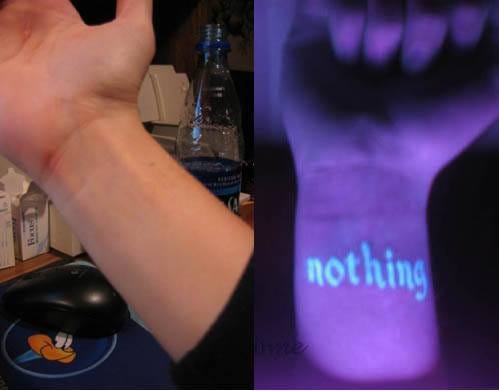
The tool uses a custom Vigenère cipher variant. Instead of a single shift (like a basic Caesar cipher), each word in your 12- or 24-word seed phrase receives a different numeric shift from a user-provided key list (numbers 1–26). For example, the word “TEST” shifted by key values [1,2,3,4] becomes something like “UGVX”. The encrypted words appear in uppercase in the generated artwork.
The decryption key itself can be embedded in a separate piece of art (or memorized/stored elsewhere). Outputs include:
All processing is client-side (via a web interface at samjhill.github.io/skin-wallet or Python CLI), so your original seed never leaves your device. Decryption can be done manually by writing words vertically and applying reverse shifts, or via the companion decypher.py script.
StegCloak takes steganography to the digital realm by embedding secrets inside ordinary-looking text using invisible Unicode characters.
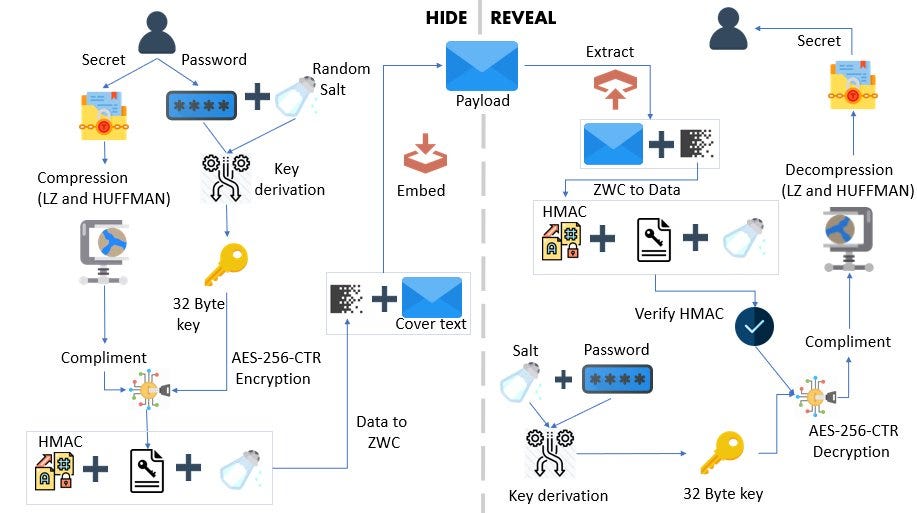
How it works:
The result looks like normal text but contains the hidden data. It works across platforms (Twitter/X, WhatsApp, email, forums) because the characters are universally supported.
This method excels at “hiding in plain sight” for sharing or archiving without drawing attention.
True steganography — techniques that hide the existence of a message rather than just its content — was primarily the domain of shinobi (ninja), who often served as spies, scouts, and messengers for samurai lords.

Historical ninja manuals such as the Bansenshūkai (1676) and Shōninki (1681) describe several steganographic methods:
Invisible Ink (Aburidashi):
Encrypted and Folded Letters:
Messages were hidden inside everyday objects, hollowed items, or lacquered containers. Some were written on materials that could be quickly destroyed if the carrier was captured.
Environmental Steganography (Signals in Plain Sight):
These methods allowed shinobi to communicate intelligence without drawing attention, fitting their role in espionage and sabotage for samurai warlords.
Physical threats to cryptocurrency holders are well-documented and growing. The comprehensive GitHub repository physical-bitcoin-attacks (maintained by Jameson Lopp) catalogs hundreds of real-world incidents since 2014, including home invasions, kidnappings, torture, and murders aimed at extracting seed phrases, hardware wallet PINs, or forcing on-chain transfers.
Common patterns include:
An anti-kidnapping kit:
These tactics increase the “cost” and risk for attackers while providing plausible deniability or escape options. You can read more about it here.
…Or just get a lawful firearm and learn how to handle it correctly:)
For the truly paranoid, microdots offer an espionage-grade physical hiding method revived for crypto seed phrases. A microdot is an extremely reduced photograph or print of text that appears as a tiny speck (often the size of a period or dust particle) to the naked eye but reveals full readable content under magnification.
Standard accessible method (25x–100x reduction):
Extreme photochemistry method (up to ~1000x reduction):
This technique is documented in experimental notes and a Devcon SEA talk by security researcher henlojseam, who reverse-engineered historical espionage processes for modern key custody.
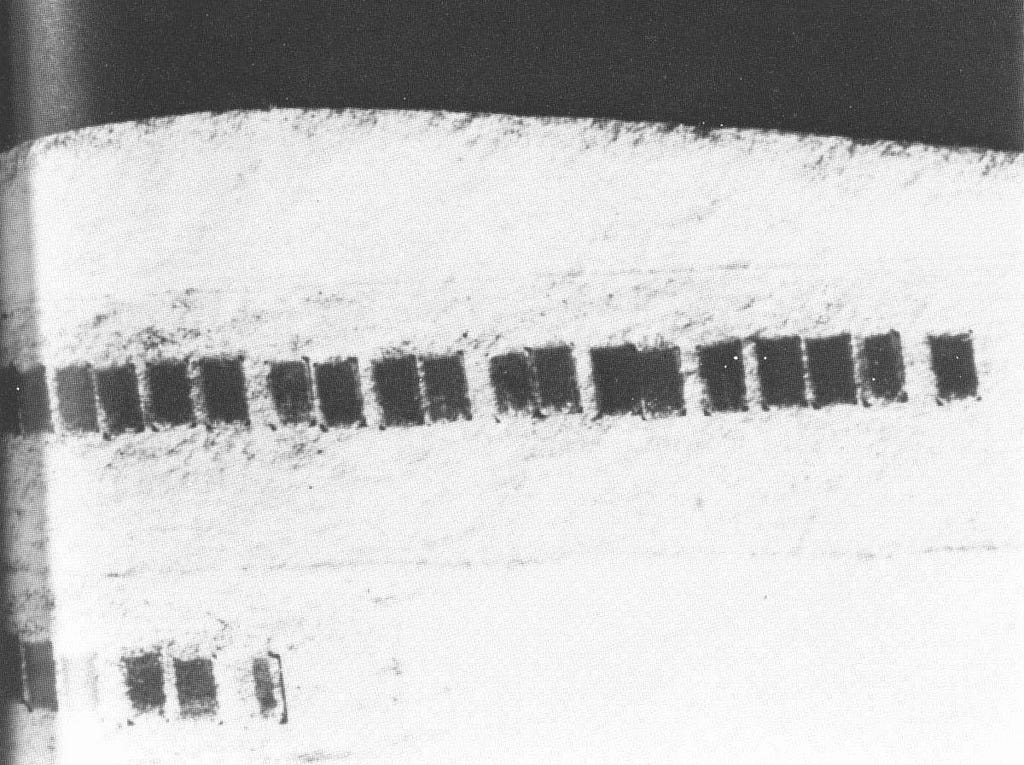
A technique comparable to modern microdots for steganographic purposes was first used in Germany during the Interwar period. It was also later used by many countries to pass messages through insecure postal channels. Later microdot techniques used film with aniline dye, rather than silver halide layers, as this was even harder for counter-espionage agents to find.
Microdot identification is a process in which tiny identification tags are etched or coded with a unique serial number or, for use on vehicles, with a vehicle identification number (VIN) or asset identification number. In South Africa it is a legal requirement to have a microdot fitted to all new vehicles sold since September 2012 and to all vehicles that require police clearance.
Some printers print, in addition to the document contents requested, tiny yellow dots containing the printer serial number and a time stamp.
Instead than depending just on cryptographic strength, security through obscurity (STO) refers to information protection by hiding the locations, methods, or presence of safeguards. STO plays a key role in the aforementioned techniques: a microdot seems as a harmless speck, plain text conceals encrypted data via unseen letters, and a tattoo looks like art.
For some users, especially those in transit between jurisdictions or worried about physical searches, the discussion moves into even more creative (and sometimes borderline paranoid) territory.
You must remember the main rule:
Your level of OpSec usually depends on your threat model and which adversary you’re up against. So it’s hard to define how good your OpSec is.
A few people have shared stories of hiding seed phrases in unexpected places to cross borders with near-zero chance of discovery:
These methods are extreme, high-risk if done sloppily, and definitely not for beginners. They illustrate how far some people will go when they treat seed phrase protection as a physical security problem, not just a digital one. The common thread remains the same: never keep everything in one place, and make recovery as resilient as possible.
Check out: Portable Secret
We can just use Steganography and a small paper, without even touching the computer.
Or we can use something like this even a logic bomb, which is a defensive trigger in advanced self-custody setups for cryptocurrency, where a certain sequence of keystrokes, actions or gestures must be performed in the exact order to activate protective functions. Instead of a simple password, it requires the user to perform an exact choreography — such as entering a PIN while pressing a hidden key combination, or opening files in a specific order, only then will it reveal the real wallet or execute a command.
For something like a robbery or kidnapping, if you get the sequence wrong or miss a step it can automatically wipe data, move your money to a safe address, silently alert your contacts or change to a decoy wallet.
This means a layer of plausible deniability and behavior-based security on top of static backups such as metal plates or steganographic hiding. The concept is derived from dead man’s switches and duress codes found in hardware wallets and anti-kidnapping kits. But it is complex and risky : one mistake can lock the owner out ( permanently ) or accidentally cause destruction of access.
Logic bombs are powerful in high threat situations but experimental and best used only by those who can reliably maintain and test the sequence under pressure.
logic-bomb/logic_bomb.c at master · starius/logic-bomb
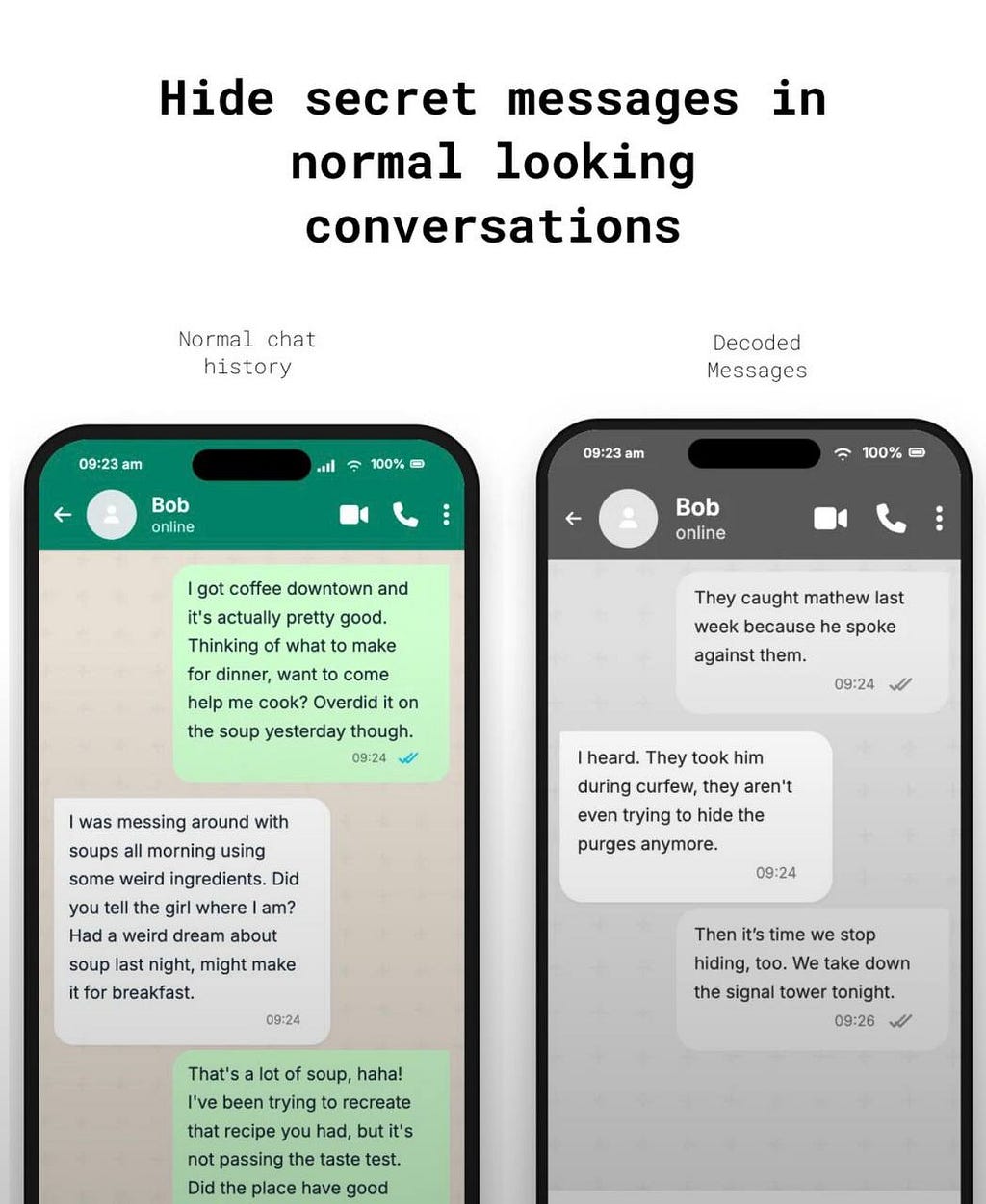
Basic OpSec is superior than any technical or physical approach. Keeping your lips shut is one of the most powerful (and underutilized) defenses. Don’t talk to anybody you don’t need to about your holdings, gains, security configurations, or even your general engagement in cryptocurrency. Bragging in public, posting on social media, or having casual discussions with people you don’t trust might establish targets and provide attackers reconnaissance.
Before attempting any of the more complex methods mentioned above, learn the fundamentals of self-custody (hardware wallet + metal backup + excellent OpSec + never disclosing your seed). The extreme approaches should not be used in place of sound foundations, but rather as additional layers for extremely valuable assets or particular threat models.
Extreme techniques like those mentioned can increase risks if discovery results in loss, but they can also add intriguing levels of protection and enjoyable exploration. For the majority of users, the best course of action is still to employ tried-and-true tools with little exposure and tight quiet. Keep yourself safe, exercise appropriate paranoia, and give provable security precedence above novelty. Check out my main OpSec guide as well!
Extreme Crypto Storage Methods That Actually Work was originally published in Coinmonks on Medium, where people are continuing the conversation by highlighting and responding to this story.





