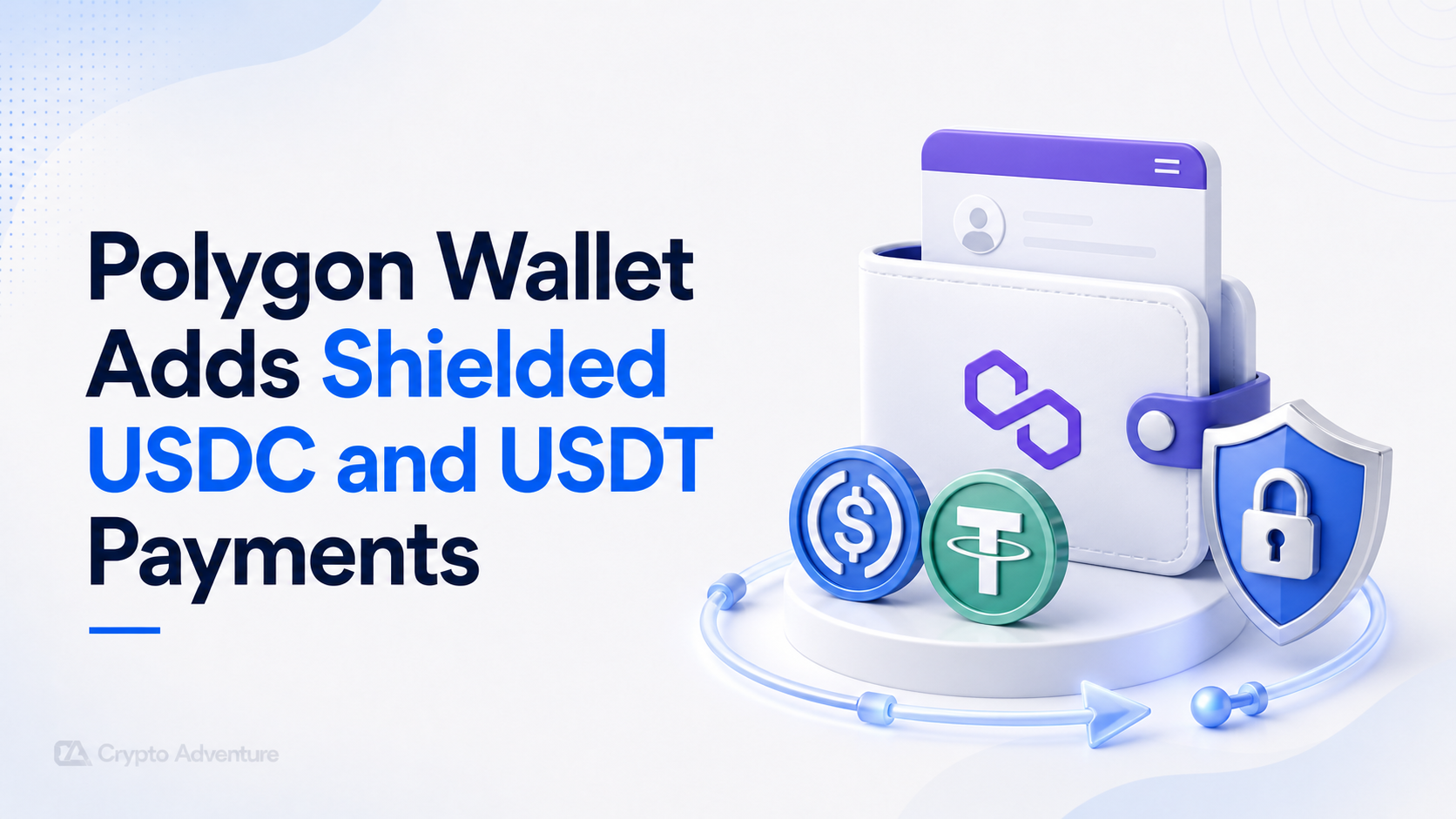
Polygon Labs has launched shielded stablecoin payments inside Polygon Wallet, giving users a new way to send USDC and USDT without broadcasting the sender, receiver and amount to the public blockchain.
The feature is live through a new “Privately Send” option in the wallet. When users select that route, the transfer goes through Hinkal’s shielded pool instead of a standard transparent on-chain transfer. Zero-knowledge proofs verify that the transaction is valid while keeping the payment details hidden from ordinary on-chain observers.
That design targets one of the biggest blockers for business stablecoin payments. Public blockchains are fast, cheap and available around the clock, but they normally expose every payment amount and counterparty relationship. That is a problem for treasury teams, payroll flows, vendor payments and internal company transfers, where confidentiality is expected on traditional banking rails.
Polygon’s launch is not a pure anonymity product. The private transfer flow includes Know Your Transaction screening before execution, while the protocol remains non-custodial. Polygon Labs said funds never sit with Hinkal or another operator during the transfer, which keeps asset control separate from the privacy layer.
That balance is the important part of the rollout. Users get confidentiality from public observers, but the design still attempts to preserve screening and verifiability. Outside observers can confirm that a valid transfer occurred, but they cannot see the sender, receiver or amount from the public chain data.
The feature fits into the wider shift toward privacy-preserving compliance. A recent programmable privacy update showed how ZK-based systems can let users prove eligibility, identity or transaction conditions without exposing underlying records to every network participant. Polygon’s shielded payment flow applies the same broad idea to stablecoin transfers.
USDC and USDT are already two of crypto’s most important payment assets, but their public transfer history can reveal business relationships, payment size, treasury balances and operating patterns. That visibility is useful for auditability, but it can also create competitive, security and privacy risks.
For businesses, shielded transfers could make stablecoins more realistic for routine payments. A company might want the speed of on-chain settlement without exposing every supplier payment or internal treasury move. For users, the feature reduces the wallet-linking problem that can follow a transparent stablecoin transfer across multiple apps and exchanges.
The compliance tradeoff remains sensitive. Privacy tools can attract regulatory attention when they hide illicit flows, and KYT screening will be central to whether Polygon’s approach is treated as a business-ready privacy layer rather than a high-risk mixer. The broader stablecoin risk debate already extends beyond pegs and reserves into freeze powers, chain risk, custody and regulatory controls.
Polygon is now betting that stablecoin adoption needs selective confidentiality, not total public exposure. The wallet update gives USDC and USDT users a privacy option inside a mainstream chain environment, while keeping screening and non-custodial settlement at the center of the product. That combination is likely to matter most for companies and payment apps that want public-chain settlement without turning every transaction into public business intelligence.
The post Polygon Adds Shielded USDC And USDT Payments To Its Wallet appeared first on Crypto Adventure.





