Polymarket is a decentralized prediction market platform where you trade on real-world events using crypto and earn based on correct outcomes. It works as a “YES/NO” market where you buy shares based on what you believe will happen, like “Will Bitcoin cross $100K before December 2026?” and your profit depends on the final result. You can even sell your position anytime before the event ends.
In this Polymarket review, we will cover how the platform works, its features, fees, and overall safety. We will also break down whether it is legal, who should use it, and how it compares with other prediction market platforms.
Polymarket is a decentralized prediction market built on the Polygon blockchain. Here, you trade “YES” and “NO” shares on real‑world questions instead of betting against a bookmaker. The platform was launched in 2020, and it quickly grew to hundreds of thousands of users. It even handled billions of dollars in trades during the 2024 U.S. presidential election.
The company behind Polymarket is headquartered in New York, and it remains one of the few prediction markets that uses a regulated pathway in the United States. Basically, in early 2025, Polymarket acquired QCX LLC. It is a CFTC‑licensed futures exchange, and it later received a no‑action letter from regulators. So, this move let the platform open an invite‑only U.S. version while keeping the global site open in more than 160 countries.
You buy and sell shares using USDC (it is a stablecoin pegged to the U.S. dollar). The system generally converts other cryptocurrencies to USDC when you deposit them.
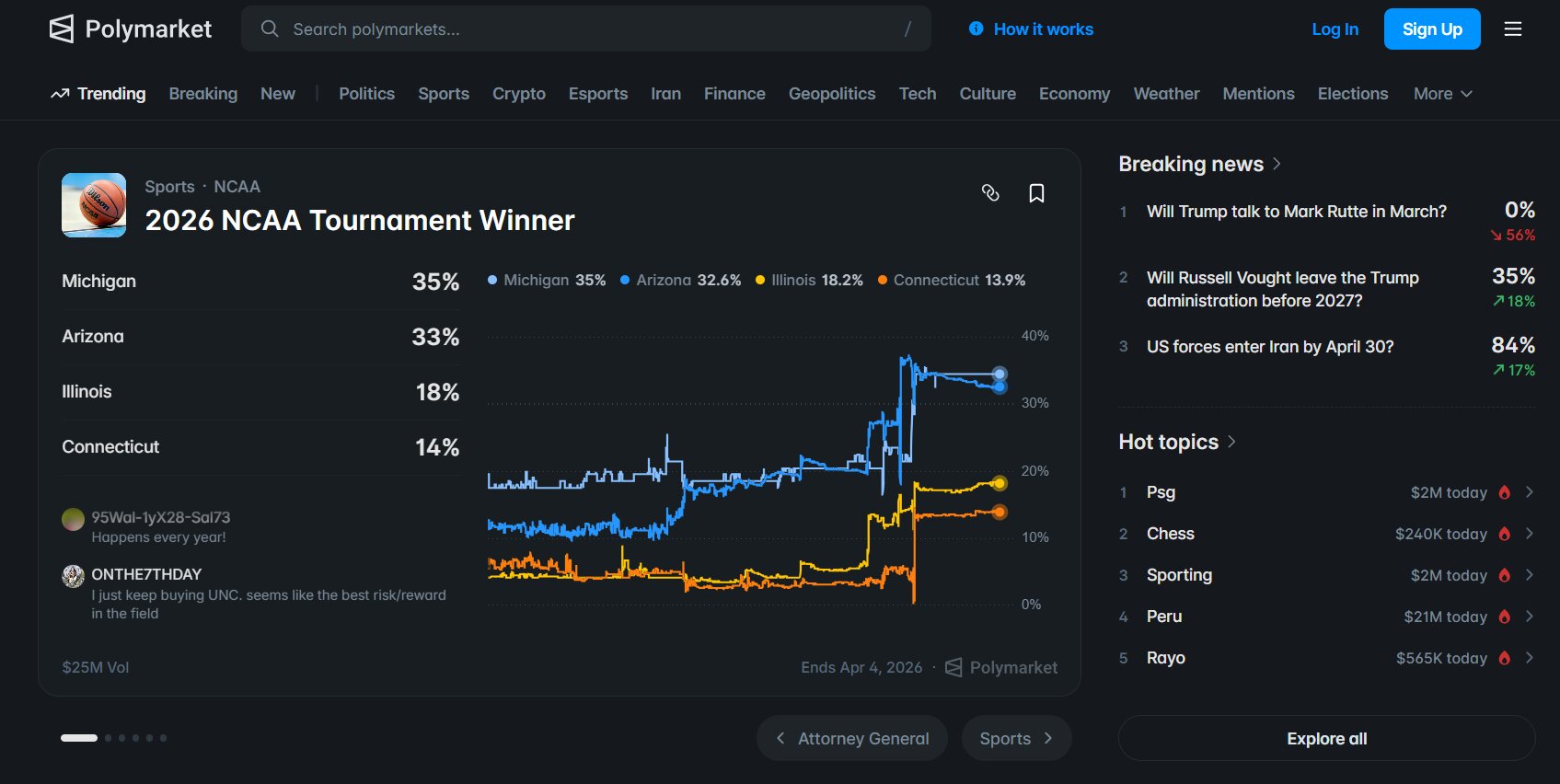
Polymarket works on a peer‑to‑peer model, as you do not bet against the house, but you trade with other users. It basically utilizes a binary share system where every outcome is represented by a “Yes” or “No” share that eventually pays out exactly $1.00. You are essentially trading the implied probability of an event.
So, for example, if a “Yes” share for a specific sports game is trading at $0.55, the market is telling you there is a 55% chance that the event happens. Now, you can buy these shares at the current market price or place a limit order at a lower price and wait for someone else to sell to you. Here, the platform does not act as the house or the counterparty, but instead, it just matches you with other traders who have the opposite view of the outcome.
It works on smart contracts to hold all user funds in escrow until an event concludes. Hence, when the event reaches its deadline, a decentralized oracle verifies the result. Right after the result is confirmed, the smart contract automatically updates the value of the winning shares to $1.00 and sets the losing shares to $0.00. You can then click a single button to claim your earnings directly to your crypto wallet. Actually, you can even sell your shares back into the market before the event is over if you want to lock in a profit or cut your losses early.
Polymarket is available in more than 160 countries, but it excludes several jurisdictions due to local laws and sanctions. To start with, some of the major restricted regions include the United States (for the global site), the United Kingdom, Canada’s province of Ontario, France, Germany, Italy, Australia, Russia, Belarus, parts of the Middle East, and countries under U.S. sanctions.
Basically, if your country is on the restricted list, you will see a geoblock and cannot access the service legally. But again, many people access it using a VPN due to its decentralized trading nature. However, the terms of service prohibit using a VPN or proxy, and we don’t recommend this.
Yes, Polymarket is legal in the U.S., but with strict conditions. You see, the main Polymarket site closed its doors to U.S. residents in 2022 after regulators charged it with offering unregistered swaps.
As a result, in 2025, Polymarket bought QCX LLC and obtained a designated contract market license. The CFTC (Commodity Futures Trading Commission) later granted a no‑action letter so Polymarket could operate regulated event contracts. Today, Polymarket US is an invite‑only service available to residents of all 50 states. You need to sign up via a waitlist and complete Know Your Customer verification before trading.
Also, the global platform remains off‑limits for U.S. residents. So, if you live in the U.S., you need to make sure you are using the regulated version and be prepared to provide ID and other personal information.

Pros of Polymarket
Cons of Polymarket
Markets on Polymarket include several categories such as political markets, sports betting markets, finance, cryptocurrency, tech, science, and entertainment.
| Politics & Elections | Presidential and parliamentary races, election winners, policy outcomes |
| Sports | Winners of league championships, tournament results, and team performance milestones |
| Finance & Economics | Interest rate moves, inflation readings, GDP growth, and company earnings surprises |
| Cryptocurrency | Bitcoin or Ethereum price milestones, project launches, and regulatory decisions |
| Tech & Science | Space missions, AI achievements, and major product releases |
| Culture & Entertainment | Film box office records, award show winners, celebrity news |
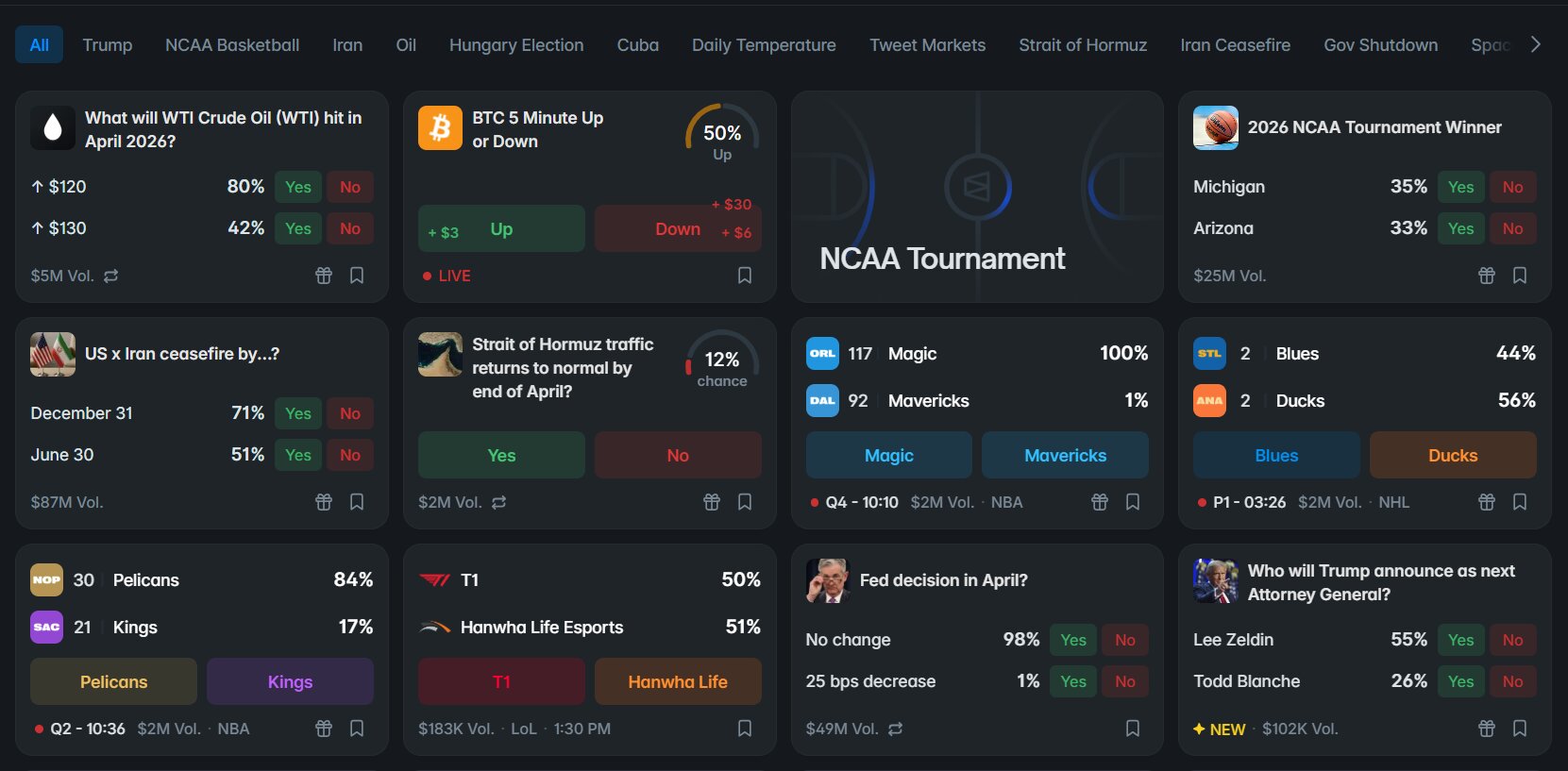
Polymarket’s design emphasizes transparency and self‑custody, as trades occur on the Polygon blockchain through smart contracts. Now, because of this, there is no single point of failure, and even if the website goes down, your positions remain on the blockchain and can be accessed through your wallet. The platform has had no major hacks as of today, and its contracts have been audited by external firms.
You can connect your own wallet (MetaMask, Coinbase Wallet, or another WalletConnect option) and hold your USDC there. Also, since you hold the private keys, Polymarket cannot seize your funds or stop you from withdrawing them.
You can trade pseudonymously by linking a wallet. The regulated U.S. version, however, requires full KYC, including an ID, Social Security number, and proof of residency. But again, that data is stored under regulatory oversight. Also, because the platform uses a public blockchain, your trades are eventually transparent to anyone who knows your wallet address, though your name is not attached unless you disclose it.
Polymarket does not require KYC from global users, but for U.S. residents, it is mandatory to perform ID verification on its licensed subsidiary. You should expect to provide a government-issued ID, a selfie, and your residential address if you want to use the regulated US platform. The platform uses a service called “Sumsub” to process these checks, and they usually take about 15 minutes to approve your account.
Note: High‑volume traders on the global site may also face additional checks to comply with anti‑money‑laundering rules.
Polymarket is considered a highly safe platform because it has operated since 2020 without any major security breaches or lost user funds. The platform relies on the “UMA Optimistic Oracle”. Well, this is a decentralized system where people stake money to ensure that market results are reported correctly. Now, if someone tries to lie about the outcome of an event, they lose their stake, and the community votes on the truth. This creates a very strong incentive for honesty.
Polymarket announced its fees on March 30, 2026, and it is no longer a near-zero fee platform. The platform now uses a dynamic taker fee system for most markets. You pay higher fees when the outcome is uncertain, and lower fees when the result is almost clear.
Basically, fees are highest around the 50% probability level and go close to zero when the probability is very high or very low.
Well, this new system helps improve liquidity, rewards market makers, and also helps the platform earn revenue. Polymarket mainly charges fees only to takers. This means users who place instant trades against existing orders, and makers, who add liquidity to the market, do not pay fees and can even earn small rebates in some cases.
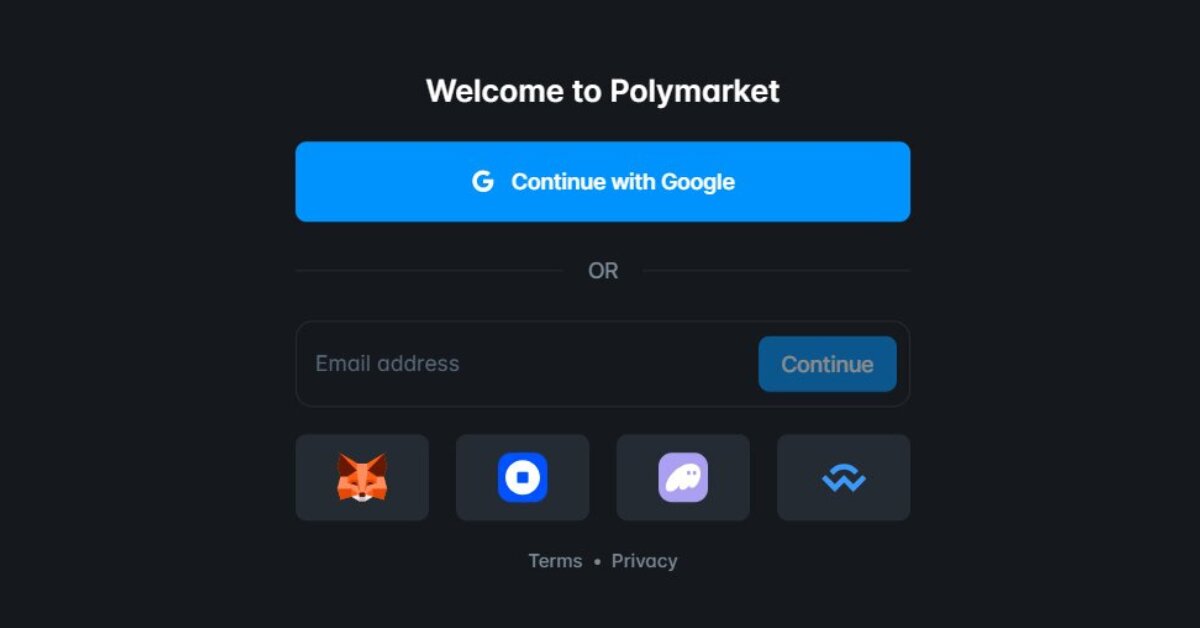
Step 1: Connect Your Identity
You can use a Google account, an email address, or a hardware wallet like Ledger. The platform will create a special “proxy” wallet on the Polygon network for you. Here, the site will also check your IP address to ensure you are not in a restricted country.
Step 2: Deposit Funds
You must send USDC to the specific address shown in your account dashboard. You can also send other cryptocurrencies like USDT, BTC, and ETH, but these will be converted to USDC after deposit, and you might notice some spread as well.

Step 3: Choose a Market
You can use the search bar or the categories to find an event you want to trade. Now, enter the amount of USDC you want to spend and click “Buy”. Now, you can monitor your positions on the portfolio page, sell early, or wait for resolution. Also, because your funds stay in your wallet, withdrawing is as simple as sending USDC back to an exchange.

Polymarket supports multiple deposit methods such as cryptocurrency, credit/debit card, exchange transfer, and bank deposits for verified U.S. clients.
| Crypto transfer | Send USDC on the Polygon network from your own wallet. |
| Other crypto assets | Deposit BTC, ETH, USDT, LTC, or similar coins. |
| Credit/debit card via MoonPay | Buy USDC directly with a card. |
| Coinbase Pay or exchange transfer | Move USDC from your exchange account. |
| Bank account transfer (U.S. version) | Fund through a regulated broker. |
Yes, it is really easy to withdraw money from Polymarket. You can just click on your balance and select the “Withdraw” option. Then, you need to enter the amount and the destination wallet address on the Polygon network. Because the platform is non-custodial, the withdrawal happens as soon as the Polygon blockchain processes the transaction. This usually takes about 30 seconds. You can easily withdraw funds to your favorite exchanges like Binance, MEXC, or Coinbase.
Withdraw to Binance and start trading globally — sign up now!
Also, you can now use cross-chain bridges directly inside the Polymarket interface. Basically, this means you can withdraw your USDC on Polygon and have it arrive in your wallet on Ethereum, Base, or Arbitrum. These bridges take a bit longer, usually 10 to 20 minutes, and you might notice some hidden spreads.
Polymarket provides support primarily through digital channels rather than traditional phone-based help desks. You can find a “live chat” button on their website. It is usually staffed by support agents during business hours. They also have a very active “Discord” server where you can ask questions and get help from community moderators. Generally, the response time for a standard support ticket is about 24 hours.
The user experience on Polymarket is excellent and has been designed to feel more like a modern trading app than a complicated crypto tool. You will find that the interface is incredibly fast and responsive, even during high-traffic events.
Also, the platform recently released a dedicated mobile app for the US market, while global users usually stick to the mobile-optimized web version. Well, both versions are very clean and hide the technical blockchain details from the user.
You can see exactly how the market’s opinion has changed over time as new information comes to light. Obviously, some advanced traders might find the lack of complex technical analysis tools a bit limiting, but for 95% of users, it is perfect. The search function is also very powerful and easily allows you to find niche markets by just typing in a few keywords.
You must understand that prediction markets are zero-sum games where for every winner, there is always a loser on the other side of the trade. Here are some tips to consider:
Polymarket is best suited for you if you enjoy data-driven decision-making and want to turn your opinions into real trades. It works well if you follow news, politics, crypto trends, or global events and feel confident predicting outcomes.
The platform fits you if you prefer simple “Yes/No” markets instead of complex trading tools. It also suits you if you are comfortable using crypto wallets and handling on-chain transactions.
The top Polymarket alternatives are Kalshi, Opinion.trade, predictIt, and Limitless.exchange. Here is a quick comparison:
| Platform | Launched Date | Supported Markets | Liquidity & Trading Volume | Fees | U.S. Availability |
| Polymarket | 2020 | Politics, sports, crypto, economics, tech, global events | Very High | Variable on winning trades (taker fee), no deposit/withdrawal fees | Limited (invite-only, regulated version) |
| Kalshi | 2018 | Economics, politics, inflation, weather, and financial indicators | High | Per-contract fee (varies, typically ~$0.01-$0.07) | Fully available |
| Opinion.trade | 2023 | Crypto trends, social sentiment, internet culture, niche events | Low | Low trading fees (varies, often spread-based) | No |
| PredictIt | 2014 | U.S. politics only (elections, policy outcomes) | Medium | 5% profit fee + withdrawal fee | Available (restricted limits) |
| Limitless.exchange | 2024 | Crypto, macro events, prediction trading (DeFi-focused) | Low to Medium | Minimal DeFi fees (gas + protocol fee) | No |
To sum up our Polymarket review, it is a legitimate, regulated prediction market and a permissionless trading platform globally. It offers a wide range of markets, low fees, and full transparency. Plus, the use of USDC makes pricing clear, and the non‑custodial design means you keep control of your money.
The shift toward a regulated US presence in late 2025 has made it much more trustworthy for the average person who was previously worried about the “crypto” label. Anyway, the best way to learn is to just jump in and try a small trade on something you know well.
The post Polymarket Review 2026: What It Is and How It Works appeared first on CryptoNinjas.





