
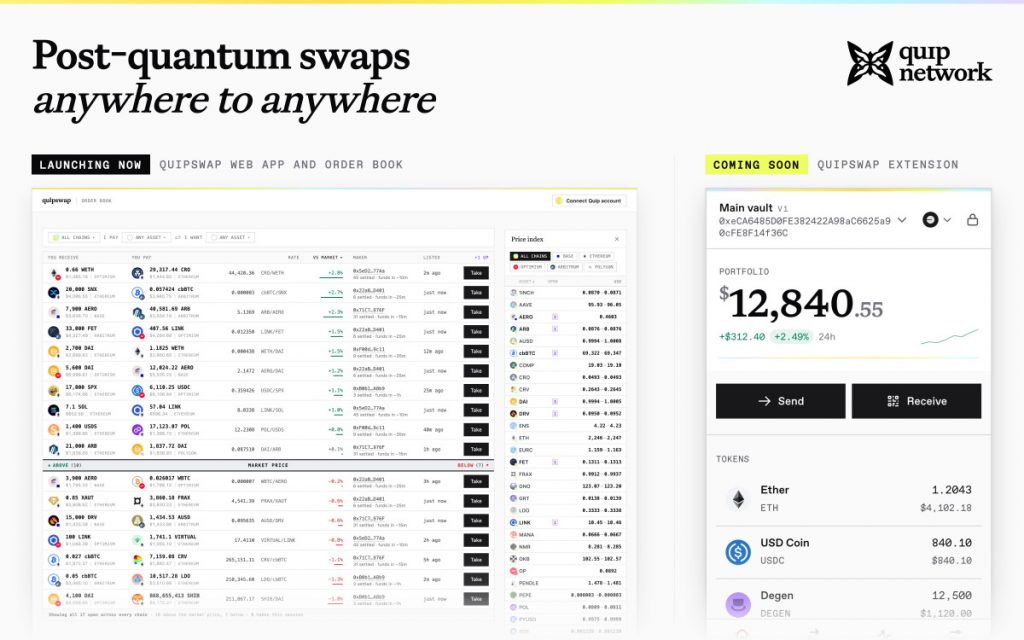
Postquant Labs, the developer behind the quantum computing protocol quip.network, has announced the public launch of QuipSwap, a Bridgeless Swap Protocol engineered to eliminate cross-chain security vulnerabilities and counter the cryptographic risks posed by advancing quantum computing.
The protocol represents the industry’s first mechanism for executing trustless cross-chain transactions without relying on bridges, oracles, or wrapped assets—infrastructure components that have historically functioned as the primary attack vectors behind billions of dollars in exploits.
Conventional cross-chain solutions depend on centralized intermediaries or smart contract bridges to transfer assets between isolated blockchains, creating persistent custody and manipulation risks. QuipSwap departs from this model by utilizing a peer-to-peer architecture in which two counterparties agree to a swap and effectively exchange wallet access across chains through a synchronized, trustless process.
“If one party claims their side of the trade, the counterparty immediately receives their claim key too—no take-backs. You can be on any chain and treat it like a P2P swap. No intermediaries holding your funds, no oracles to manipulate, no bridges to hack, and no endless waiting for quantum-resistant upgrades,” explained Colton Dillion, CEO and co-founder of Postquant Labs in a written statement. “It’s a huge win for everyone who isn’t a bad actor and eliminates several looming quantum threats. Users get to keep their favorite assets and strategies on their favorite chains while still participating in the Quip ecosystem, with full access to our quantum computer network no matter where they hold funds,” he added.
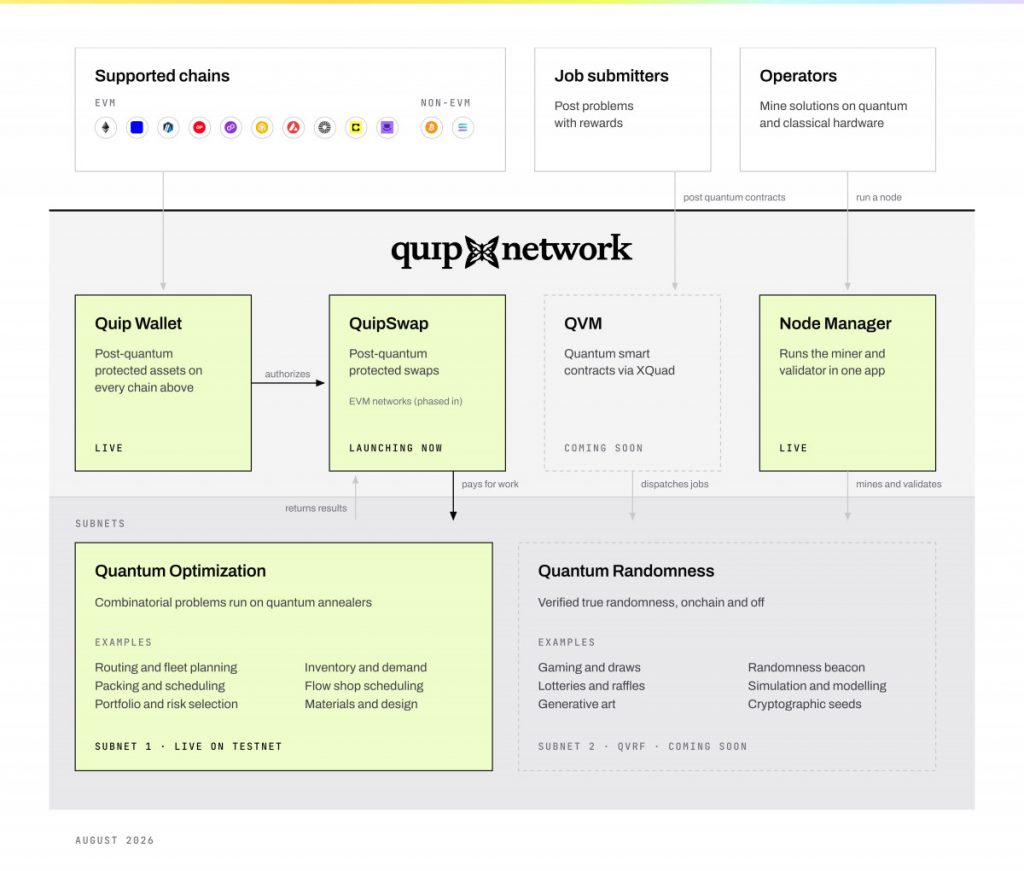
The timing of the launch reflects growing urgency around quantum resistance. As quantum hardware matures, the cryptographic primitives securing current blockchains face potential compromise. Postquant Labs contends that isolated chain upgrades are inadequate because a transaction is only as secure as its weakest link; every intermediary layer must be quantum-resistant to guarantee end-to-end protection. Because no major blockchain currently supports native quantum computation and no existing bridge or exchange handles quantum-resistant transactions, the team built proprietary infrastructure to close the gap.
“You can’t run a distributed computation network where your own miners can break your cryptography. No chain supports quantum computation, so we had to build our own,” said Dr. Richard Carback, Chief Technology Officer and co-founder of Postquant Labs in a written statement. “No bridge or exchange supports quantum-resistant transactions either, so we had to fill the void. Our bridgeless, peer-to-peer protocol sidesteps the problem entirely by removing the intermediaries that would otherwise need to be upgraded. It’s the only path to a truly secure, quantum network that you can access from anywhere,” he added.
Following a successful live claim demonstration at ETHDenver in February, the team finalized the core codebase and subjected the protocol to extensive testing alongside a formal security audit conducted by Oak Security.
Concurrently, quip.network has rolled out quantum-resistant wallets for Bitcoin, Ethereum, and Solana, presently in beta, to reinforce blockchain infrastructure against anticipated quantum threats. All research underpinning the network remains open-source, aimed at establishing an industry-wide quantum computing standard that ensures long-term resilience across heterogeneous blockchain environments.
The post Postquant Labs Launches First Quantum Cross-Chain Swaps, Eliminating Bridge And Oracle Attack Vectors appeared first on Metaverse Post.





