
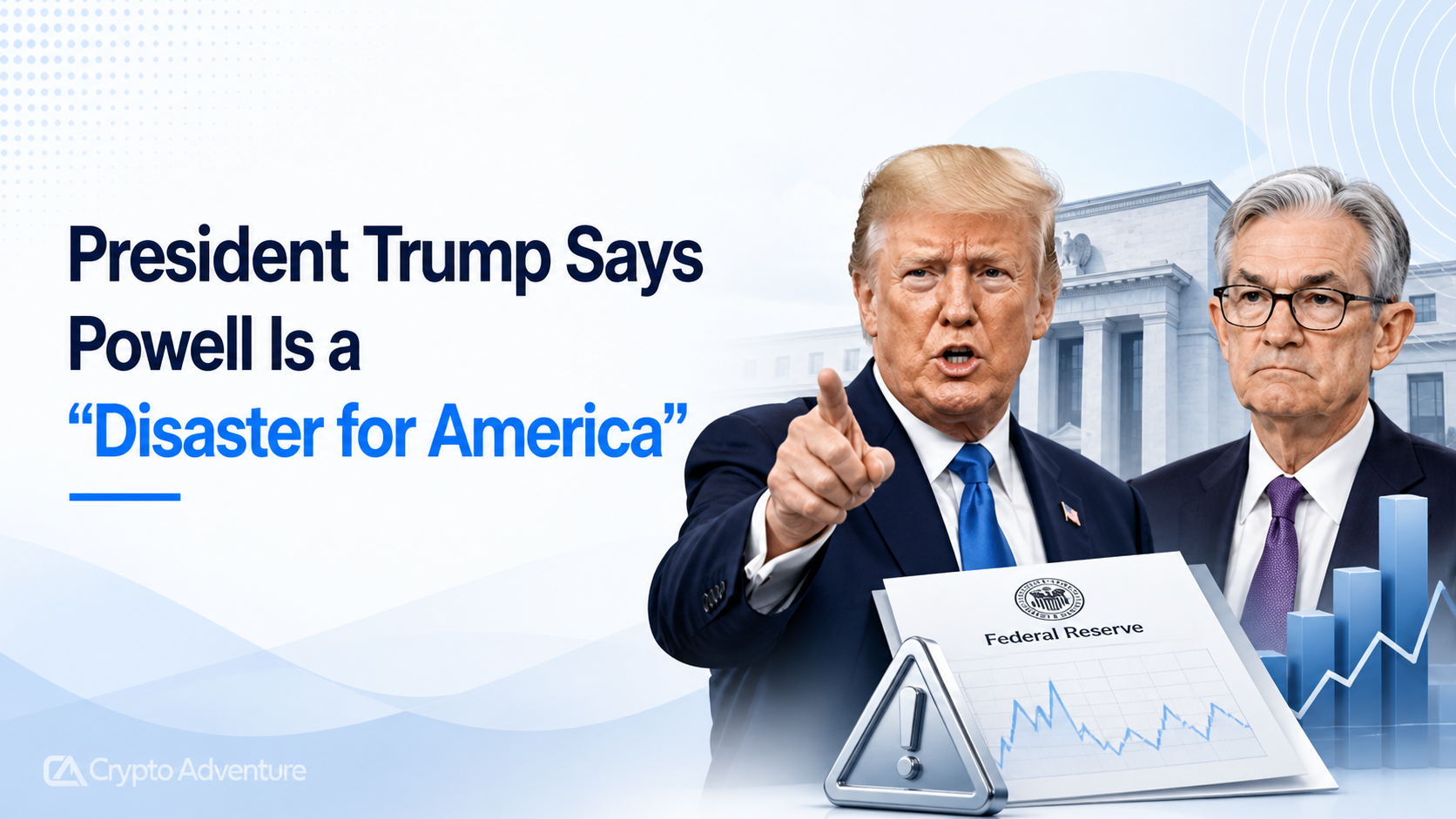
President Donald Trump has renewed his attack on Federal Reserve Chair Jerome Powell as borrowing costs remain elevated across Treasuries, mortgages, and risk markets.
Trump said Powell is a “disaster for America” and argued that interest rates are “too high,” according to a May 4 Reuters update. The criticism extends a months-long pressure campaign against the central bank at a time when markets are already pricing higher inflation risk, rising long-end yields, and weaker affordability for U.S. households.

The timing is important because the Fed did not cut rates at its latest meeting. The Federal Reserve’s April 29 FOMC statement kept the target range for the federal funds rate at 3.5% to 3.75%, while noting that inflation remains elevated and that Middle East developments have increased uncertainty around the economic outlook.
Trump wants lower rates to ease financial pressure on households, businesses, and the housing market. The bond market is sending a more complicated signal. Yields are rising because traders are still worried about inflation, energy costs, federal debt supply, and whether the Fed can cut aggressively without reigniting price pressure.
The 10-year Treasury yield rose to around 4.44% to 4.45% on May 4, according to Trading Economics. The move keeps the benchmark rate close to the 4.50% area that traders watch for stress across mortgages, corporate credit, equities, and crypto.
Mortgage costs are also staying high. Mortgage News Daily placed the average 30-year fixed mortgage rate at 6.56% on May 4, up 12 basis points on the day and at its highest level in more than a month. That keeps housing affordability under pressure even without another Fed hike, because mortgage rates move with Treasury yields, mortgage-backed securities pricing, inflation expectations, and lender risk premiums.
The long end of the bond market is carrying much of the strain. MarketWatch noted that the 30-year Treasury yield moved above 5%, its highest level in nearly a year, while the Wall Street Journal tied the rise in yields to inflation concerns, government debt pressure, and the ongoing Iran war. That combination makes Trump’s call for lower rates politically powerful but difficult for the Fed to answer quickly.
The crypto market is exposed to this fight through liquidity. Bitcoin and large-cap crypto assets usually benefit when investors expect lower real yields, easier financial conditions, and stronger ETF demand. Higher Treasury yields can work in the opposite direction by strengthening cash returns, tightening borrowing conditions, and reducing demand for speculative assets.
A recent crypto market snapshot showed Bitcoin climbing as ETF inflows improved and traders priced a softer geopolitical shock. That move becomes harder to sustain if the 10-year yield keeps pressing toward 4.50% and the 30-year yield remains above 5%.
Bond volatility is already feeding into crypto risk discussions. A separate 2-year Treasury yield spike update showed how quickly rates-market stress can draw attention from Bitcoin traders, especially when front-end yields move sharply and liquidity questions return.
The deeper issue is that Trump’s rate pressure is colliding with a market that is not yet convinced inflation risk is gone. If oil stays elevated, yields remain firm, and mortgage rates hold above 6.5%, the Fed faces political pressure to cut while bond investors demand compensation for inflation and debt risk. That leaves Bitcoin trading between two forces at once: easier-policy hopes from Washington and tighter financial conditions from the Treasury market.
The post Trump Attacks Powell As Bond Yields And Mortgage Rates Stay High appeared first on Crypto Adventure.





