
Crypto whales and longstanding investors are currently divesting in large quantities, placing continuous downward pressure on prices. This behavior resembles the period following the dot-com stock market collapse in the early 2000s, where tech stocks plunged by up to 80%, leading to over a decade of market stagnation before reaching previous highs again.
During that time, venture capitalists, locked into their investments due to mandated holding periods, were forced to hold or sell at distressed prices. This selling pressure extended into the broader market, delaying recovery. As one analyst explained:
“Many stocks traded below their IPO prices. We see a similar situation unfolding now, with venture capitalists and insiders selling during rallies, creating persistent sell-side pressure across assets like Solana, Ethereum, and Bitcoin.”
Visser clarified that a similar prolonged timeline is unlikely for crypto markets. Instead, he pointed to the dot-com crash’s aftermath as an analogy for the current sell-side dynamics, suggesting the ongoing consolidation phase could end within a year, paving the way for renewed upward movement.
The analysis emerges amid growing concerns that Bitcoin and broader crypto markets are experiencing a bear trend, confirmed by recent price declines in October, prompting many analysts to lower their bullish forecasts for the asset class.
Related: $100B in Old Bitcoin Moved, Raising ‘OG’ Versus ‘Trader’ Debate
Several analysts interpret Bitcoin’s recent price action as a sign of a potential bottom near $100,000. However, concerns remain that continued selling pressure might push the price back down to around $92,000 if demand does not pick up significantly.
While long-term holders and whales typically sell at all-time highs, their sales are not inherently problematic, according to crypto analyst Julio Moreno. Instead, the issue lies in the shrinking demand that fails to absorb the increasing Bitcoin supply on the market, a situation that could extend the consolidation phase.
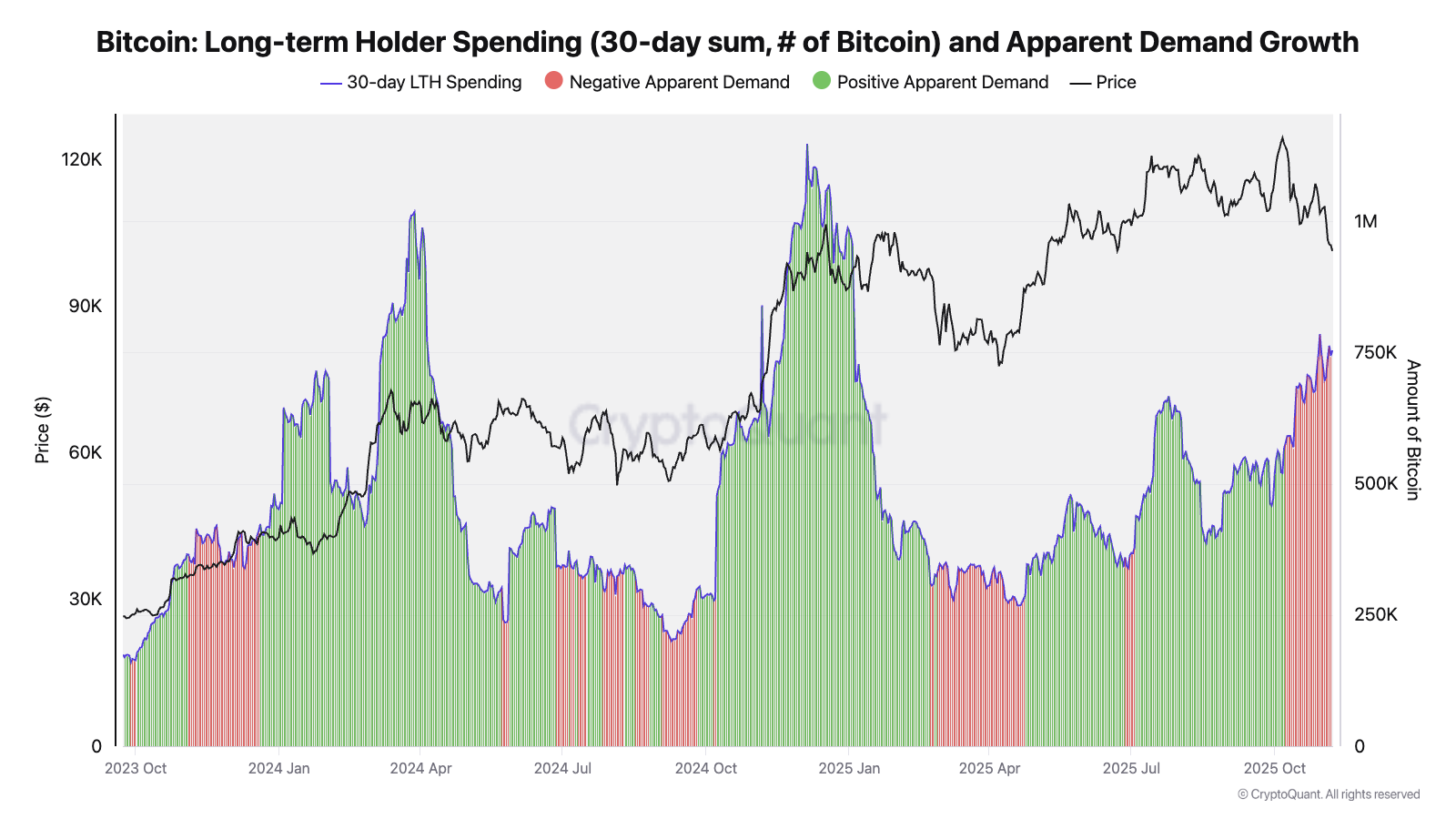
Moreno emphasized that this increased selling is matched by a decline in buyer demand, suggesting a need for a rebound in interest to stabilize prices and trigger a new bullish phase.
As the broader crypto markets navigate this period of uncertainty, the next few months could prove pivotal in determining whether Bitcoin and other cryptocurrencies establish a firm bottom or experience further declines.
This article was originally published as Crypto Market Trends Mirroring Early 2000s Stock Boom — Expert Analysis on Crypto Breaking News – your trusted source for crypto news, Bitcoin news, and blockchain updates.