
Ripple USD transfer volume has grown roughly ninefold over the past year, according to DeFiLlama’s quarterly RLUSD volume chart, giving Ripple’s dollar-backed stablecoin a stronger adoption signal in a market still dominated by USDT and USDC.
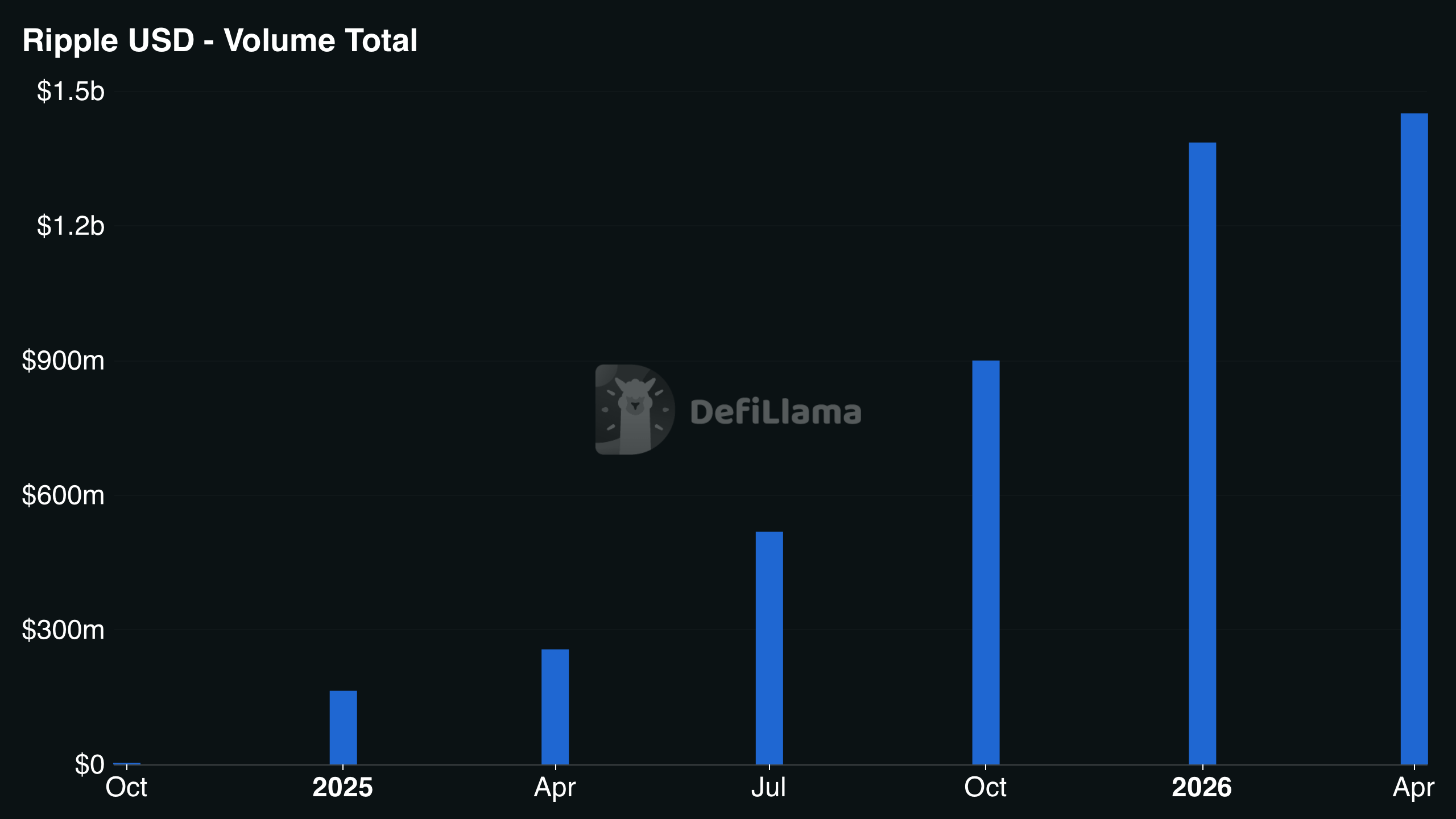
Stablecoin growth is strongest when supply is matched by real movement across wallets, exchanges, settlement flows, and trading infrastructure. RLUSD’s transfer-volume jump gives the market a clearer sign that the token is moving beyond launch-stage visibility and into broader usage.
DeFiLlama currently lists RLUSD with a market cap of about $1.54 billion and classifies it as a fiat-backed stablecoin. Its stablecoin profile states that Ripple USD is “designed to maintain a constant value of one US dollar” and is natively issued on both XRP Ledger and Ethereum.
The volume trend gives RLUSD a cleaner market story than supply growth alone. A stablecoin can show a large market cap because tokens were minted, but transfer volume gives a better view of whether users are actually moving the asset through payment flows, exchange activity, treasury management, or settlement routes. For a newer dollar token, that difference is important because liquidity and repeat usage are what turn a launch into durable market infrastructure.
Ripple’s own stablecoin materials frame RLUSD as a regulated, payment-focused dollar token built for businesses, exchanges, and settlement use cases. Ripple says RLUSD is backed by segregated reserves of cash and cash equivalents and redeemable 1:1 for U.S. dollars, subject to availability by jurisdiction.
RLUSD is taking a different route from stablecoins that grew mainly through retail trading depth, offshore exchange liquidity, or DeFi incentives. Ripple is leaning on compliance, reserve transparency, XRP Ledger settlement, Ethereum issuance, and institutional payment use cases.
That gives the token a more institutional lane in the stablecoin market. XRP Ledger support can make RLUSD useful for fast settlement and payment routing, while Ethereum issuance keeps it connected to the broader smart-contract economy. The challenge is turning those rails into consistent volume, deeper exchange liquidity, and real demand from businesses that need regulated dollar movement without relying only on traditional banking hours or slower settlement systems.
The timing also fits the wider stablecoin policy fight in the United States. Lawmakers are still debating how dollar-backed tokens should interact with banks, payment rewards, exchange liquidity, and reserve rules, while the CLARITY Act’s stablecoin-yield dispute shows how sensitive digital-dollar incentives have become.
RLUSD is still small compared with the largest stablecoins, but the transfer-volume spike gives the market a more useful signal than branding alone. If volume continues to rise, Ripple’s stablecoin will be judged less by its launch narrative and more by whether it can keep attracting real settlement activity, trading demand, and liquidity across the XRP Ledger, Ethereum, and centralized exchange rails.
The post RLUSD Transfer Volume Jumps 9x As Stablecoin Adoption Gains Speed appeared first on Crypto Adventure.





