Russia has moved to shut down crypto mining operations across 13 regions, targeting an estimated 50,000 miners in what amounts to the most sweeping enforcement action since the country legalized the activity in August 2024.
The bans, extending through 2031 during peak autumn-winter seasons, signal that Moscow’s tolerance for grid-straining mining has hit a structural limit, not just a seasonal one.
The immediate pressure is energy: affected Siberian regions are reporting shortfalls of nearly 3,000 MW on the Unified Energy System grid, driven largely by miners exploiting cheap, heavily subsidized local electricity. That’s not a rounding error – it’s a grid crisis, and Russian officials are treating it as one.
Key Takeaways:
Discover: Top Crypto Presales to Watch Before They Launch
The mechanics are straightforward: registered and unregistered miners in covered regions are prohibited from operating during designated periods, with enforcement escalating to include FSB agents, drones, and surveillance technology in areas like Kabardino-Balkaria, where illegal operations hidden in abandoned buildings caused over 1 billion rubles ($13 million) in utility damages in 2025 alone.
The regional selection isn’t arbitrary. Irkutsk Oblast faces a full-year ban – its southern areas were already restricted earlier in 2025, freeing up 320 MW – because it anchors the cheap-power arbitrage that made Siberia a global mining hub in the first place.
The North Caucasus republics (Dagestan, North Ossetia-Alania, Ingushetia, Chechnya, Kabardino-Balkaria, and Karachay-Cherkessia) are included because illegal mining there has metastasized beyond regulatory reach.
The inclusion of occupied Ukrainian territories – Donetsk, Luhansk, Zaporizhzhia, and Kherson – reflects Moscow’s intent to consolidate energy control in those regions rather than tolerate gray-market extraction.
Power officials in Buryatia welcomed the year-round bans, with TASS and Kommersant reporting officials cited relief from “serious” shortages. The Industrial Mining Association took the opposite view, stating the restrictions “reduce [Southern Siberia’s] attractiveness to investors” and leave miners “vulnerable.” Both reactions are accurate – which is precisely what makes this ban structurally significant rather than cosmetic.
Russia currently accounts for roughly 5% of global Bitcoin hash rate, according to Cambridge Centre for Alternative Finance data – a share built almost entirely on the cheap, subsidized electricity now being clawed back.
Displacing 50,000 operators from that base doesn’t evaporate hash rate; it redistributes it, and the redistribution logic points toward the United States, Kazakhstan, and parts of Central Asia as the most likely beneficiaries.
That matters because hash rate geography isn’t just a mining industry statistic – it shapes where block rewards flow, which jurisdictions capture mining revenue, and how resilient the network is to coordinated regulatory pressure.
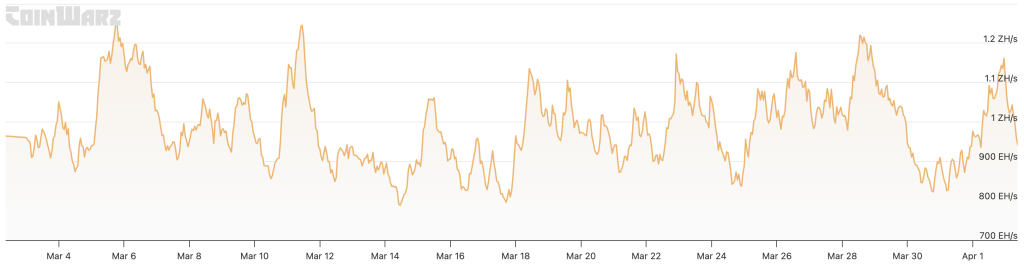
A meaningful contraction in Russian hash rate tightens the global difficulty adjustment modestly in the short term, briefly improving margins for miners elsewhere before difficulty recalibrates. Bitcoin’s broader market performance adds another variable: compressed miner margins in a sideways or declining price environment accelerate the exit of marginal operators, potentially amplifying the hash rate shift beyond what the Russian ban alone would produce.
BitRiver – the largest industrial mining operator in Russia, anchored to Irkutsk’s power infrastructure – faces the most acute operational exposure. Its model was built on energy-cost arbitrage that the Russian state is now explicitly dismantling.
Explore: Best Crypto Projects With High Growth Potential in 2026
The post Russia Targets 50,000 Miners as Crypto Mining Banned in 13 Regions appeared first on Cryptonews.





