
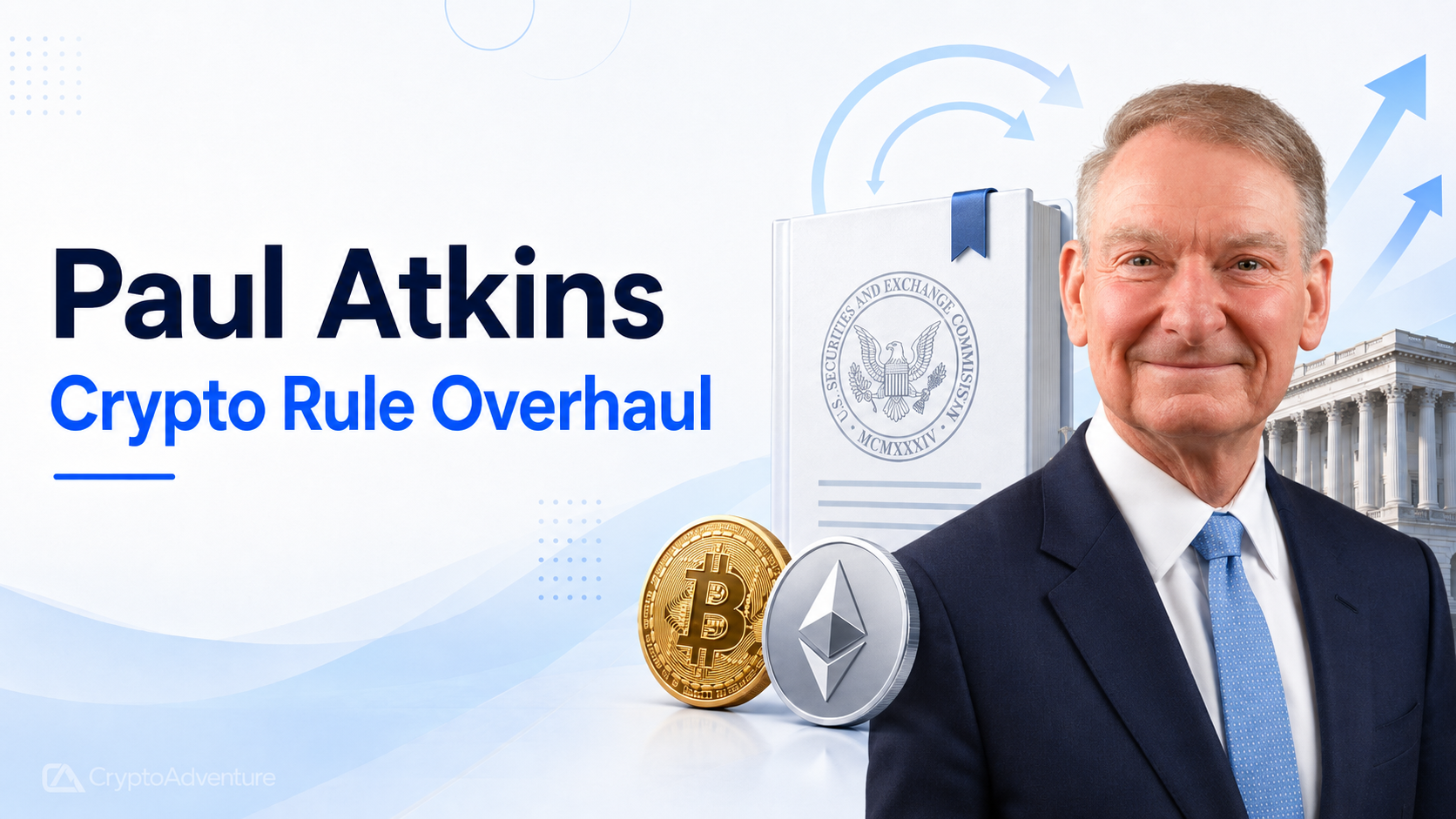
SEC Chair Paul Atkins has put onchain financial markets back at the center of U.S. crypto regulation, outlining a potential rule overhaul for trading systems, broker-dealer activity, instant settlement, and yield-generating crypto vaults.
In remarks at the Special Competitive Studies Project AI+ Expo, Atkins framed the current rulebook as built around separate market functions: brokers, dealers, exchanges, clearing agencies, and transfer agents. Onchain systems often combine those functions inside one automated stack, where a protocol can execute trades, manage collateral, route liquidity, run vault strategies, and settle transactions within seconds.
That creates a regulatory mismatch. A decentralized or hybrid platform may not fit cleanly into one legacy category, yet the activity can still touch securities law, investor protection, custody, market access, and settlement risk. Atkins’ remarks point to a more tailored SEC approach built through guidance, exemptions, and notice-and-comment rulemaking.
The first area is the definition of an exchange. Atkins said the Commission should consider how that definition applies to onchain trading systems, including a possible future framework for platforms that do not look like traditional securities exchanges but still organize liquidity and execution.
The second area is broker-dealer clarity. The SEC is reviewing how broker and dealer rules apply to onchain activity, including software interfaces that help users access decentralized markets. That distinction matters for wallets, front ends, aggregators, routers, and applications that sit between users and liquidity without always taking custody or acting like classic brokers.
The third area is clearing and settlement. Atkins pointed to blockchain systems where settlement is near-instantaneous and counterparty risk is managed algorithmically. In those cases, the traditional clearing agency model may need a fresh review because the settlement function can be embedded into the protocol rather than handled through a separate intermediary.
That could become one of the most important pieces of the overhaul. Instant or near-instant settlement changes how markets handle collateral, failed trades, counterparty exposure, liquidity routing, and finality. The policy question is not only whether blockchains can settle faster. It is how securities rules should treat systems where execution, collateral, clearing, and settlement happen together.
The fourth area is crypto vaults. Atkins described vaults as onchain software applications that allow users to earn yield passively by deploying assets into yield-generating opportunities. That puts products tied to DeFi yield, automated strategy execution, tokenized assets, and managed onchain exposure closer to Securities Act and Advisers Act questions.
Yield is already one of the most sensitive crypto policy lines in Washington. Recent CLARITY Act negotiations have centered partly on whether certain rewards resemble bank-like interest or platform activity incentives. Atkins’ vault comments bring that same pressure into DeFi-style products, where the yield source can involve lending, staking, liquidity provision, basis trades, tokenized real-world assets, or layered strategies.
The timing matters because regulated onchain finance is already moving faster than the rulebook. Tokenized securities projects are trying to combine issuance, transfer-agent records, broker-dealer controls, KYC-enabled wallets, secondary liquidity, and settlement flows. Recent tokenized-equity infrastructure on Solana shows how regulated market structure, DeFi distribution, and liquidity provision are beginning to merge.
Atkins also repeated his call for Congress to send the CLARITY Act to President Trump, arguing that rulemaking can help but statutory language would be stronger. That keeps the SEC’s work tied to the broader market-structure fight over which assets fall under SEC oversight, which activities move to the CFTC, and how centralized intermediaries, DeFi interfaces, and tokenized securities should operate in the same U.S. market.
For Bitcoin and major crypto assets, the immediate impact is not a new rule taking effect overnight. The importance is direction. The SEC is no longer only debating whether crypto fits old boxes. It is preparing to redraw the boxes around exchange activity, broker access, custody, settlement, and yield. If those proposals move forward, the largest winners will be platforms that can prove how liquidity is routed, who controls assets, how transactions settle, and where investor risk sits before capital touches the chain.
The post SEC Chair Paul Atkins Opens Door To Onchain Crypto Rule Overhaul appeared first on Crypto Adventure.





