The whales aren’t just taking profits from Bitcoin’s recent highs. They’re systematically repositioning their portfolios away from digital gold and into two specific altcoins that offer something Bitcoin simply can’t match: actual utility and yield. This isn’t panic selling or FOMO buying. It’s a calculated strategy by institutions who understand where crypto is headed next.

The numbers tell a clear story that most people aren’t paying attention to. In August 2025 alone, retail investors dumped $760 million worth of Bitcoin while whales used the weakness to strategically reposition. But here’s the twist: they’re not just accumulating more Bitcoin at lower prices like previous cycles.
On-chain data reveals that 31,967 BTC worth $3.78 billion moved from long-term holders who had been dormant for 3–5 years. One massive whale transferred 3,000 BTC ($353 million) to new wallets after five years of complete inactivity. These aren’t random moves. When Bitcoin veterans who survived multiple cycles start moving their stacks, it signals a fundamental shift in thinking.
The Altcoin Season Index climbed to 40%, a level last seen before the explosive 2021 rally. This metric measures where institutional money is flowing, and it’s screaming one message: the smart money is diversifying beyond Bitcoin-only strategies.
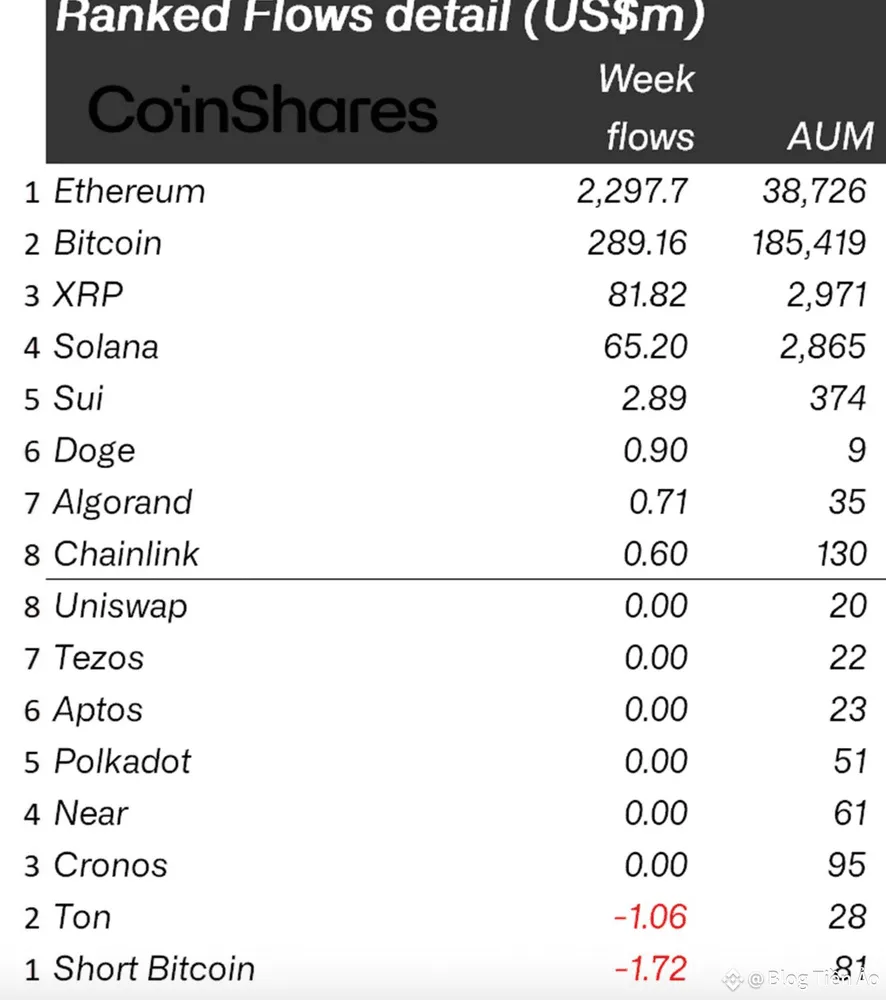
Ethereum has become the primary destination for fleeing Bitcoin capital, and the reasons are impossible to ignore. Whales have accumulated 681,103 ETH worth $2.57 billion since July 2025. In just 48 hours recently, top holders scooped up over 220,000 ETH worth $840 million.
Major institutions like Bit Digital explicitly switched their treasuries from BTC to ETH, selling 280 Bitcoin to raise $172 million for Ethereum accumulation. This isn’t just speculation. It’s corporate strategy based on fundamental advantages that Bitcoin can’t compete with.
Ethereum offers staking yields of 3.5–4% APY with 35 million ETH already locked up. Unlike Bitcoin’s fixed supply that just sits there, Ethereum generates income for holders while the network experiences deflationary pressure with -0.5% annual inflation post-Pectra upgrade.
ETF inflows are telling the same story. Ethereum ETFs saw $402.5 million in single-day inflows, actually outpacing Bitcoin’s $363 million. When traditional finance institutions can choose between Bitcoin and Ethereum through regulated products, they’re increasingly choosing the blockchain that does more than just store value.

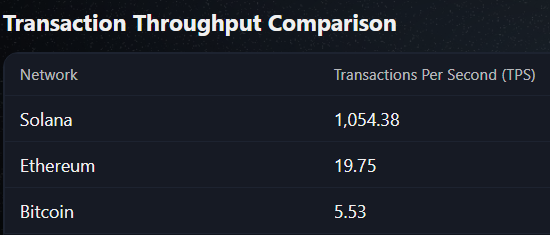
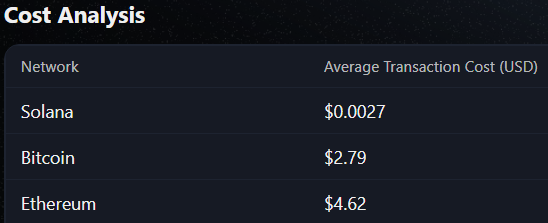
While Ethereum wins on security and decentralization, Solana is capturing whales who prioritize performance and cost efficiency. The network processes $37 billion in daily transactions compared to Bitcoin’s $22 billion, despite being a fraction of Bitcoin’s age.
Solana’s stablecoin supply crossed $12 billion in 2025, with nearly half migrating directly from Ethereum. This represents 156% growth and positions Solana as the second-largest blockchain by Total Value Locked. When institutions need to move large amounts of capital quickly and cheaply, Solana has become the obvious choice.
The technical improvements are massive. The Firedancer client now runs 7% of the network, boosting speed and reliability. Transaction delays have been virtually eliminated, addressing the main concerns that previously kept institutional money away.
Major asset managers filed Solana ETF applications with 95% approval probability for 2025. VanEck, Grayscale, Bitwise, and others are betting that regulated Solana exposure will attract billions in institutional capital that currently can’t access the ecosystem.
Here’s what most Bitcoin maximalists refuse to acknowledge: institutional money needs to be productive. Treasury managers can’t just buy assets that sit there hoping for price appreciation. They need yield, utility, and growth.
Bitcoin offers none of these things. It’s digital gold, which is valuable, but it doesn’t generate cash flow or enable complex financial strategies. Ethereum and Solana both offer multiple ways to put capital to work through staking, DeFi protocols, and yield farming.
Ethereum’s 29.4% staking rate provides institutional-grade passive income while supporting network security. Solana’s REX-Osprey Staking ETF launched with 7.3% annual yields, giving traditional investors direct exposure to both price appreciation and staking rewards.
When Federal Reserve rate cuts make traditional fixed-income assets less attractive, crypto assets that generate yield become incredibly compelling to institutional portfolios managing billions of dollars.

Crypto Twitter tells the real story of where sophisticated money is moving. While Bitcoin discussions focus on price targets and store-of-value narratives, Ethereum and Solana conversations center on ecosystem growth, developer activity, and real-world adoption.
Recent whale movements generated massive social media discussion. One post noted: “ethereum whales bought $300m worth of $ETH over the past 24 hours” while “solana whales just dumped $50m worth of $SOL.” The pattern is clear: Ethereum is seeing sustained accumulation while Solana experiences healthy profit-taking and re-accumulation cycles.
Academic research confirms that Whale Alert Twitter data significantly influences cryptocurrency markets. When these large movements become public knowledge, they create momentum that attracts additional institutional capital seeking similar positioning.

Policy changes are making altcoin diversification not just attractive but necessary. The Trump administration’s crypto-friendly policies unlocked $43 trillion in retirement savings for digital asset allocation. The GENIUS Act’s stablecoin framework and SEC guidance on liquid staking reduced institutional friction specifically for Ethereum and Solana adoption.
Unlike Bitcoin’s regulatory uncertainty around energy usage and mining centralization, both Ethereum and Solana have clearer paths to institutional adoption. Ethereum’s proof-of-stake consensus and Solana’s energy-efficient architecture align with ESG investment mandates that increasingly influence institutional decisions.
JPMorgan forecasted $60 billion in institutional crypto investment by 2025, with significant allocation expected toward utility-focused altcoins rather than pure store-of-value plays.
This rotation represents a fundamental shift in how sophisticated investors view cryptocurrency portfolios. The 2025 altcoin migration is institutional-led rather than retail-driven, focused on productive assets rather than speculative plays.
Whales are prioritizing blockchains with real utility, sustainable yields, and institutional-grade infrastructure. Bitcoin still serves as digital gold, but modern crypto portfolios require diversification into networks that generate cash flow and enable complex financial strategies.
For entrepreneurs looking to capitalize on this institutional evolution, platforms like Rocket Suite are making it easier than ever to participate in the growing token economy. This all-in-one tool helps launch professional memecoin projects on Base and Ethereum with comprehensive features including automated volume simulation to help new tokens rank higher on Dexscreener and Dextools.
The data suggests this whale migration represents structural rather than cyclical change. Institutional investors increasingly view cryptocurrency portfolios as requiring diversification beyond Bitcoin into productive, yield-generating blockchain ecosystems.
Ethereum attracts security-focused institutions prioritizing decentralization and mature DeFi infrastructure. Solana appeals to performance-oriented players seeking high-throughput applications and ultra-low transaction costs. Both offer something Bitcoin cannot: the ability to generate income while holding.
The smart money isn’t abandoning Bitcoin entirely, but they’re acknowledging its limitations in a maturing market where yield and utility matter more than pure speculation. As regulatory clarity improves and institutional infrastructure expands, expect this trend to accelerate throughout 2025 and beyond.
Why Whales Are Moving Money Out of Bitcoin Into These 2 Altcoins Instead was originally published in Coinmonks on Medium, where people are continuing the conversation by highlighting and responding to this story.