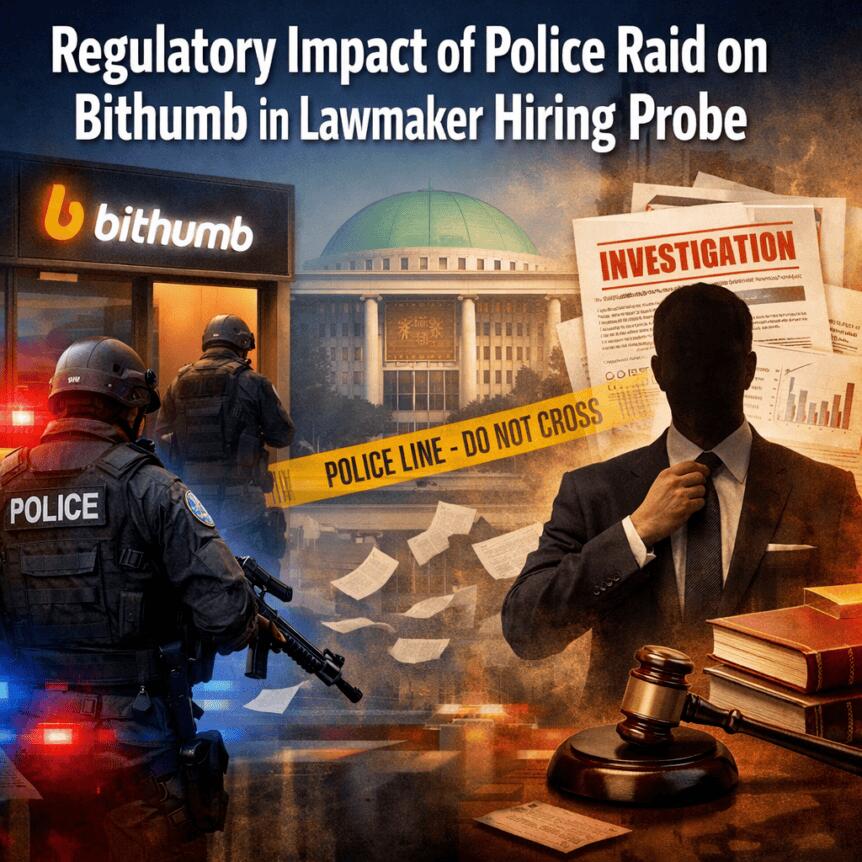
South Korean police have raided Bithumb as part of a widening investigation into alleged nepotism involving independent lawmaker Kim Byung-gi. The probe centers on whether Kim sought to influence employment opportunities for his son at multiple crypto firms, including Bithumb and Dunamu, the operator of rival exchange Upbit, according to a News1 report.
News1 noted that Kim’s son joined Bithumb in January 2025 and remained employed for about six months, prompting authorities to assess whether political pressure or preferential treatment affected the hiring process. The investigation has since expanded beyond the initial hiring claims to examine potential misuse of political influence within the crypto sector.
According to Cointelegraph, allegations of hiring favoritism and influence-peddling remain highly sensitive in South Korea, a country that has grappled with a series of political and corporate scandals related to insider networks and power used to secure advantageous outcomes.
Police have questioned Kim multiple times as they probe potential criminal conduct connected to the alleged misuse of his public position. The scope of the inquiry widened after reports that Kim, while serving on the National Assembly’s Political Affairs Committee—the body overseeing the nation’s financial regulator—consistently directed questions at Dunamu during proceedings. This has raised concerns about possible efforts to assist the company where his son was employed, and whether such conduct constitutes improper influence over regulatory outcomes or corporate opportunities.
Authorities have previously summoned executives from crypto exchanges for questioning in February and conducted a search and seizure at Bithumb’s headquarters and the Bithumb Financial Tower, according to coverage cited in reporting on the case. As the investigation continues, Kim was questioned again in April on 13 separate allegations, including nomination bribery, employment-related favors involving his son, and a purported request related to a university transfer. He has publicly expressed confidence that he will be cleared of wrongdoing, though no public closure has been announced.
Bithumb has been under regulatory scrutiny for AML and compliance deficiencies. In March, financial regulators issued a fine of $24.5 million and ordered a six-month partial suspension, citing shortcomings in Know Your Customer and broader AML controls and imposing restrictions on onboarding new users as part of the penalty package. These actions highlight the regulator’s willingness to impose material sanctions on major exchanges to tighten governance and risk controls within the sector.
In late April, a South Korean court temporarily blocked the implementation of the suspension order after Bithumb challenged the regulator’s decision, pausing enforcement while legal proceedings continue. The judicial action illustrates the balance regulators seek to strike between enforcing compliance standards and allowing ongoing operations to proceed while disputes are resolved. Bithumb did not respond to Cointelegraph’s request for comment by publication.
The case against Bithumb and the surrounding nepotism inquiry underscore the tightening regulatory environment in South Korea’s crypto markets. Authorities are increasingly tying governance practices, internal controls, and regulatory liaising to enforcement actions, signaling a broader push to align the industry with formal AML/KYC standards and licensing expectations. The developments come amid ongoing discussions about licensing regimes, the role of exchanges in consumer protection, and the solidity of corporate governance structures within fintechs and crypto firms linked to politically exposed individuals.
From a policy perspective, the episode reinforces the importance of robust independent oversight of both financial regulators and market participants. As Korea continues to refine its regulatory toolkit—reaffirming commitments to AML/KYC compliance, and tightening supervision of exchange onboarding and customer controls—institutions operating in the space should anticipate potential further action, additional inquiries, and heightened scrutiny of governance and hiring practices. The episode also intersects with broader global patterns in crypto regulation, where authorities are seeking clearer lines between political influence, corporate decision-making, and market access.
As investigations unfold, the Bithumb case will likely influence how regulators assess hiring governance, conflicts of interest, and the integrity of licensing and oversight processes in Korea’s crypto sector. Watch for further summonses, potential charges, and any tightening of enforcement or regulatory guidance that could shape compliance expectations for exchanges and affiliated firms in the months ahead.
This article was originally published as Regulatory Impact of Police Raid on Bithumb in Lawmaker Hiring Probe on Crypto Breaking News – your trusted source for crypto news, Bitcoin news, and blockchain updates.





