SpaceX and Ethereum represent two very different bets on the future — one a stake in the most valuable private space and satellite company ever to go public, the other the leading smart-contract network underpinning most of decentralized finance. Over the past year, their performance has diverged sharply. This comparison measures each on a like-for-like basis: an Ethereum position opened one year ago versus a SpaceX position taken at its IPO, both valued against current prices.
The starting and current values for each asset:
In percentage terms, that's roughly −32% for Ethereum over twelve months and +49% for SpaceX in a matter of weeks.
Applying a $5,000 investment to each entry point makes the gap concrete.
Ethereum at ~$2,600:
SpaceX at $135:
On identical starting capital, the two positions are separated by more than $4,000 — the SpaceX holding is worth over double the Ethereum holding.
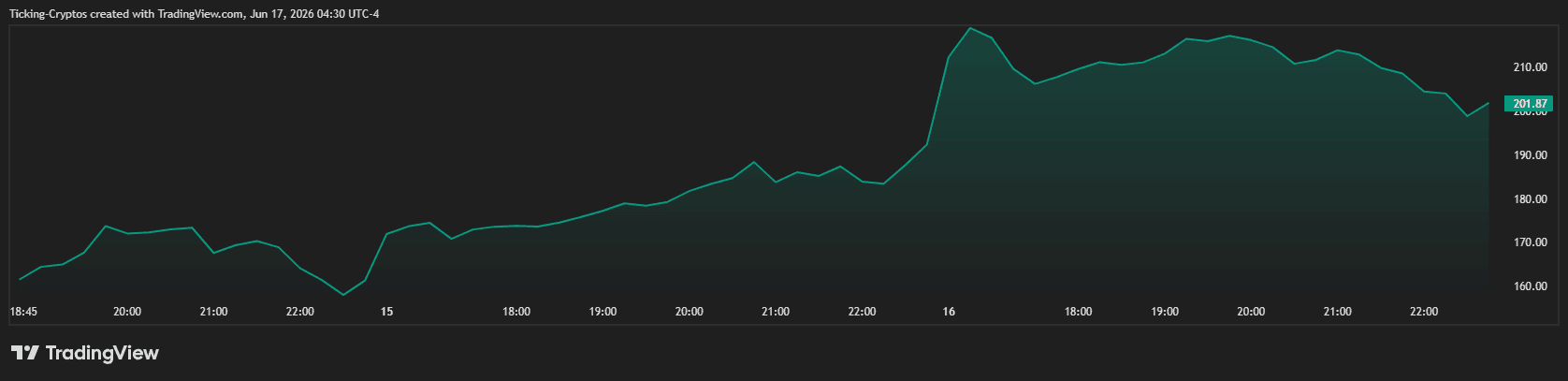
SPCX's outperformance reflects a combination of structural and market factors:
Ethereum's decline is a function of cycle timing rather than any breakdown in its fundamentals. ETH peaked near $4,950 in 2025 before entering a multi-month correction and consolidation phase, weighed down by tighter macro conditions, moderating institutional inflows, and a broad crypto risk-off period. An investor who entered near last year's elevated levels is therefore underwater today, even though the network continues to settle substantial value and remains central to DeFi and tokenization.
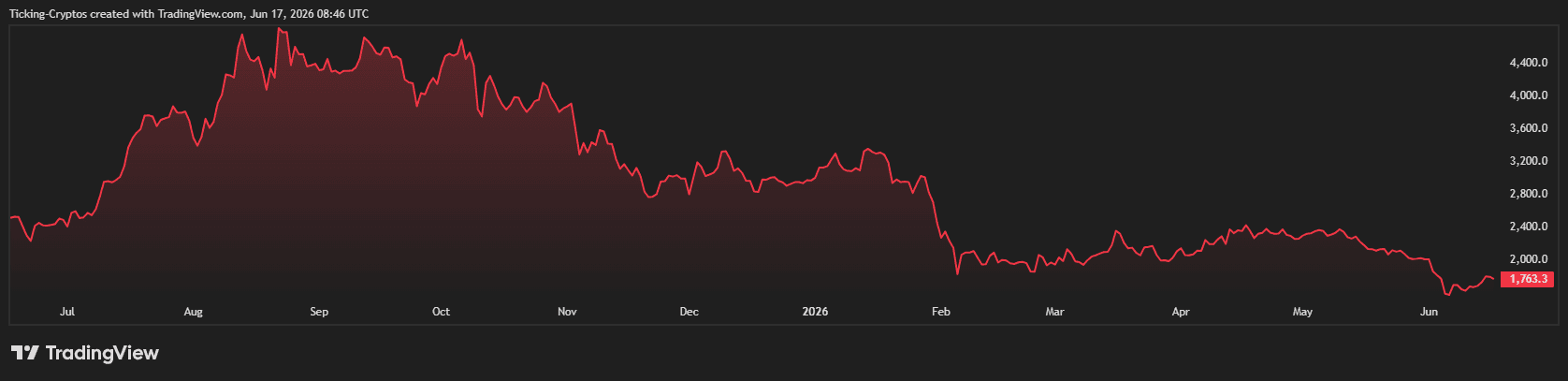
The critical variable is entry timing: an Ethereum position opened two years ago would show a gain today, whereas one opened a year ago, closer to the highs, shows a loss. Volatility cuts both ways depending entirely on the entry point.
A few factors temper the headline result:
Past performance and forward prospects are separate questions. SPCX has delivered the stronger return, but at ~$201 it carries elevated post-IPO risk, and a move back toward its IPO price would not be unusual for a stock that has risen this quickly. Ethereum, at ~$1,760, trades closer to historically oversold territory than to euphoria, which gives it clearer room to recover should the crypto cycle turn on easing macro conditions and renewed risk appetite.
Measured strictly on the trades described, SpaceX is the clear winner, converting $5,000 into roughly $7,444 while the same amount in Ethereum declined to about $3,385. The decisive factors were entry price and timing rather than any inherent superiority of one asset over the other.
The broader takeaway is that returns are driven primarily by entry point, time horizon, and asset type — not by which name carries more momentum at any given moment. SpaceX was the better investment over the past year; the better investment over the next year remains an open question that depends on each asset's distinct trajectory from here.





