SpaceX did what a heavily oversubscribed mega-IPO is supposed to do — it popped, held most of the gain, and closed comfortably above its offer price. The more interesting story sits one layer down, in the tokenized and crypto-native products that launched alongside it. There, the day split cleanly into two outcomes: products that actually controlled the underlying shares worked, and the one model that relied on a middleman to find shares at the last minute did not. That divide, more than the stock's 19% gain, is what this debut will be remembered for.
The headline numbers were strong without being euphoric. Shares opened at $150, peaked at $176.52 intraday, and closed at $160.95 — up about 19% from the $135 offer price. That close translated to roughly a $2.1 trillion market cap, making SpaceX the seventh-largest public company in the world on its first day. The raise itself — about $75 billion on more than 555 million shares — locked in the record as the biggest IPO in history.
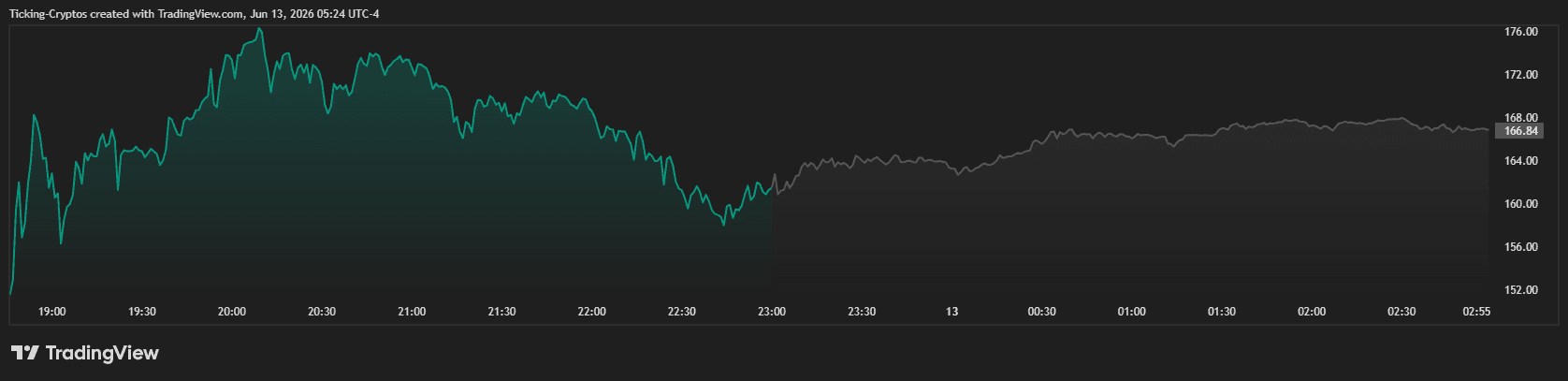
What's worth reading into the shape of the day: the stock hit its high in the early afternoon and then gave back a chunk into the close. Shares pared gains heading into the closing bell but still finished up around 19%, and analysts framed the day as a success given the healthy gain, limited volatility, and record retail demand. A debut that opens high, spikes, and settles back is the textbook signature of strong-but-rational demand — not the kind of disorderly first-day mania that often unwinds painfully in week two.
Here's a nuance most recaps gloss over. A 19% pop is excellent by historical IPO standards — but it landed below what speculative markets had been signaling for weeks. IPO researcher Jay Ritter called the open "disappointing relative to what betting markets had been predicting," while noting it was still clearly positive, and that if the price holds, the dollar value of early returns would exceed any IPO in history.
That gap is the tell. In the run-up, pre-IPO perpetual futures had priced SpaceX as much as 60% above the offer at one point. By debut day, the Hyperliquid SPCX-USDC perpetual was trading around $176, roughly 30% above the IPO price, before easing toward $172. So the public market essentially met the floor of crypto's expectations but undercut its earlier highs. The speculative premium was real, and it compressed as the actual print arrived — a useful reminder that pre-IPO derivative prices are sentiment gauges, not forecasts.
And the valuation question the market shelved for a day hasn't gone away. SpaceX remains unprofitable, with $18.7 billion in revenue last year and an $8.7 billion loss between the start of 2025 and the end of March 2026. A $2 trillion price tag on those fundamentals is a bet on Starlink and Starship execution, not current earnings — which is exactly why the Monday open and the weeks after matter more than Friday's fireworks.
The crypto angle here isn't incidental — for two weeks, SpaceX had been actively pulling money out of digital assets. Capital rotation into the listing compressed crypto liquidity for over two weeks, and analysts expected sidelined capital to gradually rotate back into risk assets once SPCX began trading. So when the overhang finally cleared on Friday, the majors caught a bid.
Bitcoin ($BTC) held the line as the market's anchor. Bitcoin traded near $63,262, up about 0.4% on the day; it briefly retraced after a hot US Producer Price Index print of 6.5% year-over-year, but buyers defended the demand zone and BTC recovered. Ethereum ($ETH) was steadier than spectacular. Ether sat broadly flat at around $1,653.
The standouts were further down the cap table. XRP ($XRP) put in its best session in a week. XRP added about 2.39%, its strongest session in over a week, as improving legal clarity and institutional appetite returned to the asset. And Solana ($SOL) was the most directly tied to the SpaceX story, since it hosted the tokenized stock. Solana advanced about 2.84%, supported by the tokenized SPCX share launch and elevated FIFA World Cup fan-token volumes on its network.
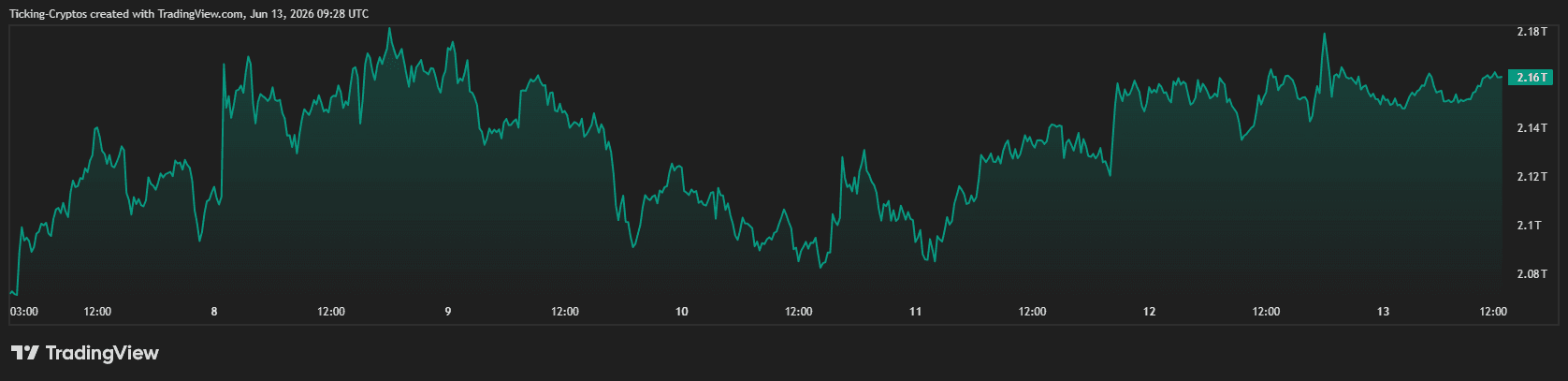
The bigger read: the market shifted from two weeks of relentless selling to cautious optimism, helped by easing US-Iran tensions and the SpaceX IPO finally pricing. The relief was real, but worth keeping in perspective — the hot inflation print and the June 17 Fed meeting are the next macro tests, so Friday's green board is a tone shift, not an all-clear.
This is where the debut got genuinely instructive. Several tokenized versions of SPCX were built to go live the moment the stock did, letting non-US and crypto-native traders get exposure without a traditional brokerage. Most of them delivered. The products that issued tokens against shares they actually held — onchain or via a regulated broker-dealer — opened and traded as planned.
Then there was the route that didn't hold any shares of its own. Four platforms had to scrap their allocation campaigns outright. Binance, Bybit and Bitget canceled their tokenized SpaceX allocation campaigns and refunded subscribers in full after xStocks, the provider routing the deals, could not source the underlying shares — even as xStocks' own onchain token and rival protocols launched the same morning. MEXC was caught in the same shortfall.
The amount of money that got parked and then unwound is the part that should make exchanges think twice. Binance's campaign alone had taken in over $557 million in USDC before being cancelled for "circumstances outside of our control." Bybit told users that "due to xStocks' inability to deliver the underlying assets, no SpaceX allocations were received," and Bitget said it couldn't secure and distribute the tokens it had promised. The consolation packages tell you how much goodwill was at stake: Bybit added a 10% reward and Bitget offered fee refunds plus future whitelisting and a gas voucher, while Binance pledged $1 million in shares via its own bStocks product, with CZ posting "Protect users when things don't go as planned."
--> Check out here all the options to Trade SpaceX stocks
Strip away the branding and the failure maps the architecture of tokenized equity perfectly. The deciding variable wasn't whether a product was onchain, decentralized, US-listed, or a perp — it was who controlled the shares. Everything backed by real, held inventory settled. The one design that outsourced share-sourcing to an intermediary at the last moment is the one that collapsed under demand.
That matters because the usual pitch for tokenized stocks is access and speed. As industry participants put it, the problem wasn't tokenization itself but getting the underlying asset — SpaceX's retail demand simply overwhelmed the shares available, leaving many orders unfilled. And the fine print had warned about exactly this: xStocks' own disclaimers stated its IPO tokens offered price exposure only, with no guaranteed allocation and no direct ownership. The lesson for the next blockbuster listing — Anthropic and OpenAI are both circling the public markets — is concrete: allocation-campaign tokens now carry a proven sourcing risk that platforms will either have to price honestly or stop offering.
Friday answered the easy question (does SpaceX pop?) and left the harder ones open. Three things worth tracking: whether SPCX holds above its $160 close once first-day euphoria fades, the index-inclusion buying wave that could hit as early as July as trackers are forced to add the stock, and whether the refunded crypto exchanges return for the next mega-IPO with a share-backed model instead of a promise to source. As one outlet put it, when markets reopen Monday, SPCX will be closely watched all over again





