
Strategy finally broke a brutal nine-month slide in April, with MSTR climbing 33% as Bitcoin gained almost 12% during the same month. The rebound revived the old question around Michael Saylor’s company: whether investors still see it as a leveraged Bitcoin proxy after months of underperformance.
The streak had been ugly. From mid-2025 through March, MSTR repeatedly fell harder than Bitcoin during weak months, showing the same amplified structure that makes the stock attractive during BTC rallies and punishing when sentiment turns. April changed the tone, with the stock more than doubling Bitcoin’s monthly return and pushing Strategy back ahead of several crypto-linked equities on a year-to-date basis.
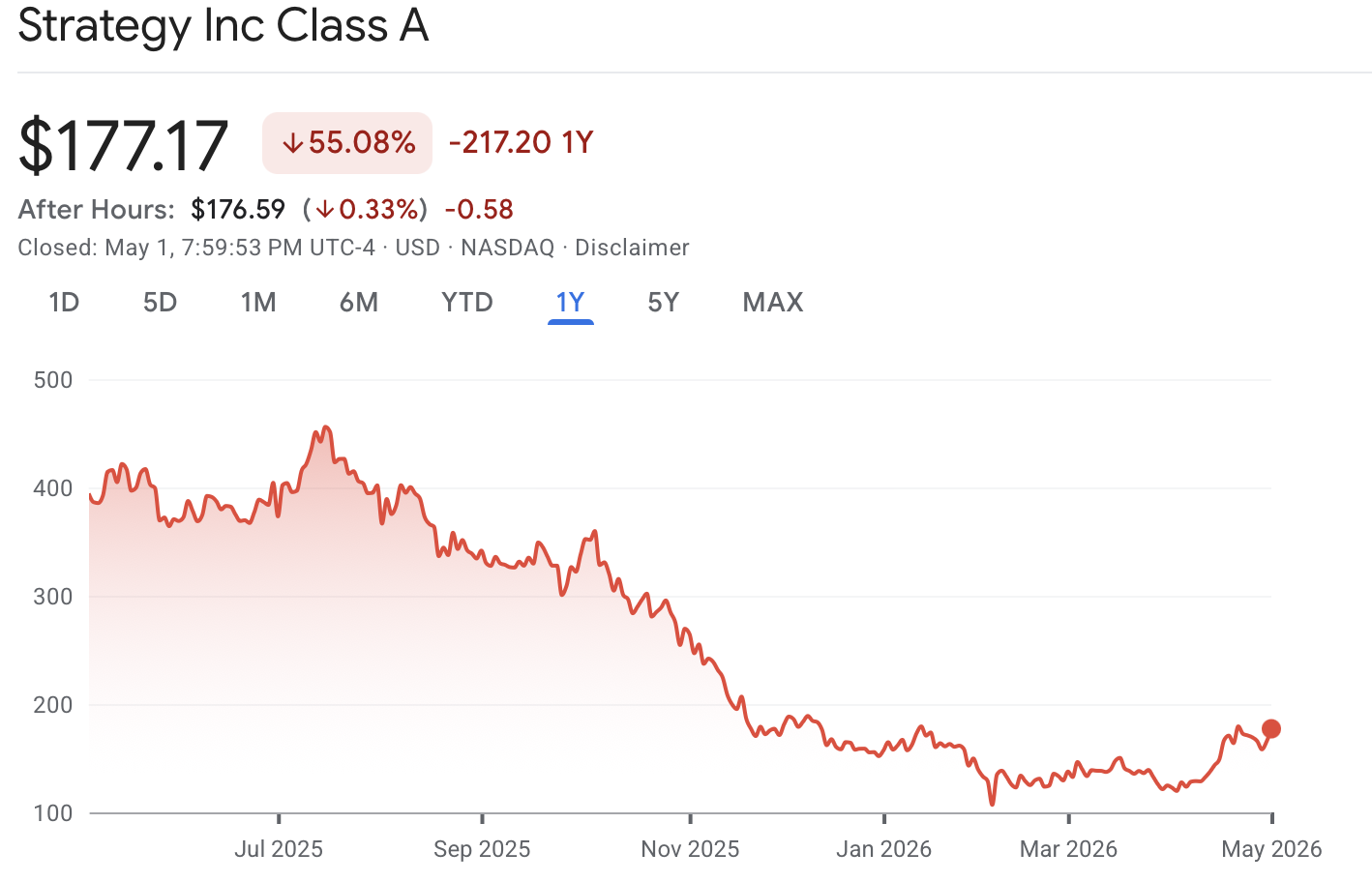
The move also arrived while institutional interest in the Bitcoin proxy trade keeps building. Strategy now lists 818,334 BTC on its Bitcoin purchase dashboard, with an average acquisition price near $75,537. That treasury position keeps MSTR tied closely to BTC’s market direction, but April showed that equity buyers can reprice the company faster than Bitcoin itself when confidence returns.
The rebound was not only about MSTR common stock. STRC, Strategy’s perpetual preferred stock, has become a central part of the company’s capital-markets machine. Strategy’s official STRC page lists an 11.50% annualized dividend rate, payable monthly in cash, with the rate adjusted monthly to help the instrument trade around its $100 stated amount.
Michael Saylor also highlighted STRC’s market profile on X, pointing to roughly 3% volatility, 11.5% yield, and about $380 million in liquidity. The combination gives Strategy a different investor base from MSTR: income-focused buyers who want yield exposure rather than pure equity upside.
That structure remains controversial. Critics argue that the preferred-stock model depends on Bitcoin appreciation, market appetite, and Strategy’s ability to keep raising capital. The debate around MSTR and STRC’s risk profile has grown louder as the company expands its preferred-share stack.
Strategy is now asking shareholders to approve a change that would shift STRC dividends from monthly to semi-monthly payments. The company’s proposal page says the amendment is intended to reduce reinvestment lag, improve liquidity, increase market efficiency, and help STRC trade more tightly around its target price.
The vote requires approval from both MSTR and STRC holders. Strategy lists June 8 as the meeting date, June 30 as the first record date under the new cadence if approved, and July 15 as the first payment date.
The combined signal is clear without needing a dramatic spin. MSTR’s April rebound restored momentum after a long losing streak, while STRC’s yield and liquidity give Strategy another funding route tied to investor demand for Bitcoin-backed credit exposure. The model works best when BTC rises, capital stays available, and preferred-share buyers trust the payout structure. If Bitcoin stalls and issuance demand weakens, April’s rally will face the same question that has followed Strategy for years: how much leverage to Bitcoin can the market keep rewarding?
The post MSTR Snaps Losing Streak As STRC Liquidity Tests Saylor’s Bitcoin Model appeared first on Crypto Adventure.





