The best crypto exchanges in Vietnam in 2026 are Binance, Bybit, Bitget, OKX, and MEXC. Binance is the strongest overall choice for Vietnam-based users who need the widest market access and the most familiar P2P culture for VND entry and exit. Bybit is the better fit for active traders who prioritize execution depth over beginner onboarding. Bitget sits in the middle lane between beginner clarity and more active-market features. OKX is the strongest pick for users who want exchange trading and broader wallet or onchain tooling in the same ecosystem. MEXC is best for users who prioritize long-tail altcoin access and are comfortable applying stricter due diligence themselves.
For context on how Vietnam compares to neighboring markets, see our Best Crypto Exchanges in Southeast Asia 2026 overview.
| Exchange | Outstanding point | Score | One-line note |
|---|---|---|---|
| Binance | Deepest VND P2P counterparty depth | 5/5 | Interface complexity can overwhelm new users |
| Bybit | Best active-trader and derivatives posture | 4/5 | Not the right first account for VND beginners |
| Bitget | Best middle lane between beginner and active | 3.5/5 | Copy-trading framing overpromises independence |
| OKX | Best exchange plus Web3 wallet ecosystem | 4/5 | Dense interface, not suited for casual buyers |
| MEXC | Widest altcoin breadth available to Vietnam users | 3/5 | Higher personal due-diligence demands |
| Exchange | Best for | VND access | Language support | App availability | Regulation context | Main tradeoff |
|---|---|---|---|---|---|---|
| Binance | Overall use and P2P familiarity | P2P (no direct VND bank route) | Vietnamese, English | iOS, Android, Web | No Vietnam license yet; offshore ban being drafted; five domestic firms in licensing pipeline | Product complexity can overwhelm new users |
| Bybit | Active and derivatives traders | P2P available | Vietnamese, English | iOS, Android, Web | No Vietnam license yet; named in draft offshore restriction rules | Less beginner-friendly than simpler apps |
| Bitget | Retail users moving into more active trading | P2P available | Vietnamese, English | iOS, Android, Web | No Vietnam license yet; accessible but offshore access window narrowing | Copy-trading framing can distract from independent risk control |
| OKX | Exchange plus wallet and onchain tools | P2P available | Vietnamese, English | iOS, Android, Web | No Vietnam license yet; named in draft offshore restriction rules | Interface can feel dense for first-time buyers |
| MEXC | Long-tail altcoin hunters | P2P available | Vietnamese, English | iOS, Android, Web | No Vietnam license yet; accessible but offshore access window narrowing | Trust and withdrawal checks matter more before funding |
Binance is the strongest overall pick for Vietnam-based users who need the widest market access and the most familiar P2P culture. From the public flow we reviewed, it immediately feels more like a full crypto operating system than a simple buy-and-hold app. That is a strength if you already expect to move between spot, P2P, and broader exchange tools, but it can become a weakness if your priority is the shortest possible path from VND to a first purchase.
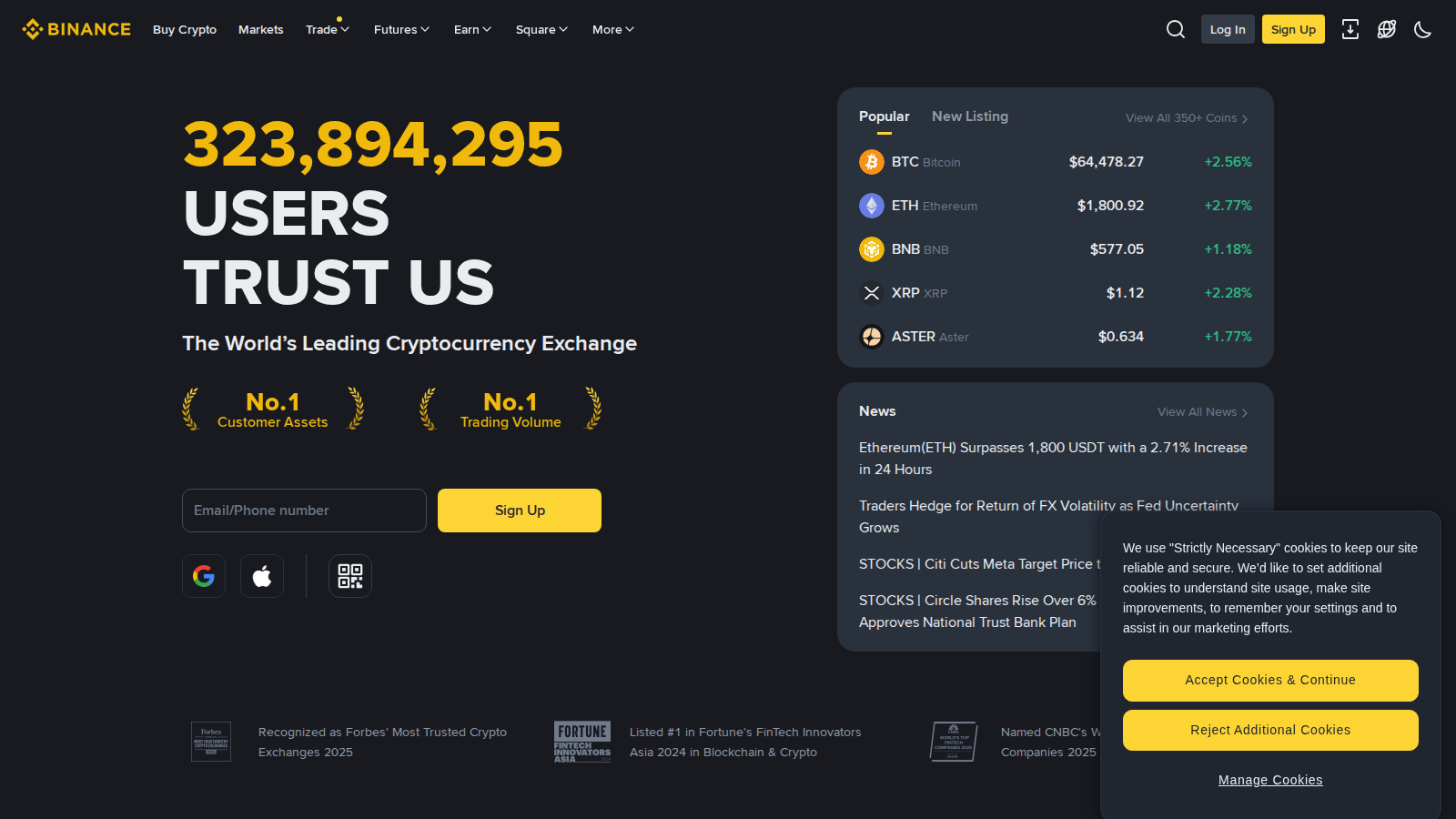
Best for: Users who want strong liquidity, familiar market structure, and widely used P2P funding routes.
Main tradeoff: Interface complexity and product breadth create more wrong-click risk for casual users than simpler apps.
Vietnamese users consistently come back to Binance P2P as the default VND entry point, not because it is the only option, but because the counterparty depth is the deepest available. In a r/VietNam thread on how to cash out crypto in Vietnam, one user summarized the practical consensus: "Binance has a p2p feature that lets you sell usdt for vnd." Another thread on safely cashing out via Binance P2P captures the risk dimension too: users moving meaningful USDT amounts worry about whether P2P counterparties are clean, and whether a bank account freeze is possible downstream.
That liquidity advantage does not make Binance automatically the right answer. The product surface assumes more user confidence than most beginner-friendly apps. The real question a live account test would answer is whether the P2P experience holds up at real Vietnamese bank speeds when demand spikes.
Bybit is the better choice for Vietnamese users who already think like active traders. The public product surface signals a trading venue rather than a mass-market onboarding app: order types, perpetuals, and execution posture are visible early in the flow, before any beginner framing appears.
Best for: Active spot and derivatives traders, users who care more about trading posture and execution depth than beginner UX.
Main tradeoff: Less forgiving for new users; local cash-in and cash-out practicality needs separate verification.
One data point from a Vietnamese user captures Bybit's actual role in the market. In a r/VietNam thread about crypto use and payments, one commenter described using Bybit Pay to handle bank transfers for 90% of their spending in Vietnam, a use case that is adjacent to, but distinct from, active trading. Bybit in Vietnam is not the simplest first account, and it does not solve the VND P2P problem differently from Binance. It solves the active-trader and payment-rail problem better once the VND entry step is already handled elsewhere.
That is the honest framing for Bybit in Vietnam: a second account for users who already know what they need, not the first account for users still figuring out the basics.
Bitget sits in the middle lane between beginner clarity and more active-market features. From the public flow we reviewed, it feels more retail-guided than Bybit, but less stripped down than a pure starter app. Its copy-trading framing is visible earlier in the flow than on competing platforms.
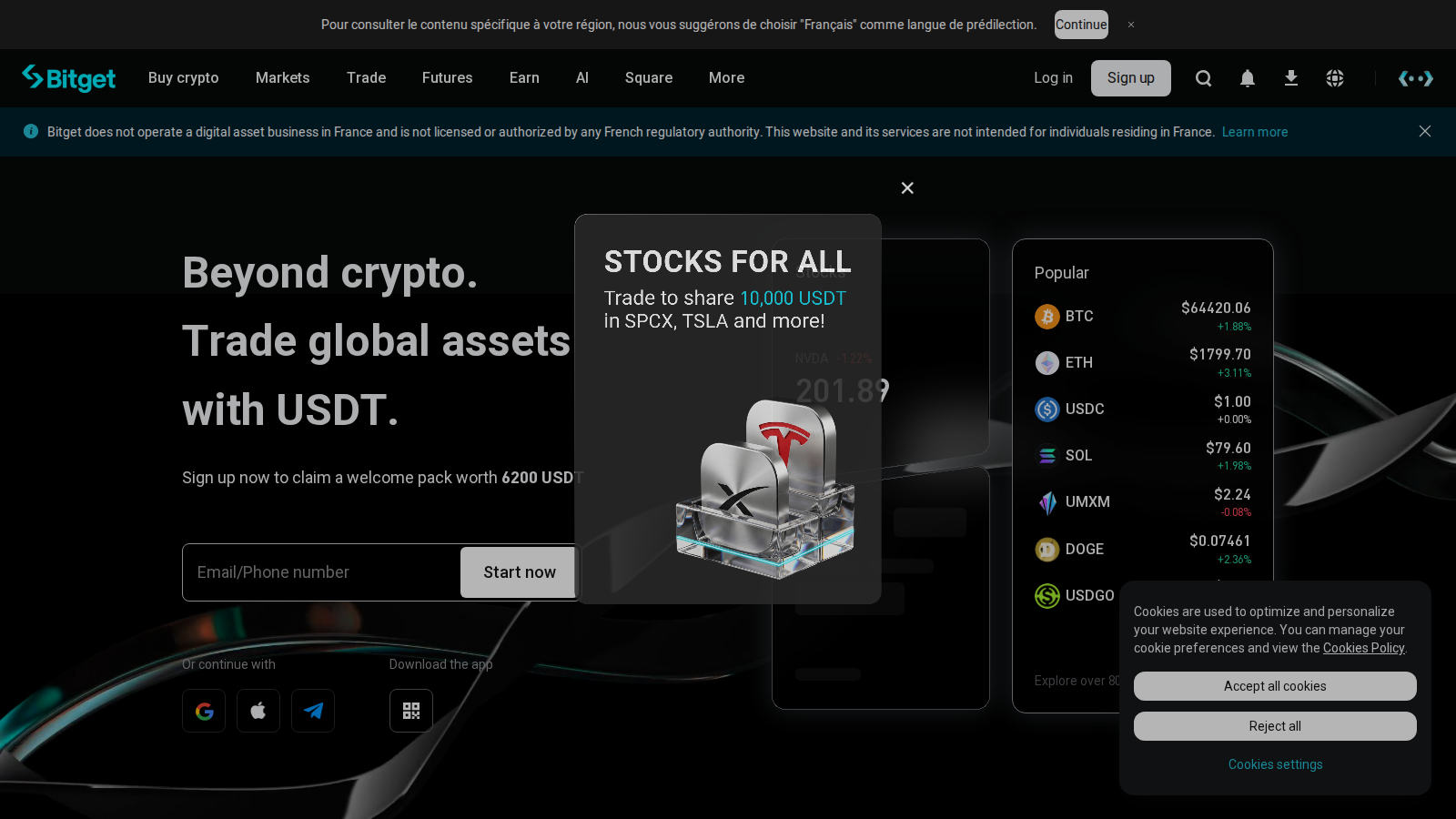
Best for: Users moving from beginner use into more active trading, traders curious about copy-trading features without committing to a pure derivatives platform.
Main tradeoff: Copy-trading framing can distract from independent risk control; VND workflow evidence needs a live test before publication.
The P2P entry pattern for Vietnam users is consistent across platforms. In a r/VietNam thread asking why people P2P trade crypto in Vietnam, one user described P2P as the practical default: "When I was in VN it was the only way available to ramp in through Binance." Another explained the structural reason: banks and regulations can be restrictive, so P2P is how people move funds more freely. That same dynamic applies to Bitget's P2P desk: the draw is access, not the platform brand.
The copy-trading angle is real, but it is also the part that needs the most personal scrutiny. Copying another trader's positions does not transfer their risk tolerance or their ability to cut a loss. That gap between what the feature promises and what it actually requires is the thing this platform's interface underweights.
OKX is the strongest pick for users who want exchange trading and broader wallet or onchain tooling in the same ecosystem. From the public flow we reviewed, it immediately feels more like a multi-surface crypto platform than a single-job exchange: the wallet, Web3 gateway, and DEX tools are surfaced earlier than on any other platform in this list.
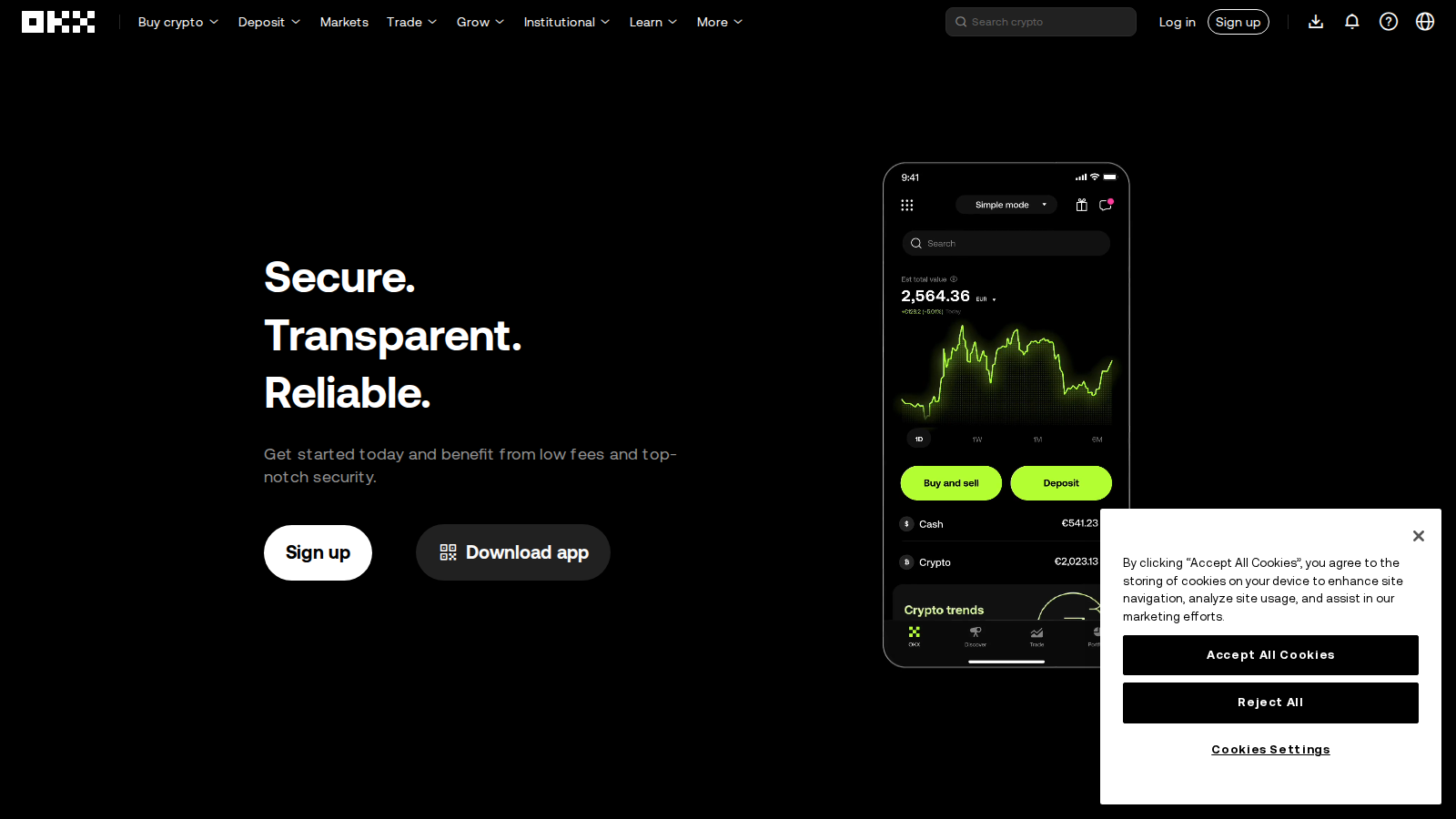
Best for: Users who expect to move between centralized trading and onchain tools, traders comfortable with denser product navigation.
Main tradeoff: Heavier interface than many casual users need; more ecosystem breadth means more decision points early.
The Vietnam crypto landscape also has a risk dimension that OKX users need to factor in. In a r/VietNam thread about the ONUS platform suddenly freezing withdrawals, Vietnamese users described finding that a domestic platform with 7 million registered users had halted all access with no notice. The comments are direct: "Never keep your crypto/money on a crypto exchange." That warning applies to OKX too: the platform's breadth and Web3 tools are only useful if the withdrawal path is tested before meaningful funds are committed.
OKX is not a weakness pick. It is an accurate fit for users who already know what they need from an exchange. It will reward you once you know what you are looking for. It will frustrate you if you arrive expecting a simple VND-to-BTC flow.
MEXC is the right choice for Vietnamese users who prioritize long-tail altcoin access and are comfortable applying stricter personal due diligence. From the public product surface, MEXC signals broad token inventory more clearly than brand trust or mainstream onboarding, which is an honest signal about the tradeoff.
Best for: Altcoin-focused traders, users hunting beyond major blue-chip assets, experienced users comfortable with self-directed risk filtering.
Main tradeoff: Long-tail asset access comes with higher due-diligence demands; MEXC is not the right first account for a Vietnam-based beginner.
MEXC-specific Vietnam user discussions are thinner than for Binance or Bitget, which is consistent with its more specialized positioning. In a r/VietNam thread on crypto use in Vietnam, one commenter was blunt: "They don't use cryptocurrency, they speculate and gamble real money on it. Most people I've known are neck deep in debt to family and friends because they bet on shitcoins." That context matters for MEXC: a platform that leads with token breadth is speaking directly to the speculative use case, which is real in Vietnam but also the highest-risk entry point.
The version of MEXC that works well is one where the user already understands what they are buying, why the asset is on a smaller exchange rather than Binance, and what their exit plan is. The version that goes badly is the one where token breadth is mistaken for platform quality.
What stood out was how consistently VND access, not product features, drives the real exchange decision for Vietnamese users. All five platforms in this list face the same VND constraint: no direct bank transfer, P2P as the main entry route. That changes the comparison from a feature race into a question of P2P depth, counterparty familiarity, and whether the platform's Vietnamese-language support is good enough to use without friction.
The policy context adds a second layer. Vietnam's domestic exchange licensing framework is live but no platform has launched yet. Every user in this list is still operating offshore as of July 2026, but the government has cleared five firms for licensing and targets Q3 2026 for the first domestic exchanges. The Ministry of Finance is also drafting rules to restrict access to offshore platforms. That means the regulatory baseline is shifting faster here than in most Southeast Asian markets, and the current offshore access model may not last.
Vietnam-based users often focus too much on headline fees and too little on real execution cost. In practice, a low advertised fee matters less if P2P pricing is wide, withdrawal routes are slow, stablecoin spreads are higher than expected, or the platform pushes overtrading through product clutter.
This is why the best exchange is not the one with the lowest number on a fee page. It is the one with the cleanest real workflow for your actual use case.
These questions matter more than token counts. In Vietnam, the exchange is only useful if the VND path in and out works when you need it.
This guide is based on live public exchange surfaces, official platform materials, and regional market references reviewed in July 2026, including Chainalysis's 2025 Global Crypto Adoption Index and Vietnam's Law on Digital Technology Industry. We directly checked visible onboarding framing, public trading posture, and top-level product positioning. Anything that depends on a logged-in VND workflow, live P2P depth, withdrawals, or a full end-to-end trade still needs final verification before publication.
To write this comparison, we reviewed the live public product surfaces of the shortlisted exchanges and compared how they present onboarding, trading posture, and mainstream-user entry points. That direct review does not replace a full VND deposit or withdrawal test, but it does show very quickly which platforms are signaling simplicity, which are signaling trader depth, and which are trying to do both at once.
What stood out immediately was not who had the longest feature list. It was how differently these exchanges frame the first user decision. Binance and OKX push ecosystem depth early in the flow. Bitget and Bybit push trading identity. That distinction matters for Vietnam-based users whose real first question is whether the VND cash-in path works, not whether the derivatives dashboard is impressive.
Vietnam’s crypto regulatory landscape shifted decisively in early 2026. The Law on Digital Technology Industry (Law No. 71/2025/QH15), passed by the National Assembly in June 2025 and effective January 1, 2026, formally recognizes digital assets as property under Vietnamese civil law. Government Resolution No. 05/2025/NQ-CP, issued in September 2025, established a five-year pilot program for licensed crypto-asset trading markets. In January 2026, the Ministry of Finance issued Decision No. 96/QD-BTC, launching the formal licensing procedures, and the State Securities Commission (SSC) began accepting applications on January 20, 2026.
The licensing requirements are among the most restrictive in Asia. Applicants must be Vietnamese-incorporated companies with minimum charter capital of VND 10 trillion (approximately USD 400 million). At least 65% of that capital must come from domestic institutional shareholders such as banks, securities firms, insurers, or technology companies. Foreign ownership is capped at 49%. Platforms must meet Level 4 cybersecurity standards, and exchanges are regulated as market infrastructure similar to securities exchanges, not as fintech payment companies.
As of March 2026, five companies cleared the initial screening round: affiliates of Techcombank, VPBank, LPBank, VIX Securities, and the Sun Group conglomerate. Deputy Finance Minister Nguyen Duc Chi confirmed in May 2026 that the government targets Q3 2026 for the first licensed domestic exchanges to begin operations. However, as of this review in July 2026, no domestic exchange has received a full operating license, and detailed custody, AML, and KYC regulations are still being finalized.
Simultaneously, the Ministry of Finance is drafting rules that would restrict Vietnamese users from trading on offshore platforms such as Binance, OKX, and Bybit. Reuters reported in March 2026 that traders may have a six-month transition window to move funds to licensed domestic platforms once the ban takes effect. A proposed 0.1% personal income tax on gross transaction value would apply to all trades on licensed platforms, with the tax withheld automatically at the point of transaction. All transactions must settle exclusively in Vietnamese dong through licensed commercial banks.
This means that while all five offshore platforms in this list remain accessible to Vietnamese users as of July 2026, the access window is narrowing. Vietnam is actively building a domestic-only exchange model that could restrict or eliminate direct access to global platforms. Users in Vietnam should treat the current offshore access as a transitional state, not a permanent arrangement. The practical constraint remains VND: none of these offshore platforms support direct VND bank transfer, so Vietnamese users still reach them through P2P desks.
| Claim | Status |
|---|---|
| Binance public homepage and P2P surface loaded and reviewed | Observed |
| Bitget public homepage loaded and reviewed | Observed |
| OKX public homepage loaded and reviewed | Observed |
| Bybit public homepage loaded and reviewed | Observed |
| Vietnam Law on Digital Technology Industry reference checked | Observed |
| VND deposit completed on any platform via P2P | Not verified |
| Live P2P order depth and counterparty quality checked | Not verified |
| Withdrawal timing to Vietnamese bank tested end-to-end | Not verified |
| Customer support response tested from a Vietnam-registered account | Not verified |
| MEXC public homepage loaded and reviewed | Not verified |
For most users, Binance is still the strongest all-around answer because it combines liquidity, P2P familiarity, and widely used VND funding routes. Active traders may prefer Bybit or OKX depending on how they trade.
Yes. No platform in this list supports direct VND bank transfer. P2P desks are the standard entry route for most Vietnamese users, which is why counterparty depth and P2P familiarity matter in the comparison.
Binance and Bitget are usually the easiest starting points because they balance accessibility with enough product depth to grow into. Binance's P2P depth and Bitget's Vietnamese-language support are the two practical advantages for new users.
Not yet as of July 2026, but the framework is live and moving fast. The Law on Digital Technology Industry (effective January 2026) formally recognizes digital assets as property. Resolution 05/2025 established a five-year pilot licensing program, and the SSC has been accepting exchange license applications since January 20, 2026. Five companies linked to major banks and conglomerates cleared initial screening in March 2026, and the government targets Q3 2026 for the first licensed platforms to begin operations. Until then, Vietnamese users still access all major exchanges as offshore accounts.
Disclaimer
This article is for informational purposes only and does not constitute investment, legal, or tax advice. Access routes, P2P depth, and local enforcement conditions can change quickly.
All five platforms in this list are accessible from Vietnam as of July 2026. However, the Ministry of Finance is drafting rules to restrict offshore exchange access, with licensed domestic platforms expected to launch by Q3 2026. This ranking reflects current availability and may change as the licensing framework takes effect.





