The latest crypto crash left the market in red across all major tokens. The reason behind the crash ties to global economic tension and heavy liquidations. Renewed US–China trade fears, massive profit-taking after record highs, and algorithmic selling cascades caused over $1 trillion to evaporate from total crypto market capitalization in a few hours.
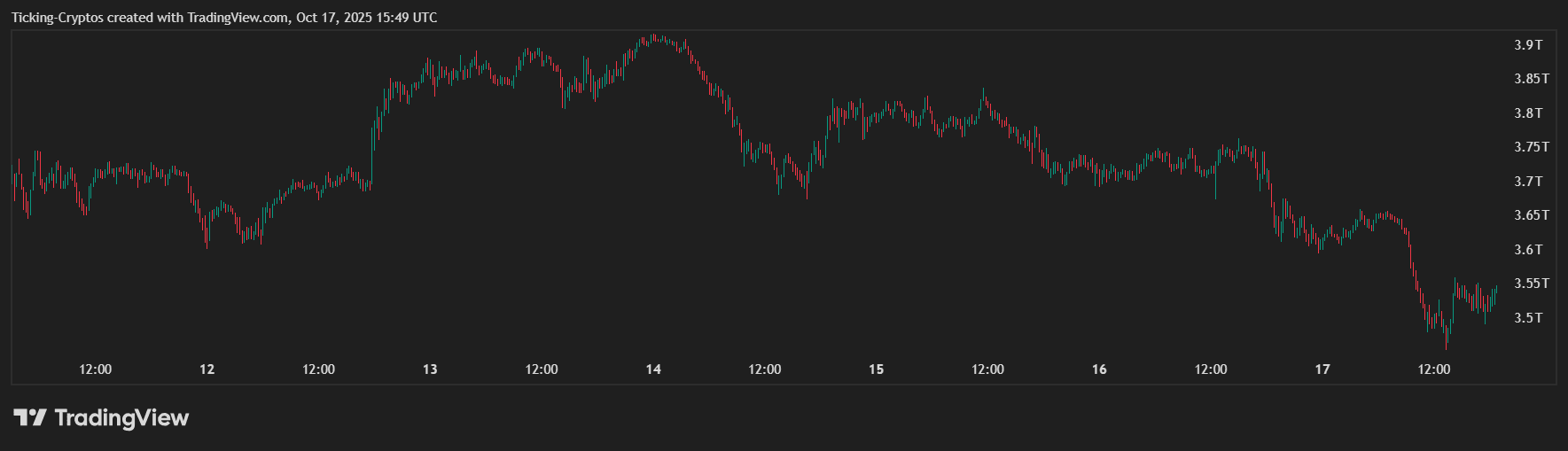
Total crypto market cap in USD over the past week - TradingView
$Bitcoin and $Ethereum fell sharply, dragging altcoins and DeFi tokens with them. Let’s take a closer look at the top 5 losers in this crypto crash, their performance, and what these numbers mean.
$Aster leads the list with an 18% daily drop and nearly 34% weekly loss. The high trading volume — over $1.5 billion — signals massive sell pressure, possibly from institutional profit-taking. Despite the sharp decline, liquidity remains strong, hinting that short-term panic might have exaggerated the move.
If the selling persists, Aster could retest the $1.00 psychological level, but recovery depends on broader market sentiment and developer updates within the Astar ecosystem.
$Aave, one of DeFi’s oldest and most trusted protocols, wasn’t spared. With a 15% daily decline, AAVE shows how vulnerable even top-tier decentralized lending tokens are during broad sell-offs.
The sharp fall in total value locked (TVL) across DeFi platforms and reduced borrowing demand amplified the sell pressure. Still, Aave remains a major player in decentralized finance — and could rebound quickly if liquidity returns to the market.
$Aster leads the list with an 18% daily drop and nearly 34% weekly loss. The high trading volume — over $1.5 billion — signals massive sell pressure, possibly from institutional profit-taking. Despite the sharp decline, liquidity remains strong, hinting that short-term panic might have exaggerated the move.
If the selling persists, Aster could retest the $1.00 psychological level, but recovery depends on broader market sentiment and developer updates within the Astar ecosystem.
$Aave, one of DeFi’s oldest and most trusted protocols, wasn’t spared. With a 15% daily decline, AAVE shows how vulnerable even top-tier decentralized lending tokens are during broad sell-offs.
The sharp fall in total value locked (TVL) across DeFi platforms and reduced borrowing demand amplified the sell pressure. Still, Aave remains a major player in decentralized finance — and could rebound quickly if liquidity returns to the market.