The cryptocurrency market has suffered one of its most brutal corrections of the year, shedding more than 20% of its total valuation over the past seven days. Bitcoin ($BTC) plummeted below the critical $70,000 threshold to hit a low of $60,800, dragging the entire digital asset landscape down with it.
Ethereum ($ETH) collapsed to $1,560, while major altcoins faced aggressive selling pressure; Solana ($SOL) dropped to $62 and Ripple ($XRP) hovered at $1.08. This massive deleveraging event was not isolated to digital assets. Instead, it was triggered by a systemic macro-economic shock where everything that could go wrong for global financial markets went wrong simultaneously, wiping out a staggering $2.5 trillion in a single trading session.
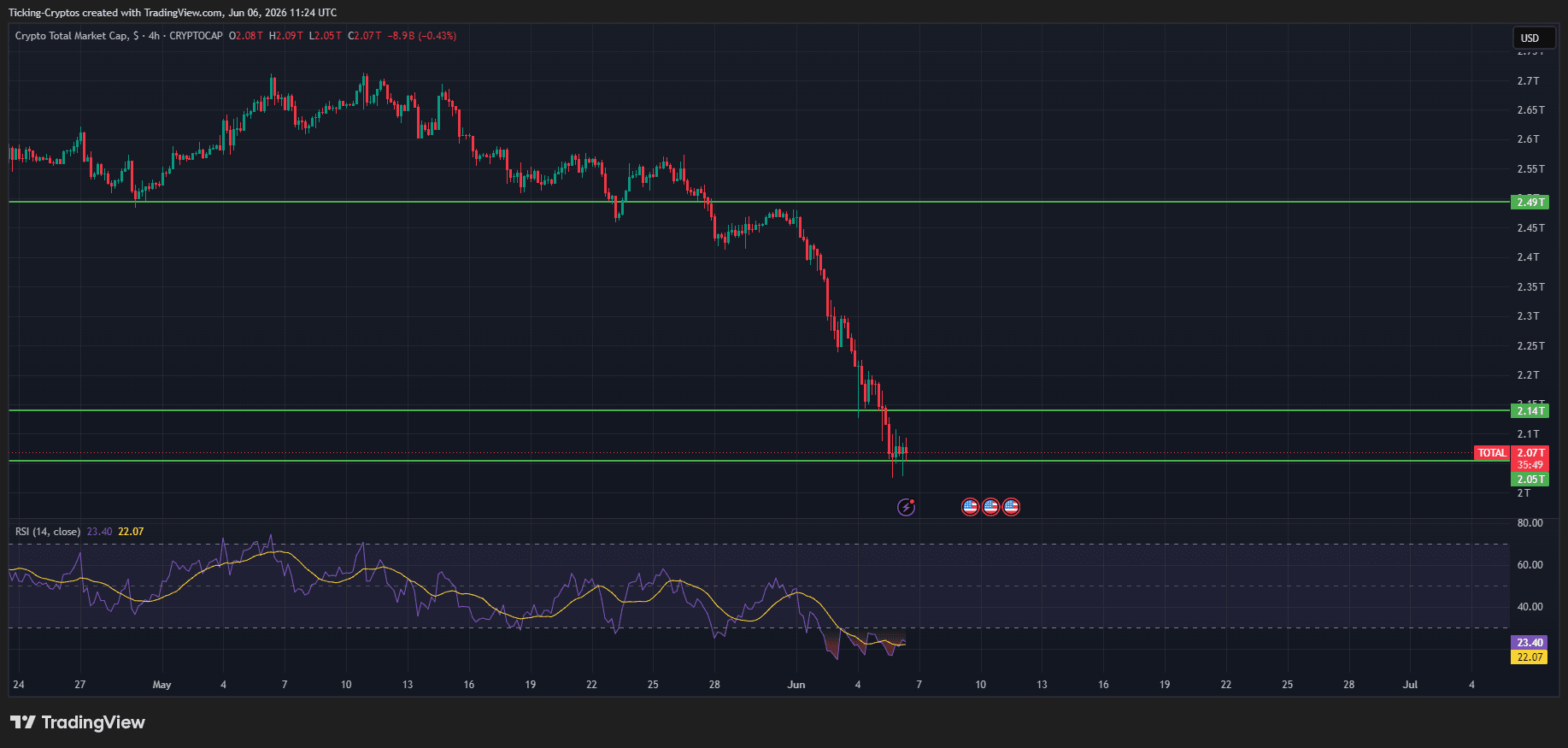
The primary trigger for the market-wide liquidation began with the release of the U.S. Bureau of Labor Statistics May employment report. The US economy added 172,000 nonfarm payroll jobs, obliterating Wall Street expectations of roughly 88,000.
While a robust labor market is typically a sign of economic health, it presents a major problem under current conditions. With inflation stubbornly stuck at 3.8% and crude oil trading at $90 per barrel, an overheating job market signals to the Federal Reserve that the economy is not cooling down. Consequently, the probability of an interest rate hike this year surged from 40% to 57% in a single day. Higher interest rates reduce the present value of risk assets, sending shockwaves through both tech equities and cryptocurrencies.
For months, the crypto market has enjoyed a strong correlation with high-growth artificial intelligence and semiconductor stocks. That correlation turned toxic when the AI tech narrative experienced its first major structural crack:
This combination of decelerating corporate guidance and structural uncertainty forced institutional investors to question bloated tech valuations, causing a domino effect of liquidations that spilled directly into highly liquid crypto markets.
Underneath the surface, a major liquidity crunch is actively starving the markets. Giant technology companies are preparing for massive public listings. SpaceX is targeting a $1.75 trillion public valuation next week, while both Anthropic and OpenAI have initialized filing processes.
Together, these upcoming listings represent between $4 trillion and $5 trillion in expected market value. Because cash reserves among institutional fund managers are at their lowest levels since early 2024, institutional players are forced to aggressively sell down their existing holdings—including highly liquid mega-cap cryptocurrencies—simply to raise the capital required to participate in these new listings.
Compounding the panic is the upcoming Federal Open Market Committee (FOMC) meeting in 11 days. This marks the very first policy meeting for the newly appointed Federal Reserve Chair, Kevin Warsh, who took office under the Trump administration with market expectations of an aggressive rate-cutting agenda.
However, Chair Warsh is now walking straight into a macroeconomic trap of high inflation, surging energy prices, and a red-hot labor market. Because market participants have no historical precedent for how this new leadership will react to these conflicting metrics, institutional investors chose the safest option: aggressively de-risking portfolios and stepping to the sidelines.
When systemic liquidations hit the digital asset space, emotional trading usually leads to severe capital destruction. Professional traders rely on strict risk-mitigation systems to preserve capital during a macro-driven market drawdown.
During high-velocity crashes, velocity outweighs valuation. Converting portions of a portfolio into asset-backed stablecoins (such as USDC or USDT) removes directional market risk. This strategy halts portfolio drawdowns and builds dry powder, ensuring liquid capital is available to deploy once the market finds a structural bottom.
Attempting to catch the exact bottom of a crash is statistically unprofitable. A disciplined Dollar-Cost Averaging strategy breaks down your target investment allocation into fixed smaller amounts deployed at regular intervals (e.g., weekly or monthly). Focusing DCA allocations strictly on highly liquid blue-chip assets like $Bitcoin and $Ethereum minimizes the risk of holding illiquid altcoins that may fail to recover.
--> Check out our savings plan comparison tool to help you choose the best provider
Before entering new spot positions, traders should observe the derivatives market via platforms like Coinglass. A true market bottom is often preceded by a cascade of long liquidations and a shift in funding rates from positive to negative. When funding rates turn deeply negative, it indicates an oversold market where short sellers are paying a premium to hold their positions, often laying the groundwork for a short squeeze.





