The digital asset market is experiencing a classic period of price compression. Crypto news today is dominated by stories of institutional tugs-of-war, shifts in spot ETF flows, and heavy horizontal channel boundaries holding down major assets. Instead of the wild, parabolic moves seen in previous cycles, investors are watching a steady battle line draw across the order books.
For market participants, this environment poses a crucial question: is it time to accumulate and HODL through the boredom, or should you deploy a short-term trading strategy to capitalize on predictable swings between support and resistance?
The primary driver behind the current crypto consolidation is a stark divergence between corporate buyers and broader macroeconomic headwinds. Public filings show that enterprise demand remains robust, anchored heavily by single-entity accumulation machines like Michael Saylor’s MicroStrategy.
However, this massive spot floor is being countered by cooling retail participation and an abrupt reversal in institutional funds. Spot Bitcoin ETFs recently snapped a multi-week inflow streak, clocking notable net weekly outflows. This sudden pause in global fund allocation has stopped the broader market from forming any sustained bullish momentum.
Simultaneously, traditional financial markets are adjusting to a "higher-for-longer" interest rate outlook, compressing risk assets globally. On the regulatory front, the U.S. Digital Asset Market CLARITY Act continues to face a barrage of legislative amendments. This ongoing lack of immediate regulatory finality has prompted larger trading desks to sit on their hands, choking daily trading volume and forcing prices into a tight horizontal corridor.
To determine whether to trade or sit tight, you must look directly at the current architectural layout of the charts. Top-tier crypto prices are currently clustering around highly specific, predictable demand and supply blocks.
Bitcoin continues to act as the macro anchor for the entire digital asset space.
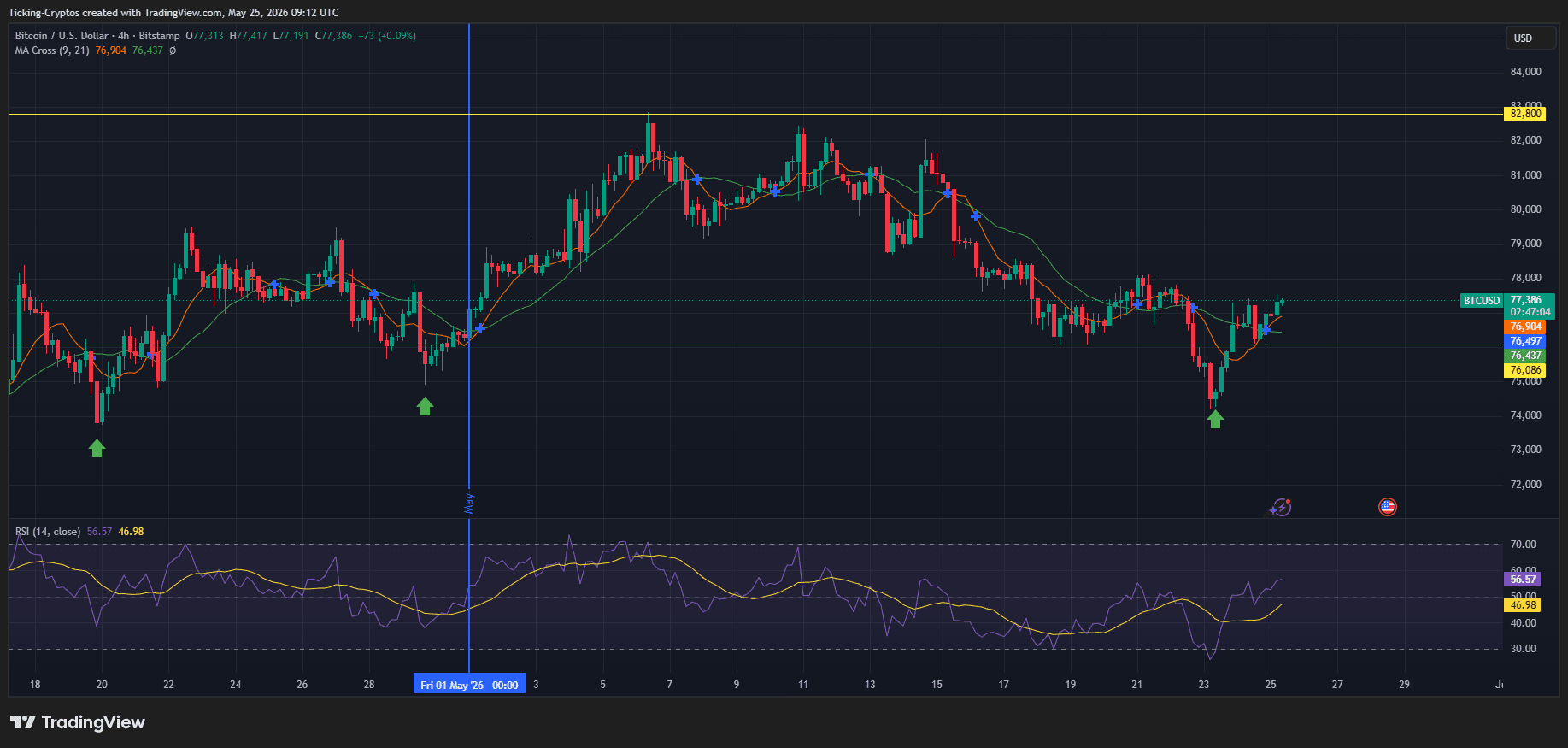
Track these movements live on the Bitcoin Price Ticker.
Mirroring the market leader, Ethereum is grinding inside a compressed zone just under its core psychological thresholds, occasionally threatening brief intraday breakouts before reverting back to its weekly average. Large-cap altcoins, including Solana ($SOL$) and XRP, are experiencing similarly suppressed daily volatility, driving the aggregate market Relative Strength Index (RSI) into a perfectly neutral stance.
With the market locked in this specific pattern, your strategy depends entirely on your financial time horizon and risk tolerance. Here is how to break down your approach.
If you are an investor looking at a multi-year horizon, this crypto consolidation phase is a gift. Historically, extended sideways grinds following sharp market recoveries represent healthy asset accumulation periods rather than structural decay.
If you are looking to generate active weekly cash flow, holding your breath for a massive breakout in this environment is a losing game. Instead, the current market structure is tailor-made for high-probability range trading.
When prices bounce predictably between a floor and a ceiling, risk management becomes incredibly precise:
To execute this strategy efficiently without high fees or slippage destroying your tight profit margins, it is vital to pick a platform with deep liquidity pools. Compare top-tier platforms via our comprehensive Crypto Exchange Comparison Guide.
The current crypto setup does not force an exclusive choice; it allows you to bifurcate your capital. A balanced approach means maintaining a core, untouched HODL spot portfolio stored in cold storage, while simultaneously using a separate, smaller allocation of capital to safely trade the clear horizontal ranges.
By avoiding the emotional trap of chasing breakouts on low volume, you can consistently harvest profits from the sideways churn while waiting for institutional forces to spark the next true trend.





