The dollar strengthened as geopolitical tensions in the Middle East intensified. Heightened uncertainty traditionally boosts demand for safe-haven assets and dollar liquidity, supporting the US currency against a range of peers. An additional factor remains the resilience of US macroeconomic indicators, which limits expectations of an imminent easing of the Federal Reserve’s monetary policy.
Amid the escalation of the conflict, investors are reducing risk exposure and reallocating capital into more defensive instruments. As a result, volatility has increased and capital inflows into dollar-denominated assets have strengthened, while traditional safe-haven currencies are showing a mixed reaction.
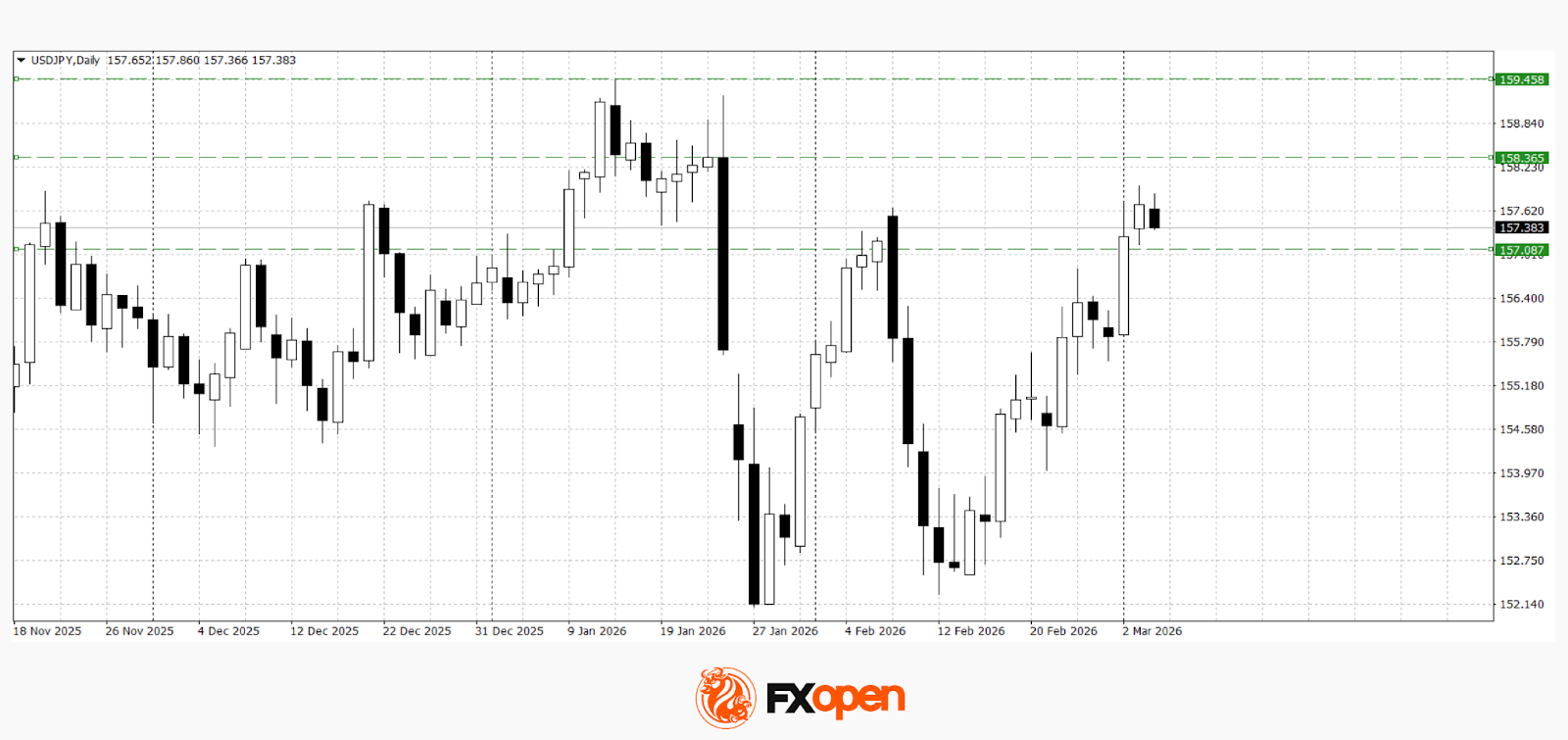
The USD/JPY pair maintains its upward structure and is approaching the year’s highs in the 158.40–159.50 range. Despite the yen’s status as a "safe-haven asset", the dollar retains the advantage due to higher US Treasury yields and stable expectations regarding the Federal Reserve’s policy rate. Should geopolitical tensions continue to intensify, a spike in volatility and a sharp correction towards 157.00 are possible; however, momentum currently remains on the dollar’s side.
Key events for USD/JPY:
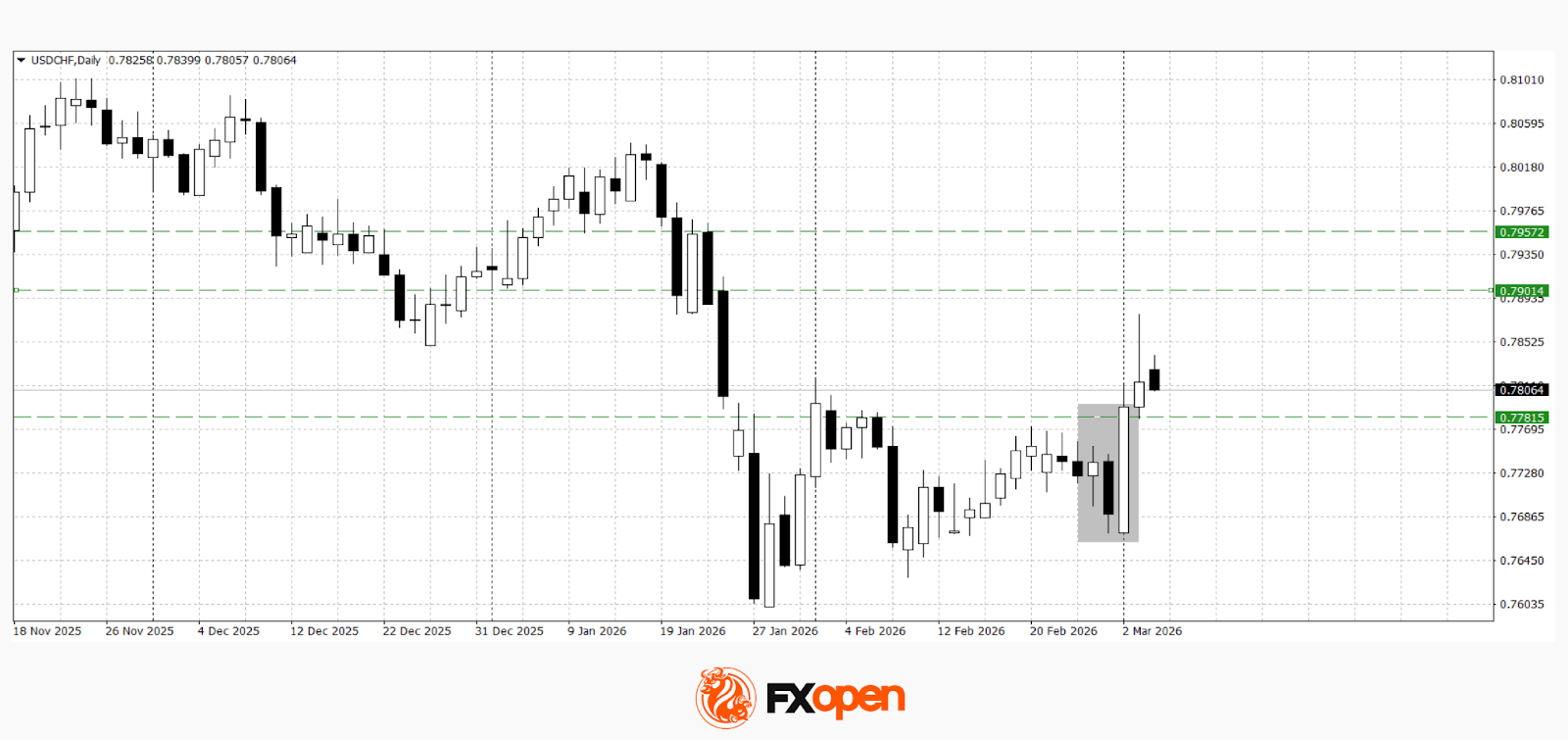
The USD/CHF pair is showing moderate dollar strength, although price action remains relatively restrained due to the Swiss franc’s "safe-haven" status. Nevertheless, technical analysis of USD/CHF suggests potential upside towards 0.7900–0.7950, as a “bullish engulfing” pattern has formed and been confirmed on the daily timeframe. The bullish scenario would be invalidated by a confident move below 0.7780.
Key events for USD/CHF: