The global financial markets are currently in the midst of a violent "risk-off" rotation. Bitcoin (BTC) has surrendered the $70,000 handle and recently dipped below the $66,000 level, while the altcoin market is seeing double-digit percentage losses. This isn't just a "crypto thing"—equities and bonds are also under immense pressure.
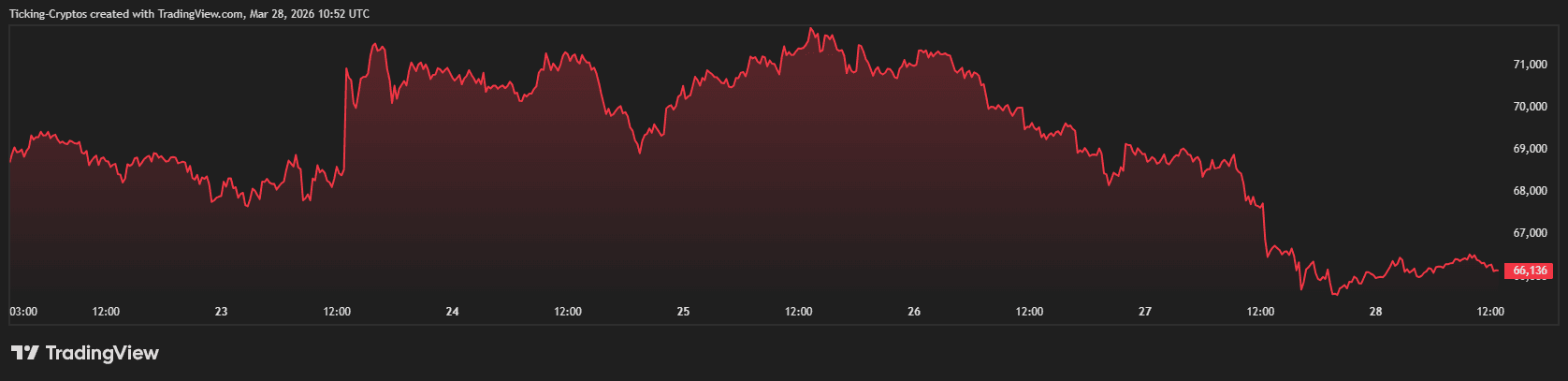
As of late March 2026, a "perfect storm" of geopolitical escalation, a deteriorating bond market, and a pivot in central bank expectations has drained liquidity from risk assets. Here is a deep dive into the three primary reasons the market is dumping.
The primary driver of the current "panic sell" is the worsening situation in the Middle East. Despite brief hopes for a diplomatic breakthrough, the conflict involving the United States, Israel, and Iran has reached a fever pitch.
The bond market is sending a massive "warning flare" to investors. We are currently witnessing a synchronized sell-off in sovereign debt, which is driving yields to levels not seen in decades.
Perhaps the most bearish development for the crypto market is the sudden shift in Federal Reserve expectations. Only a few months ago, the market was pricing in multiple rate cuts for 2026. That narrative has flipped entirely.
While the technicals and fundamentals look grim, one unconventional indicator to watch is the language used by President Donald Trump.
In recent cabinet meetings, Trump remarked that the "stock market hasn't come down a lot" despite the conflict. This suggests that the administration currently views the market decline as a manageable correction rather than a crisis.
The Reversal Signal: History suggests that a market bottom often coincides with a change in political rhetoric. Once the tone shifts from "the market is doing fine" to "the market is significantly undervalued" or "this is the best time to buy in history," we may see the first signs of a trend reversal.
For now, the structure remains bearish. If Bitcoin fails to reclaim $68,000, the next major support zone sits at the $62,600 level.





