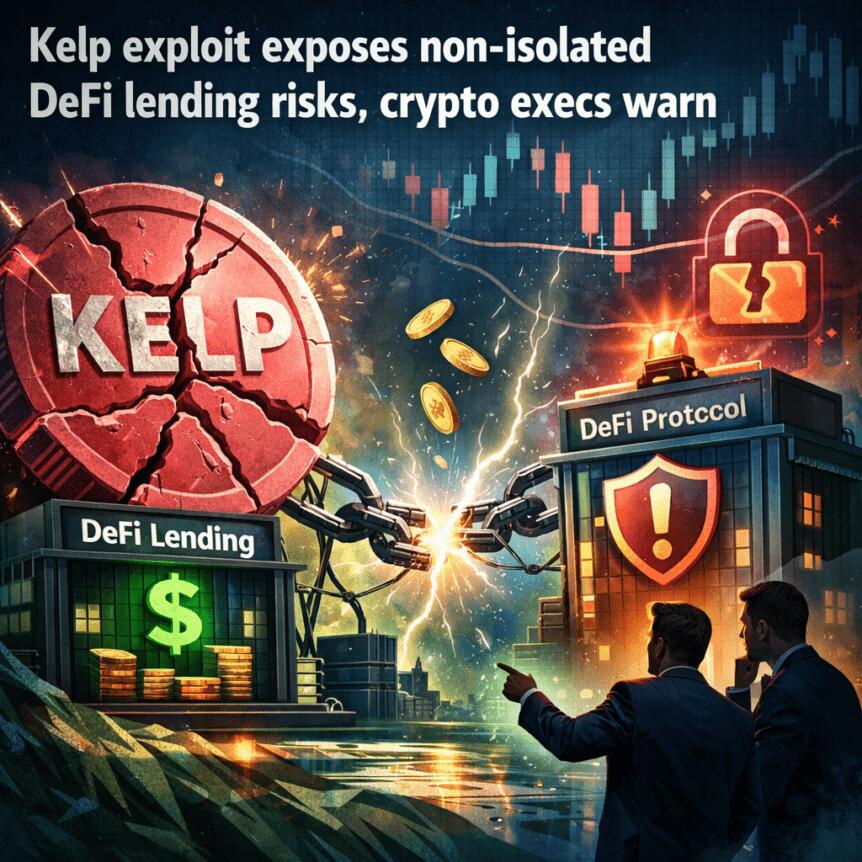
The Kelp restaking exploit underscores a broader vulnerability in DeFi: non-isolated lending and tightly integrated protocols can create rapid, cross-platform contagion. Industry insiders say the incident serves as a stress test for how risk can cascade beyond a single smart contract when assets and incentives are interconnected across multiple chains and products.
According to Michael Egorov, founder of Curve Finance, allowing lending frameworks to treat a wide array of collateral as interchangeable leverage exposes users to the risk of a single point of failure within the broader collateral ecosystem. In practical terms, a breach or misstep tied to one token can ripple through all assets backed by that same architecture, amplifying losses beyond the original target. Egorov’s observations align with a growing emphasis in DeFi risk management on collateral design and vault hygiene as the ecosystem grows more complex.
The Kelp project, which operates a restaking mechanism tied to the rsETH token, became the centerpiece of a weekend security incident when it was attacked, forcing a halt to Kelp’s smart contracts and triggering an urgent security review. Early estimates pegged misappropriated funds at around $293 million, with the platform moving quickly to investigate and mitigate the damage. The incident illustrates how nuanced DeFi constructs—restaking, liquidity provision, and cross-protocol guarantees—can present an expanded attack surface when combined with cross-chain functionality.
In the wake of the attack, Egorov urged DeFi teams to enhance asset vetting before accepting tokens as lending collateral, warning against single points of failure or exploitable surface areas within new digital assets. His guidance points to a broader industry push toward stronger due diligence on novel assets and more granular risk assessments for collateral acceptance on lending platforms.
The Kelp incident also spotlights the cross-chain dimension of the risk vector. Egorov cautioned that cross-chain frameworks and bridges, while enabling liquidity and interoperability, introduce significant attack surfaces. “Cross-chain is hard and potentially risky. Only use cross-chain infrastructure when absolutely necessary, and do it really carefully,” he said in an interview. The message arrives at a time when users increasingly depend on multi-chain strategies to access liquidity and yield opportunities, but security architectures have not always kept pace with rapid product innovation.
Crypto-security researchers framed the incident as a contagion event rather than a single-contract exploit. Cyvers, a blockchain security firm, described the Kelp attack as crossing protocol boundaries almost immediately. The incident affected at least nine DeFi protocols and platforms, including Aave, Fluid, Compound Finance, SparkLend, and Euler, all of which took steps to freeze rsETH markets or otherwise mitigate the fallout. The rapid cross-protocol response underscores how decentralized systems rely on a network of dependent components—lenders, oracles, bridges, and liquidity pools—to function. When one piece falters, others must quickly reconfigure risk controls to prevent broader losses.
“This was not just a protocol exploit. It immediately became a cross-protocol contagion event,” Cyvers CEO Deddy Lavid told Cointelegraph. The challenge is no longer just preventing exploits at the contract level, but understanding how fast they can cascade across integrated protocols.
The ripple effects from Kelp are not isolated to a handful of DeFi shops. The attack followed Drift Protocol’s about $280 million hack earlier in the month, and Cointelegraph notes that a string of other crypto platforms and DeFi exploits have marked a period of heightened risk activity for the sector. In total, losses from crypto hacks, code exploits, and scams in Q1 2026 were reported to be substantial, reinforcing the need for improved security, governance, and incident response across DeFi ecosystems.
The Kelp incident is a concrete reminder that highly specialized DeFi constructs—such as restaking mechanisms—do not exist in a vacuum. The rsETH token, while offering potential yield and staking mechanics, also creates dependencies on the health of the restaking pipeline and the security of the tokens used as collateral. When a vulnerability emerges in one component, other protocols relying on the same token or the same cross-chain infrastructure can be pulled into the crisis, sometimes within hours or minutes of the initial breach.
From a risk-management perspective, the episode underscores several practical steps for builders and operators. First, strengthening the governance and vetting process for new assets used in lending markets is critical. Second, there is a clear case for tighter, more auditable cross-chain interaction patterns—reducing trust assumptions where possible and defaulting to more conservative bridge usage. Third, incident response playbooks must embrace rapid cross-protocol coordination, including predefined withdrawal or pause criteria that can be executed decisively to limit losses.
For investors and traders, the unfolding narrative reinforces a cautious stance toward complex DeFi products that rely on multi-layer architectures. While such products can unlock innovative yield opportunities, they also carry layered risk—asset design risk, cross-chain risk, and governance risk—that can compound quickly in fast-moving market environments. As the sector digests this latest episode, market participants will be watching not only for immediate recoveries and protocol updates but also for longer-term shifts in collateral standards and security best practices across DeFi lending.
Analysts suggest that the Kelp incident could influence how regulators and industry groups frame risk disclosures and capital adequacy for DeFi platforms. As ecosystems become more interconnected, there is a growing call for standardized risk reporting around cross-chain activities, collateral diversification, and incident response metrics. While regulatory approaches vary by jurisdiction, the shared industry objective remains clear: build resilient infrastructure capable of withstanding rapid, multi-protocol shocks without compromising user funds.
The road ahead will likely feature a combination of enhanced asset vetting, more cautious cross-chain deployment, and stronger protocol-to-protocol coordination. The lessons from Kelp are not just about recovering from a single attack; they are about reshaping the safety net for an increasingly interconnected DeFi landscape.
Watching the next set of protocol updates and audits will be essential. As developers and security researchers digest the Kelp fallout, the market will likely see renewed emphasis on collateral risk controls, faster detection of cross-chain anomalies, and tighter governance processes to prevent similar contagion events from reoccurring.
Readers should stay tuned for further disclosures from affected platforms as they publish findings from post-incident reviews, patch timelines, and any changes to rsETH-related risk parameters. The evolving response from the DeFi community will be a critical barometer for how quickly the sector can translate security lessons into practical safeguards for users, traders, and liquidity providers.
This article was originally published as Kelp exploit exposes non-isolated DeFi lending risks, crypto execs warn on Crypto Breaking News – your trusted source for crypto news, Bitcoin news, and blockchain updates.





