
The latest leg of the crypto slump has been driven as much by position unwinds as by simple spot selling.
Over the weekend and into Monday, Bitcoin slid from the high‑$80,000s toward the mid‑$80,000 area, with some candles briefly pushing below $86,000. Ethereum dropped more than 5–7 percent in the same window, giving up the $3,000 handle and trading closer to $2,800. Major altcoins like XRP, Solana and BNB followed, posting mid‑single to double‑digit intraday losses.
A widely cited Yahoo Finance report notes that the weekend crash in Bitcoin, Ethereum and XRP triggered more than half a billion dollars in liquidations, with fears around stablecoins and selling pressure in specific tokens adding fuel.
One analysis of derivatives data highlighted that over 180,000 traders were wiped out within 24 hours, with total liquidations in the $500–$600 million range, mostly from long positions on BTC and ETH. Another piece put the figure closer to $640 million, with more than 200,000 accounts liquidated.
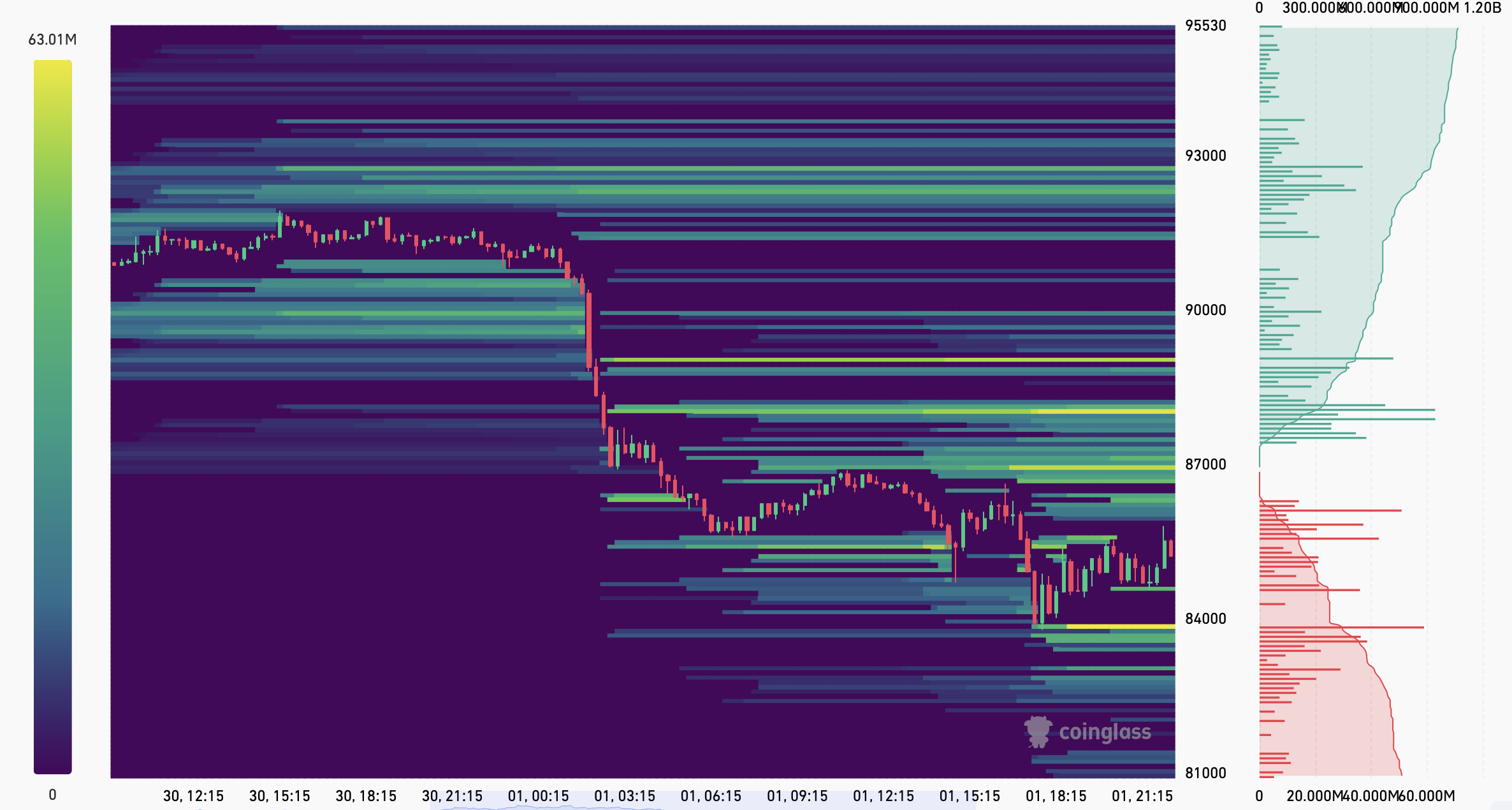
Across different datasets and time windows, the message is the same: a very large chunk of leveraged long exposure was flushed out in a short span of time.
Because each data provider slices the period slightly differently, the exact dollar number varies. But recent reports agree on the broad scale:
Zooming out, some analysts point out that this flush followed earlier shocks: in mid‑November, one weekly crash toward the low‑$80,000s triggered roughly $1.7 billion in liquidations across the market.
These numbers matter because they show how much of the market was riding on borrowed money.
When funding rates are high and open interest climbs, it is often a sign that traders are leaning heavily one way – in this case, long – using leverage. Thin weekend order books make that structure fragile:
High funding rates, crowded longs and thin weekend order books created exactly this kind of chain reaction, pulling BTC, ETH and SOL sharply lower.
From the outside, the drop can look sudden and mysterious. Under the surface, it is a mechanical process of clearing out leverage.
The leverage story is only half of the picture. Macro conditions – especially bond yields and expectations for Japanese interest rates – are making crypto extra sensitive right now.
Several recent reports link the latest crypto flush to a surge in Japanese government bond yields and speculation that the Bank of Japan may move further away from its ultra‑easy stance:
At the same time, U.S. Treasury yields have been choppy, and equity markets have shown signs of stress. A combination of higher real yields, concerns about global growth and uncertainty over how quickly central banks will cut rates has increased the risk premium demanded for speculative assets.
In this environment, a market already heavy with leveraged longs is more likely to react violently when macro headlines hit.
The weekend and Monday selling did not stop at Bitcoin and Ethereum. Coinglass and other trackers show meaningful liquidations and sharp price moves in majors such as XRP, Solana, BNB and ADA.
Some of the pressure was mechanical:
There were also asset‑specific narratives in the background – including renewed debates about stablecoin risk and token‑specific news – but in this window they mainly acted as extra accelerants on top of a macro‑driven flush.
Market commentators and derivatives desks are now focusing on a few key indicators to gauge whether volatility is likely to persist:
For traders and longer‑term investors, this episode reinforces some familiar lessons:
None of this is financial advice. Crypto remains an extremely volatile asset class, and phases like this show how quickly conditions can change.
The weekend and Monday selloff were not just about “somebody selling”. They were the result of a highly leveraged market colliding with a more hostile macro backdrop, especially rising bond yields and shifting expectations around Japan’s interest‑rate policy.
Hundreds of millions of dollars in forced liquidations across Bitcoin, Ethereum, XRP and other majors turned what started as a dip into a full‑scale flush. For now, the key questions are whether leverage has been reduced enough to stabilise the tape and whether bond markets, especially in Japan, calm down.
Until those pieces line up, traders should expect volatility to remain elevated and treat leverage with extra caution.
The post Liquidations And Volatility: How Leverage Turned A Dip Into A Crypto Flush appeared first on Crypto Adventure.





