The line between enthusiastic consumerism and dangerous mob mentality has completely dissolved in Western retail. Recent product launches across Europe and North America have witnessed unprecedented chaos, sending shockwaves through cultural and financial analysts alike. What began as an aggressive marketing push by corporate watch giants has officially devolved into physical altercations, broken glass, and police-enforced evacuations at high-end shopping centers.
Shoppers in major European cities recently surged past security barriers, forcing retail staff to lock doors in fear for their safety. In some locations, local authorities had to intervene to disperse hostile crowds. The catalyst for this physical violence? A non-limited, $400 mass-produced timekeeping accessory made of “bioceramic”—a proprietary marketing term for engineered plastic.
For those trying to understand why a low-cost, unserviceable quartz or basic mechanical watch can trigger a minor riot, the answer lies in manufactured psychological scarcity. The Swatch Group—which owns both accessible fashion brands and ultra-luxury powerhouses like Omega and Blancpain—has successfully engineered an artificial bottleneck.
By weaponizing high-profile brand collaborations (such as the historic MoonSwatch and subsequent dive watch collections) and refusing to sell them reliably online, the company forced thousands into physical queues. This deliberate distribution constraint, paired with aggressive secondary market flipping, transformed a simple retail release into a flashpoint of consumer desperation.
To fully grasp the gravity of the situation, it is necessary to examine how these retail events escalate from overnight camping to civil unrest.
When luxury aesthetics are democratized at a sub-$500 price point, it creates a toxic cocktail of consumer envy and opportunistic greed. The crowds gathered outside these boutiques generally consist of two distinct factions:
Because the Swatch Group fundamentally underestimated—or intentionally leveraged—the initial viral velocity of these launches, physical boutiques were left entirely unequipped. In cities like Leidschendam and Singapore, crowd density reached critical thresholds. When technical issues or limited stock announcements disrupted the lines, the psychological barrier of civil behavior shattered. People pushed, fought, and trampled structures just to secure a plastic watch that cannot even be mechanically repaired at a standard horological workshop.
This chaotic physical phenomenon is far from unique; rather, it is a localized, offline translation of the digital hysteria that gripped the financial landscape exactly five years ago.
During the historic bull run of 2021, the world witnessed an identical psychological breakdown occur entirely on the internet. Instead of physical storefronts, the battlegrounds were decentralized exchanges, NFT minting portals, and meme-coin launchpads. Millions of retail participants, driven by intense Fear Of Missing Out (FOMO), rushed digital liquidity pools, crashing networks and bidding up digital assets to irrational heights.
| Feature | The Swatch Collaboration Hype | The 2021 Crypto Market Frenzy |
|---|---|---|
| The Asset Class | Physical Bioceramic (Plastic) Timepieces | Digital Tokens / Non-Fungible Tokens |
| Access Bottleneck | Limited brick-and-mortar boutique locations | Network congestion and high Ethereum gas fees |
| Primary Driver | Brand prestige and immediate resale arbitrage | Speculative mania and overnight wealth generation |
| The Ultimate Risk | Illiquid physical inventory / unrepairable movement | Sharp market corrections and illiquid digital floor prices |
The underlying human software remains unchanged. Whether standing in the freezing rain outside a European mall or staying awake for 48 hours to click "Mint" on a digital art profile picture, the modern consumer is hyper-vulnerable to gamified scarcity.
The escalation of violence over a commodity that serves no vital survival function is a stark indicator of where hyper-consumerism has brought global society. We live in an era where identity is heavily tied to the acquisition of temporary cultural signifiers.
Major corporations have perfected the art of behavioral modification. By combining the scarcity tactics pioneered by streetwear brands with the legacy heritage of Swiss horology, they have turned basic shopping into a high-stakes competitive sport. The fact that human beings are willing to risk injury, legal consequences, and public humiliation for a mass-produced product highlights a profound existential void in the modern economic landscape—one that falsely equates the accumulation of material goods with true personal value.
While retail speculators bruise themselves in physical lines for a transient cultural trend, savvy market participants are looking at the underlying financials. The hype surrounding these bioceramic collaborations has directly fueled corporate balance sheets, a reality clearly reflected in the public markets. Over the past year, The Swatch Group Ord Shs (UHR:SWX) has experienced a massive valuation surge, climbing by more than 36% to sit comfortably above CHF 201.00.
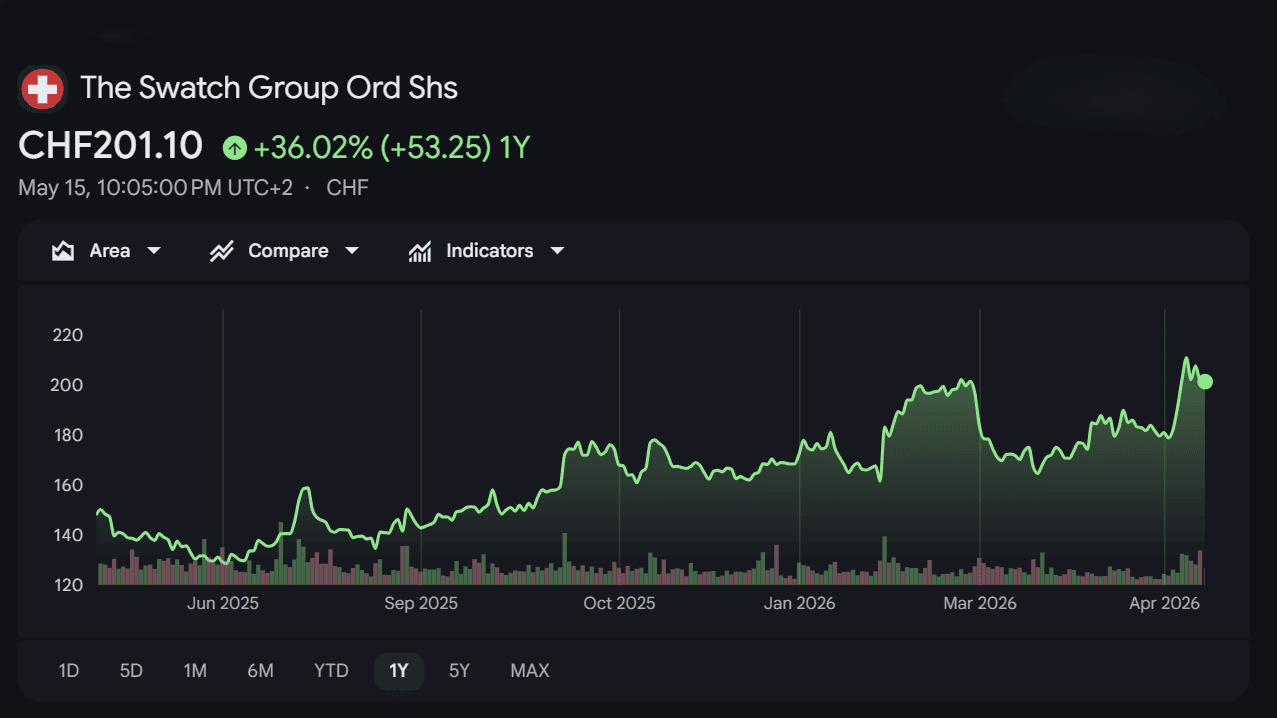
Investing in the parent company's equity presents a fundamentally stronger risk-to-reward ratio than purchasing the physical watch itself. Consumer trends are notoriously fickle; the secondary market premium on mass-produced fashion watches inevitably cools off as production caps scale up and novelty fades. Conversely, by holding the stock, you own a piece of the entire diversified empire—including luxury cash cows like Omega and Blancpain—capturing institutional value long after the storefront crowds have dispersed.
The modern digital asset ecosystem makes transitioning from crypto profits to legacy equity simpler than ever before. You no longer need to deal with traditional brokerage bureaucracies or restrictive funding hours to gain exposure to the Swiss stock market.
You can easily buy fractional shares of the Swatch Group without relying on complex, leveraged CFD structures. Utilizing platforms like Bitpanda allows you to maintain direct asset ownership, bridging the gap between decentralized wealth and traditional corporate equity effortlessly.
-> Check out our review on Bitpanda and get started here today.
While critics are quick to point out the clear similarities between the Swatch madness and the worst impulses of crypto’s historical bull markets, a critical ideological distinction must be made.
The internet-based financial mania of the past half-decade eventually paved the way for a deeper, institutional maturation. Unlike the dead-end consumerism of luxury fashion collaborations, the underlying infrastructure of the digital asset ecosystem was built as a direct antidote to societal dependency on legacy systems.
Crypto, at its core philosophical level, is not about buying digital collectibles to flex on social media; it is about establishing baseline financial freedom. Consider the systemic structural contrast:
The individuals fighting in line for a consumer watch are willingly subjugating themselves to a centralized corporate hierarchy for a product that holds them captive to a trend loop. Conversely, the true participants of the decentralized movement use digital networks to decouple themselves from centralized reliance entirely.





