The question of whether Ethereum (ETH) can really act as a store of value is coming up more and more as the network grows into a core part of the decentralized economy. That label used to belong almost entirely to Bitcoin, seen as “digital gold” because of its fixed supply. But since the Merge and the upgrades that followed, Ethereum has started to play by a different set of rules—and that’s starting to shift the conversation.
As of March 2026, Ethereum isn’t just for developers anymore. It’s become a global settlement layer. Still, with the price moving sideways lately, investors are asking the obvious question: is holding ETH actually a solid way to preserve value over time?
$Ethereum is starting to be seen as a real store of value—but it works differently than $Bitcoin. Bitcoin’s story is all about scarcity. Ethereum, on the other hand, gets its value from how much the network is actually used, plus the fact that it can generate yield.
By staking ETH, holders can earn a native return—usually around 2.8% to 3.5%. That helps offset inflation and adds a compounding effect you simply don’t get with assets that don’t produce any yield.
A store of value is an asset that maintains its purchasing power over time without significant depreciation. To qualify, an asset typically requires:
Looking at the technical data from the past five years, Ethereum has exhibited a distinct pattern of "high-velocity growth followed by structural consolidation."
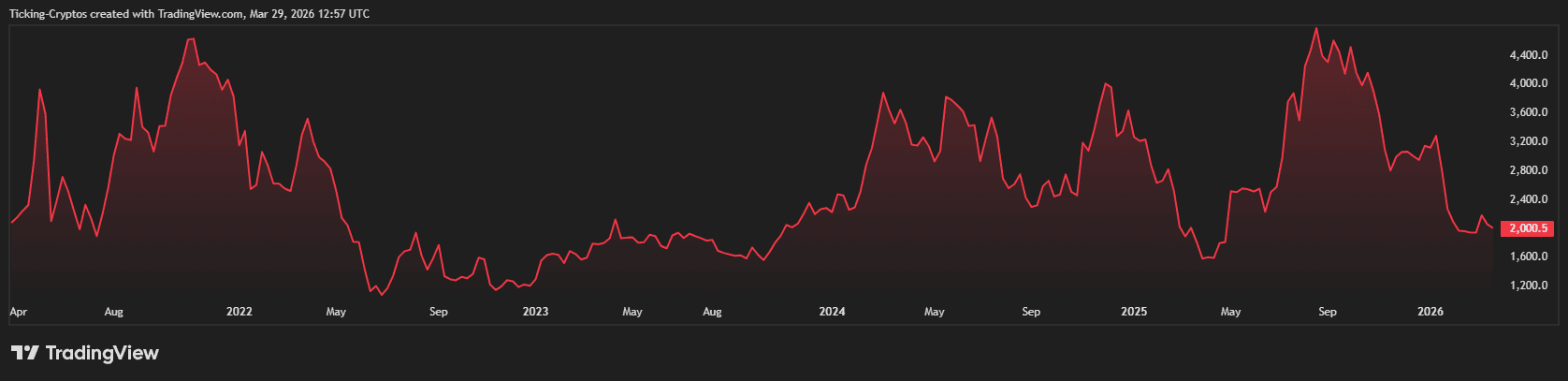
Since the peak of the 2021 bull run and the subsequent market correction, ETH has largely spent the period between 2024 and early 2026 consolidating within a massive horizontal channel.
This prolonged consolidation is actually a healthy sign for a "store of value" thesis. It suggests that Ethereum is moving away from the "lottery ticket" volatility of its early years and toward a more stable, mature asset profile.
The term "ultrasound money," coined by Ethereum researcher Justin Drake, suggests that if Bitcoin is "sound" because its supply is capped, Ethereum is "ultrasound" because its supply can actually shrink.
Under EIP-1559, a portion of every transaction fee is "burned" (destroyed). In 2026, we see a dual-track economic model:
Despite this fluctuation, Ethereum's total supply remains significantly lower than it would have been under the old Proof-of-Work system, maintaining its competitive edge against fiat currencies.
| Feature | Bitcoin ($BTC) | Ethereum ($ETH) |
|---|---|---|
| Primary Thesis | Digital Gold / Scarcity | Digital Oil / Yield-Bearing Asset |
| Supply Cap | Fixed (21 Million) | Dynamic (Burn vs. Issuance) |
| Native Yield | None (Requires 3rd party) | 2.8% - 4% via Staking |
| Utility | Payment / Store of Value | Smart Contracts / DeFi / RWAs |
| Institutional View | Macro Hedge | Tech Infrastructure Play |
While Bitcoin remains the king of "pure" scarcity, major institutions like BlackRock have highlighted Ethereum's role in the tokenization of real-world assets. This utility creates a "structural demand" for ETH that persists regardless of speculative market cycles.
No investment is without risk. For Ethereum to maintain its status, it must navigate:
For investors seeking a balance between growth and preservation, Ethereum is a compelling store of value. It offers the security of a battle-tested blockchain combined with the unique advantage of native yield. While it may experience more volatility than Bitcoin, its role as the "Internet's Bond" makes it a foundational asset for any modern digital portfolio.
As we look toward the remainder of 2026, the current consolidation phase provides a strategic entry point for those who believe in the long-term "ultrasound" roadmap.





