The success of any bold idea hinges on those daring enough to put it to the test — and Proof-of-History was no different.
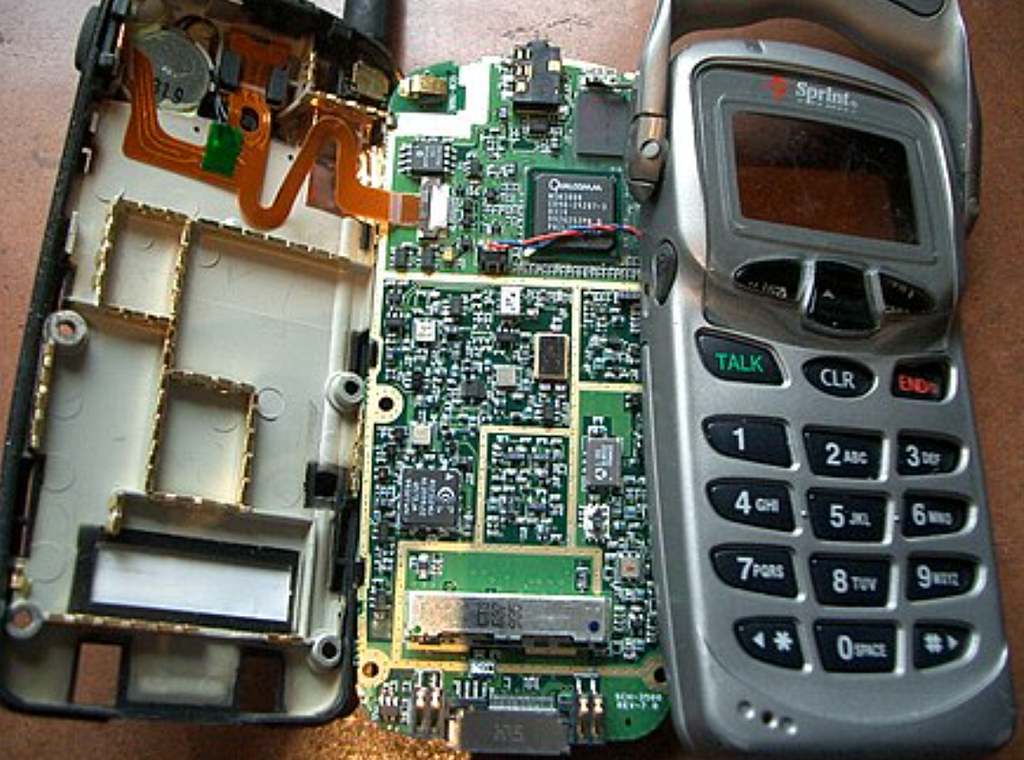
Anatoly Yakovenko spent 13 years at Qualcomm, a leading semiconductor company in San Diego, California. His journey started with QChat, and then he moved to BREW, Qualcomm’s mobile app platform built for CDMA phones. Binary Runtime Environment for Wireless or BREW is an obsolete app development platform designed for CDMA mobile phones.
Unlike most modern phones that use SIM cards, CDMA phones store network information directly in their hardware.
At the time, Code Division Multiple Access (CDMA) mobile phones had very little processing power and memory, and so couldn’t run complex apps or multitask. They could only manage basic tasks, and even those needed a bit of tweaking.
One of Anatoly’s jobs at Qualcomm was to make sure the phone software running on the phones ran quickly and smoothly. Since the phones had such limited capabilities, he and his colleagues couldn’t rely on standard coding methods. Instead, they had to manually write and fine-tune the C or C++ code to ensure the phone could perform its tasks without slowing down or crashing.
This time-consuming process required a deep understanding of both hardware and software to squeeze out every bit of performance. But it taught Anatoly the art of maximizing output with minimal resources — a lesson that would later shape Solana’s design.
After Qualcomm, Anatoly joined Mesosphere (now known as D2iQ), specializing in distributed systems and cloud-native infrastructure. Thereafter, he moved to Dropbox in May 2017, a cloud storage and file-sharing company, where he worked on compression technologies.
By this time, the ICO boom was gaining momentum, fueled by Ethereum’s smart contract capabilities that made it easy for projects to raise funds. This drove demand for ETH, from trading at around $8–$10 in January 2017 to trading at around $269.36 in June 2017.
More people caught the crypto bug, including Anatoly. As the hype grew, new blockchain projects popped up, all aiming to compete with Ethereum. However, many of these competitors were simply copying Ethereum’s code without solving its scalability problem.
Anatoly wanted to join the fun, but not by building another Ethereum knockoff. If anything, he aimed to crack the Blockchain Trilemma that plagued Ethereum and Bitcoin.
But he wasn’t quite sure how he was going to reduce network latency and boost throughput without messing up security and decentralization.
Then, one weeknight, after “two coffees and a beer,” inspiration struck at 4 a.m. Anatoly realized he could use timestamps to fix the scalability problems of Ethereum and Bitcoin. The simplest way would be to get computers that didn’t trust each other to agree on time. This idea consumed him to the point of being “manic for a week.”
And so, just five months into his role at Dropbox. He left in October 2017 to pursue his idea full-time.
He reconnected with an old friend, Raj Gokal — an experienced investor, founder, and product leader. Raj immediately understood Anatoly’s vision: a blockchain that could dramatically boost speed and throughput by introducing a shared sense of time.
Not long after, Raj joined as a co-founder of Solana, building the business side of the company and focusing on operations, growth, and strategy.
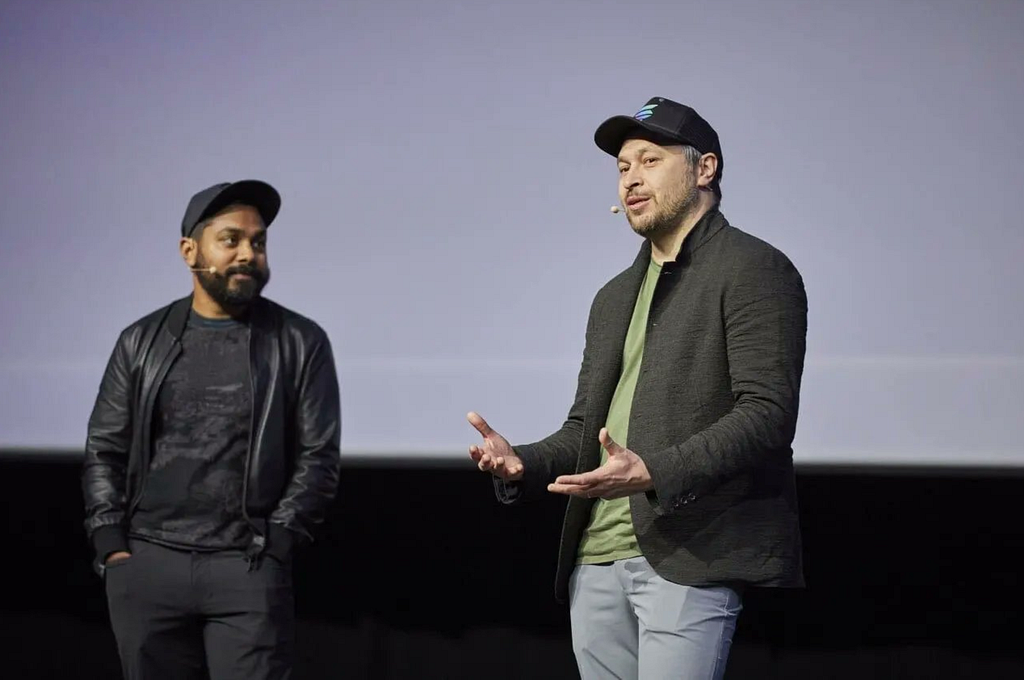
In late 2017, Anatoly published the draft of Solana’s whitepaper, which explained a new way to keep track of time on a blockchain. This method, which he called Proof-of-History, automates blockchain transaction ordering to make transactions more scalable.
Anatoly needed more hands to help develop the core technology behind Solana, so he brought in Greg Fitzgerald and Stephen Akridge, two former Qualcomm colleagues with whom he used to work.
Together, they further refined the project:

With these advancements, the team began seeking funding for Solana.
Alan Yu, Solana’s business development lead and a former Google employee, helped the team secure a spot at Xoogler Demo Day. This event, held at Google’s headquarters, provided a platform for startups founded by ex-Google employees or Xooglers to pitch their ideas to investors.
During the event, Anatoly delivered a short pitch that highlighted Solana’s strengths, stating:
“NASA can handle over 500,000 messages per second. Solana can handle 700,000 transactions per second on a 1-gigabit network of commodity hardware.”
This pitch played a key role in attracting attention and initial funding for the project. By June 2018, the team had scaled the technology to run on cloud-based networks. On July 19th, they launched a 50-node, permissioned public testnet that consistently handled bursts of 250,000 transactions per second (TPS).
Progress continued throughout the year, and in December 2018, Solana released version 0.10.0, codenamed Pillbox. This updated version expanded the testnet to 150 nodes running on a gigabit network, achieving an average throughput of 200,000 TPS and bursts exceeding 500,000 TPS.
Despite the team’s ongoing efforts to secure funding and grow, the crypto winter of 2018, caused by numerous fraudulent ICOs, created skepticism around cryptocurrencies and made fundraising difficult.
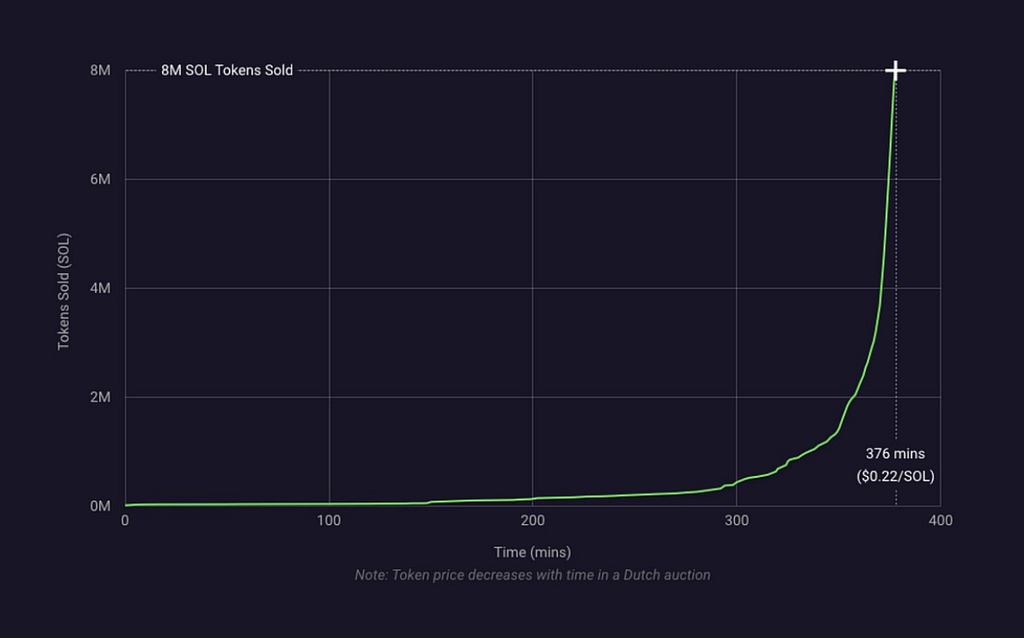
Eventually, venture capital (VC) firms like Multicoin Capital, Foundation Capital, and Slow Ventures gave Solana its initial funding. This helped the team to continue developing the blockchain, although the project’s real growth would come after its official launch in March 2020, shortly after raising $1.76 million in a public token auction hosted on CoinList.
At launch, the mainnet supported transfer functions and basic programs but didn’t provide any staking rewards to validators and node operators as Solana was still figuring out its long-term plan for issuing new tokens as rewards.
Reflecting on those early days working with the network validators, Anatoly shared in a podcast interview with Acquired:
“We started with a group of dedicated people that were there throughout our first launch that crashed in 20 minutes, the second launch that crashed in 2 hours and over and over they came back because they were true [solana] believers.”
But it wasn’t just blind faith that kept them coming back. Every time doubt crept in or challenges arose, they held on because they believed in Anatoly’s vision etched in Solana’s whitepaper.
Something about that 32-page document made them think… this could actually work.
References
Acquired. (2021, July 18). Special: Solana (with CEO Anatoly Yakovenko). Acquired. Retrieved February 24, 2025, from https://www.acquired.fm/episodes/solana-with-ceo-anatoly-yakovenko
Cointelegraph. (2017, June 11). Four main factors that explain 3,000 percent rally of Ethereum in 2017. Cointelegraph. https://cointelegraph.com/news/four-main-factors-that-explain-3000-percent-rally-of-ethereum-in-2017
Cointelegraph. (2018, July 13). New study says 80 percent of ICOs conducted in 2017 were scams. Cointelegraph. https://cointelegraph.com/news/new-study-says-80-percent-of-icos-conducted-in-2017-were-scams
Cointelegraph. (2024, April 2). History of Crypto: The ICO Boom and Ethereum’s Evolution. Cointelegraph. https://cointelegraph.com/news/ethereum-ico-boom-history-crypto
FinNotes. (n.d.). Anatoly Yakovenko. FinNotes. Retrieved February 25, 2025, from https://www.finnotes.org/people/anatoly-yakovenko
IQ.wiki. (n.d.). Anatoly Yakovenko. IQ.wiki. Retrieved February 22, 2025, from https://iq.wiki/wiki/anatoly-yakovenko
Messari. (n.d.). Anatoly Yakovenko Investments, Portfolio. Messari. Retrieved February 25, 2025, from https://messari.io/person/anatoly-yakovenko
Osprey Funds. (2021). Speed and Scale for the 21st Century. Osprey Funds. https://ospreyfunds.io/wpcontent/uploads/Osprey_Lightpaper_Solana_2021.pdf
Solana Compass. (2020, October 6). Solana’s History: When Was SOL launched? Solana Compass. https://solanacompass.com/solana/solanas-history-when-was-sol-launched
Solana. (2018, April 25). Solana: The world’s fastest blockchain (elevator pitch at Google Headquarters) [Video]. YouTube. https://www.youtube.com/watch?v=jG5nlXO499Q
Solana Foundation. (2023, March 23). Solana raises 1.76 million in sold-out CoinList auction. Solana. https://solana.com/news/solana-raises-1-76-million-in-sold-out-coinlist-auction
Solana Labs. (2017). Solana: A new architecture for a high performance blockchain. Solana Labs. https://solana.com/solana-whitepaper.pdf
Solana Labs. (2018). Solana v0.10.0 Release Notes. Solana Labs. https://newreleases.io/project/github/solana-labs/solana/release/v0.10.0
Solana Labs. (n.d.). Solana Labs GitHub repositories. GitHub. Retrieved February 25, 2025, from https://github.com/solana-labs
Timepath. (n.d.). Solana. Timepath. Retrieved February 25, 2025, from https://timepath.org/solana
The Block. (n.d.). Anatoly Yakovenko. The Block. Retrieved February 25, 2025, fromhttps://www.theblock.co/profile/293239/anatoly-yakovenko
Wikipedia contributors. (n.d.). Binary Runtime Environment for Wireless. Wikipedia. Retrieved February 23, 2025, from https://en.wikipedia.org/wiki/Binary_Runtime_Environment_for_Wireless
Wikipedia contributors. (n.d.). LLVM. Wikipedia. Retrieved February 23, 2025, from https://en.wikipedia.org/wiki/LLVM
Yakovenko, A. (n.d.). Anatoly Yakovenko — Resume. Retrieved February 25, 2025, from https://aeyakovenko.github.io/resume.html
This article took me a long-ass week, several cups of coffee, and about 38 open tabs (including YouTube videos and podcast interviews) to complete.
I’m pretty sure the details are spot-on, but if you catch something off, suggest an edit in the comments.
Thanks! 🙂
#2 Solana: The Race Against Time was originally published in Coinmonks on Medium, where people are continuing the conversation by highlighting and responding to this story.