
The global stablecoin sector has rapidly transformed from a niche crypto segment into a foundational pillar of digital finance. Today, stablecoins facilitate trillions of dollars in cross-border transactions, support decentralized finance ecosystems, and increasingly serve as settlement tools for institutions worldwide. However, as their influence grows, so do the risks surrounding them.
A new threat intelligence report released by Skynet highlights two major challenges facing the stablecoin ecosystem in 2026: the escalating sophistication of cyberattacks targeting stablecoin infrastructure and the rise of state-linked stablecoins designed to bypass international sanctions. The report paints a picture of a rapidly evolving landscape where financial innovation and geopolitical conflict are becoming increasingly intertwined.
Historically, crypto-related attacks focused primarily on vulnerabilities within smart contracts. However, attackers are now shifting their attention toward the broader infrastructure supporting stablecoins, including bridges, custody platforms, treasury systems, and payment networks.
Cross-chain bridges have emerged as one of the most attractive targets for cybercriminals. These protocols enable assets to move between different blockchain networks, making them essential for modern crypto markets. Yet their complexity also creates opportunities for exploitation.
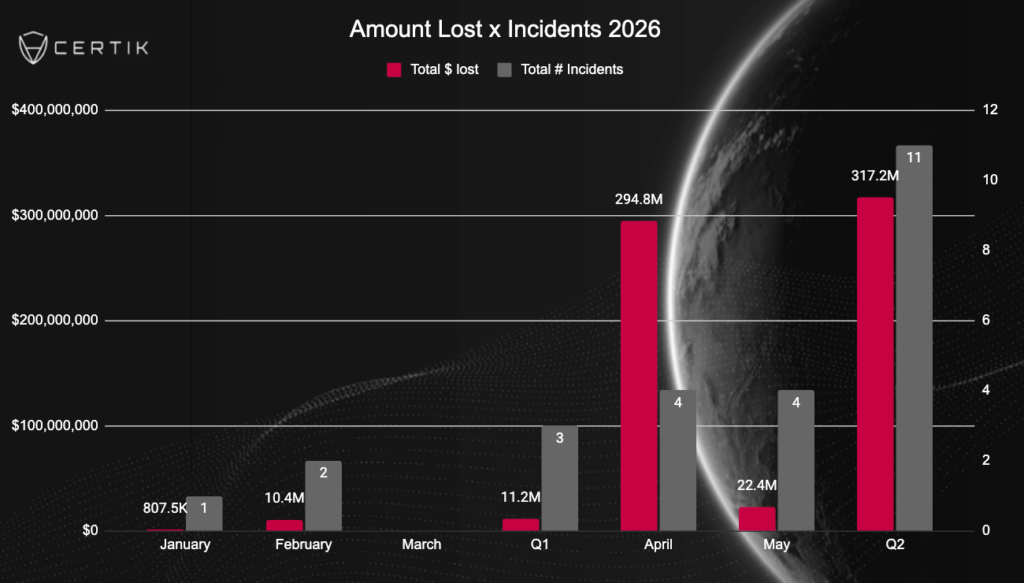
According to the report, bridge-related incidents generated more than $328 million in losses during the first half of 2026 alone. The largest event involved Kelp DAO, which suffered a wallet compromise that resulted in losses exceeding $291 million.
The growing popularity of interoperability solutions has increased the potential impact of attacks. A single bridge vulnerability can expose liquidity across multiple blockchain ecosystems simultaneously, magnifying financial damage. Researchers also noted a significant shift in attack methods. Rather than exploiting coding flaws, threat actors are increasingly targeting wallet security and operational controls.
Wallet compromises accounted for the majority of major DeFi losses in 2026 by value. This trend suggests that attackers are finding greater success by exploiting weak access controls, compromised credentials, and treasury management systems instead of attacking smart contracts directly.
As institutions expand their use of stablecoins, custody providers and treasury management platforms have become critical components of the digital asset economy. These services handle large amounts of capital and often rely on complex operational infrastructures. As a result, they present lucrative targets for attackers seeking maximum financial gain.
The report identifies several key vulnerabilities, including compromised private keys, insider threats, cloud infrastructure weaknesses, and poorly configured access management systems.
The increasing convergence of traditional finance and blockchain technology is also changing the nature of threats. Stablecoin platforms are now vulnerable to attack techniques commonly associated with conventional financial crime, including API exploitation, payment fraud, and compliance system manipulation. This shift reflects the growing maturity of the sector. Stablecoins are no longer merely speculative assets but have evolved into critical components of global financial infrastructure.
Another concern highlighted by researchers is the growing complexity of decentralized finance ecosystems. Stablecoins serve as foundational assets across lending platforms, derivatives protocols, liquidity pools, and automated market makers. Because these applications are deeply interconnected, vulnerabilities in one system can quickly spread throughout the broader ecosystem.
Attackers have repeatedly used flash loans, oracle manipulation, governance exploits, and liquidity attacks to destabilize protocols and generate profits. Since stablecoins often function as collateral for other financial products, disruptions can trigger cascading effects that impact multiple platforms simultaneously. As DeFi continues expanding, managing composability risk will become increasingly important for developers, institutions, and regulators alike.
While cyberattacks represent one side of the threat landscape, the report highlights a second and potentially more complex challenge: the emergence of stablecoins designed specifically to operate outside Western regulatory frameworks.
The most notable example is A7A5, a Russian-ruble-backed stablecoin launched in January 2025. Within just one year, A7A5 reportedly processed more than $110 billion in cumulative on-chain transactions and captured approximately 43% of the global non-U.S. dollar stablecoin market. The token has become a key component of Russia’s alternative financial infrastructure as the country seeks to reduce dependence on Western-controlled payment systems.
Unlike traditional stablecoins such as USDT and USDC, A7A5 was created within a network of entities already subject to international sanctions. Its issuer, reserve custodian, and operational infrastructure are linked to organizations sanctioned by the United States, United Kingdom, and European Union.
Despite these restrictions, the stablecoin has continued to expand. Researchers found that the number of A7A5 holders increased steadily from roughly 13,000 in early 2025 to approximately 29,000 by May 2026, with no significant slowdown following sanctions announcements. This suggests that the token’s user base operates largely outside jurisdictions where Western sanctions exert meaningful influence.
The report describes A7A5 as a proof of concept demonstrating how sanctioned actors can build and maintain large-scale financial networks using blockchain technology. The token is reportedly backed by ruble deposits and operates across both Ethereum and Tron, although nearly all circulating supply exists on Tron. Its architecture mirrors many features found in mainstream stablecoins, including minting controls, wallet blacklisting capabilities, token destruction functions, and emergency pause mechanisms.
However, unlike Western-issued stablecoins, governance and compliance functions remain under the control of entities beyond Western regulatory reach.
Researchers also highlighted concerns regarding the broader ecosystem surrounding A7A5. Associated platforms have previously been linked to ransomware operations and illicit financial activity, creating additional anti-money laundering concerns. The report further notes that Russia has been actively promoting the A7 network internationally, particularly in parts of Africa where regulatory oversight remains fragmented.
Countries such as Nigeria and Zimbabwe have emerged as areas of strategic interest, potentially creating new channels for cross-border settlements that bypass traditional banking systems.
The findings underscore how the stablecoin industry is entering a new phase of development. Cybercriminals are targeting increasingly sophisticated infrastructure, while geopolitical actors are leveraging blockchain technology to construct alternative financial networks.
For financial institutions, exchanges, and compliance teams, adapting to this environment will require stronger security controls, enhanced monitoring of wallet activity, improved bridge protection mechanisms, and more comprehensive sanctions screening programs.
The report concludes that stablecoins are no longer merely digital assets. They have become strategic financial infrastructure, making them attractive targets for both cybercriminals seeking profit and nation-state actors pursuing economic objectives. As adoption continues to accelerate, the ability to secure these networks and manage emerging geopolitical risks will play a critical role in shaping the future of digital finance.





