
The US dollar strengthened following the release of stronger-than-expected inflation data, which reinforced expectations that the Federal Reserve will maintain a restrictive monetary policy stance. US consumer prices rose to their highest levels since May 2023, renewing concerns over persistent inflationary pressure. This pushed Treasury yields higher and supported demand for the dollar. Additional support came from renewed speculation among some market participants that the Fed could still consider further tightening.
Despite the stronger dollar, the continuation of the upward move remains uncertain. Following the sharp rally, both USD/JPY and USD/CAD tested important resistance levels, but the market has so far failed to secure a sustained break above them. This suggests that investors remain cautious and that the latest bullish impulse has yet to be fully confirmed.
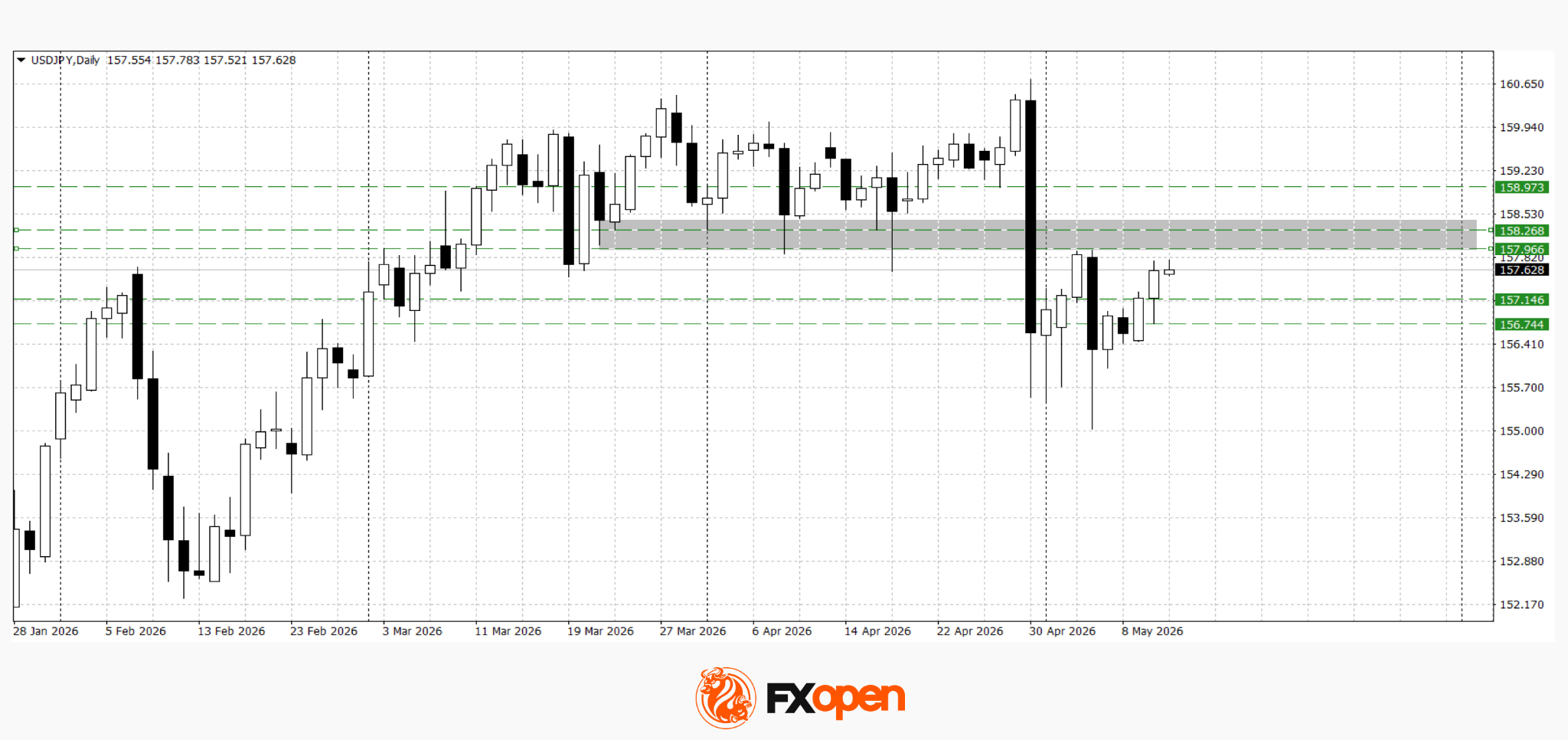
USD/JPY advanced on the back of accelerating inflation and rising US bond yields, but the pair failed to hold above the key resistance area between 158.00 and 158.20. Technical analysis points to a possible retest of recent support levels around 157.20–156.70. If the pair manages to break above 158.20 during the coming sessions, a move towards 159.00 may follow.
Key Events For USD/JPY:
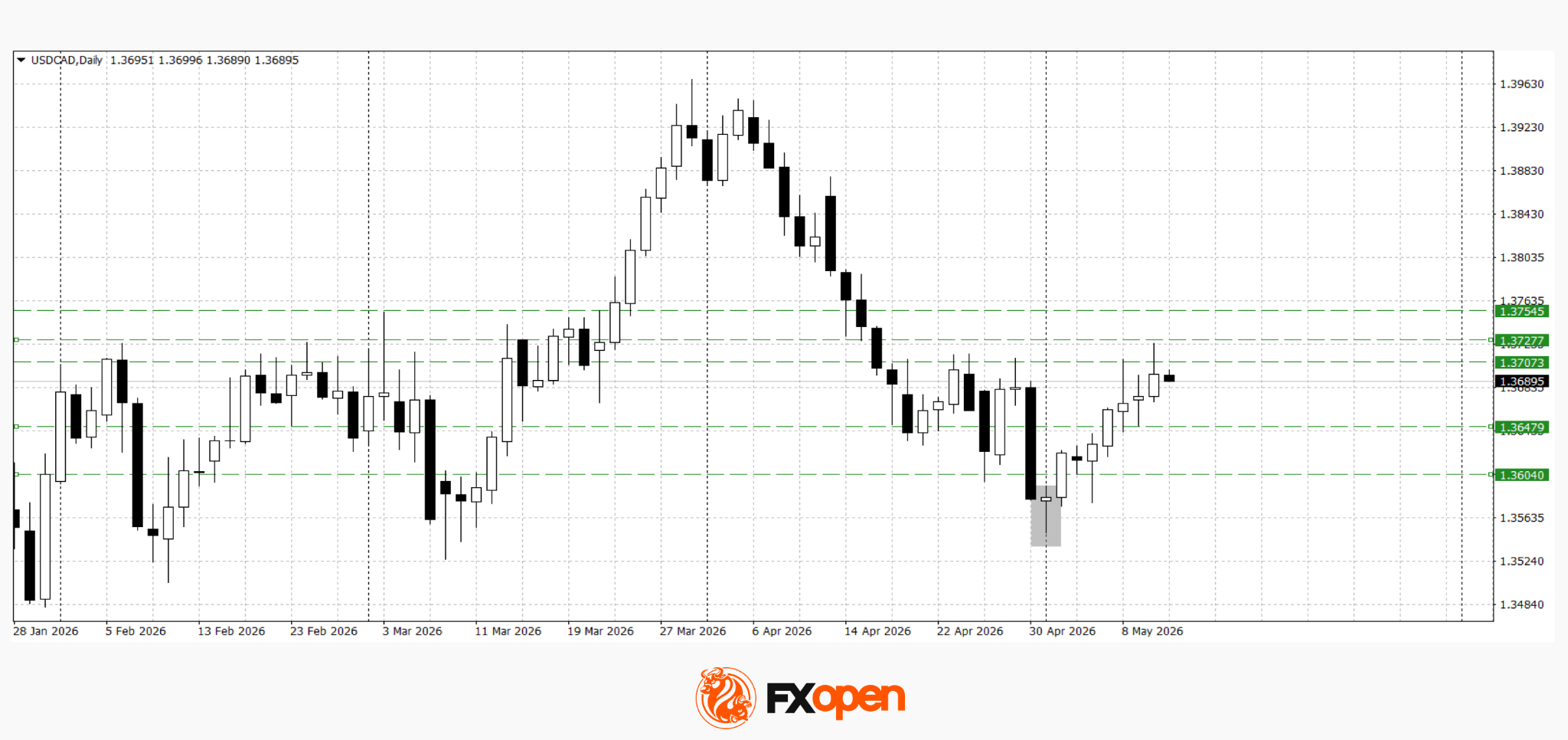
USD/CAD continues to reflect the bullish hammer pattern formed on the daily timeframe on 1 May. However, yesterday’s upward move lost momentum near the important resistance area between 1.3700 and 1.3730. If buyers manage to establish the price above these levels in the coming sessions, the pair could advance towards 1.3750. Otherwise, a decline towards 1.3600–1.3650 remains possible.
Key Events For USD/CAD:
Overall, stronger inflation data has supported the dollar and strengthened expectations of tighter Fed policy. However, the inability of USD/JPY and USD/CAD to break decisively above resistance levels points to ongoing market uncertainty. If inflationary pressure remains elevated, the dollar’s advance could continue, while a weaker market reaction to upcoming data may result in both pairs returning to previous ranges and entering a corrective phase. Market response to further inflation and production data will be crucial in confirming the current trend.





