TL;DR
1inch introduced Aqua as a new liquidity layer that reshapes how capital moves across the DeFi ecosystem. The protocol applies a shared-liquidity model that prevents fragmentation across pools and removes the traditional logic of deposits and lockups.
Aqua allows a single amount of capital to support multiple strategies simultaneously without leaving the user’s wallet. That approach aims to correct a structural problem: the competition among protocols to attract liquidity, which creates opportunity costs and isolated strategies that operate with limited efficiency.
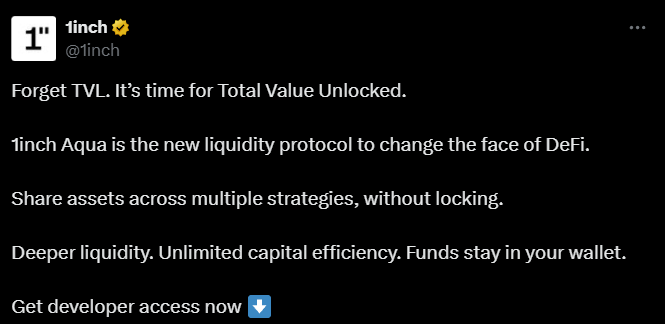
The announcement took place at Devconnect in Argentina, an event where teams usually present technical developments focused on the Ethereum ecosystem. There, 1inch released early access to Aqua’s SDK, libraries and documentation so developers can integrate the model, test its instructions, validate assumptions and build on an architecture that aims to serve as a new liquidity base for Web3. The team also introduced a rewards program offering up to $100,000 for contributions, optimizations and bug reports.

Aqua reorganizes market mechanics. Instead of users depositing, splitting or locking capital across specific pools, each wallet functions as a self-custodial AMM. Strategies draw and return liquidity atomically under defined rules, creating a capital multiplier: a single balance can support different yield approaches simultaneously without forming silos.
This model also simplifies developers’ work. Aqua fully removes deposit and withdrawal management at the application level; strategies check balances instead of handling user funds.

1inch aims to redefine capital efficiency across the DeFi ecosystem and build an environment where strategies can cooperate on a shared liquidity base rather than compete for deposits





