Bitcoin dropped to approximately $107,000 on October 21, 2025, while Ethereum fell below $3,900. The decline continues one of the year’s most dramatic sell-offs in the cryptocurrency market.
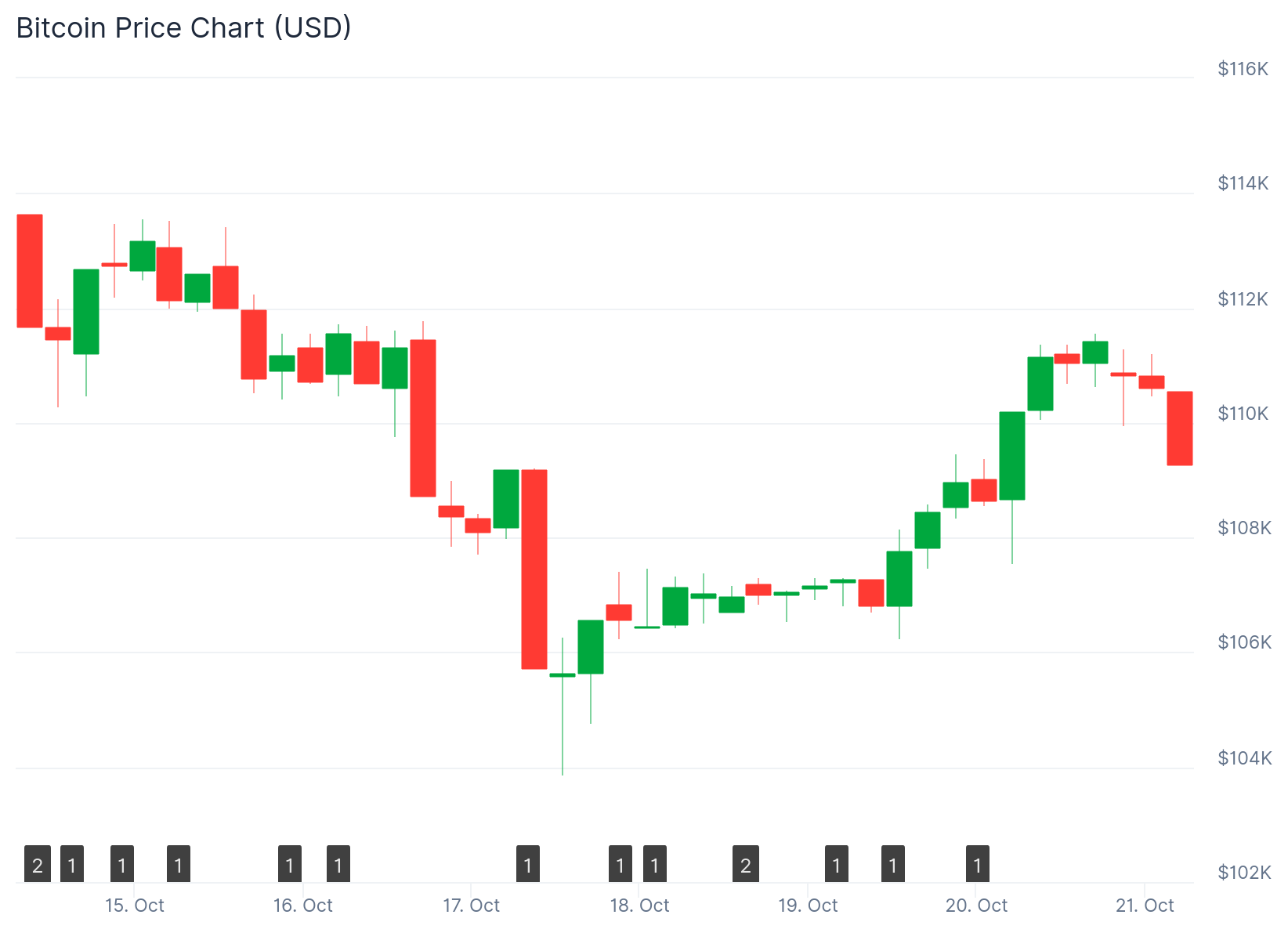
The downturn stems from multiple economic pressures. Rising U.S. real yields and a stronger dollar have created headwinds for risk assets. Trade tensions between the United States and China escalated after President Donald Trump announced a 100% tariff on Chinese tech imports.
The tariff announcement rattled global markets. Investors fled risky assets across multiple sectors. The crypto market experienced particularly severe damage.
Over $19 billion in leveraged crypto futures positions were liquidated last week. This represents the largest single-day crypto liquidation event ever recorded. The mass liquidations occurred as traders who had borrowed money to amplify their bets were forced to close positions.
Bitcoin had climbed above $126,000 earlier in October. The rapid rise created excessive leverage in the market. Analysts describe the current sell-off as a necessary deleveraging phase.
Spot Bitcoin and Ethereum exchange-traded funds saw heavy outflows. These investment products had helped stabilize prices during 2025’s bull run. Institutions pulled money from ETFs as they reduced portfolio risk.
On October 20, Ethereum spot ETFs recorded a total net outflow of $146 million, marking the third consecutive day of outflows. Bitcoin spot ETFs saw a total net outflow of $40.47 million, extending their four-day streak of withdrawals.
https://t.co/Tvs2oCSxTg pic.twitter.com/EiXVJBKLbK— Wu Blockchain (@WuBlockchain) October 21, 2025
The ETF outflows created additional pressure on prices. When large amounts of money exit these funds, it triggers liquidity drains. Collapsing collateral margins then force additional sales.
The CoinMarketCap Fear & Greed Index fell to 33. This reading indicates deep fear across crypto markets. Futures open interest is declining as traders exit positions.
Funding rates turned negative. This metric shows traders are betting on further price drops. The pessimistic sentiment has created a feedback loop of selling pressure.
Alternative cryptocurrencies suffered larger losses than Bitcoin. Solana, Cardano, and Avalanche logged weekly declines between 25% and 40%. Smaller market cap coins typically experience more volatility during corrections.
Some institutional investors view the crash as a buying opportunity. BitMine and Strategy reportedly accumulated coins during the dip. These firms compare the current period to previous consolidation phases that preceded new highs.
The sell-off occurred after Bitcoin reached historic price levels. This differs from corrections that happen during bear markets. Analysts say structural demand for digital assets remains intact despite the sharp decline.
The broader stock market showed mixed signals on October 21. Dow Jones, S&P 500, and Nasdaq futures slipped slightly more than 0.1%. Investors focused on upcoming corporate earnings reports from companies like Netflix and General Motors.
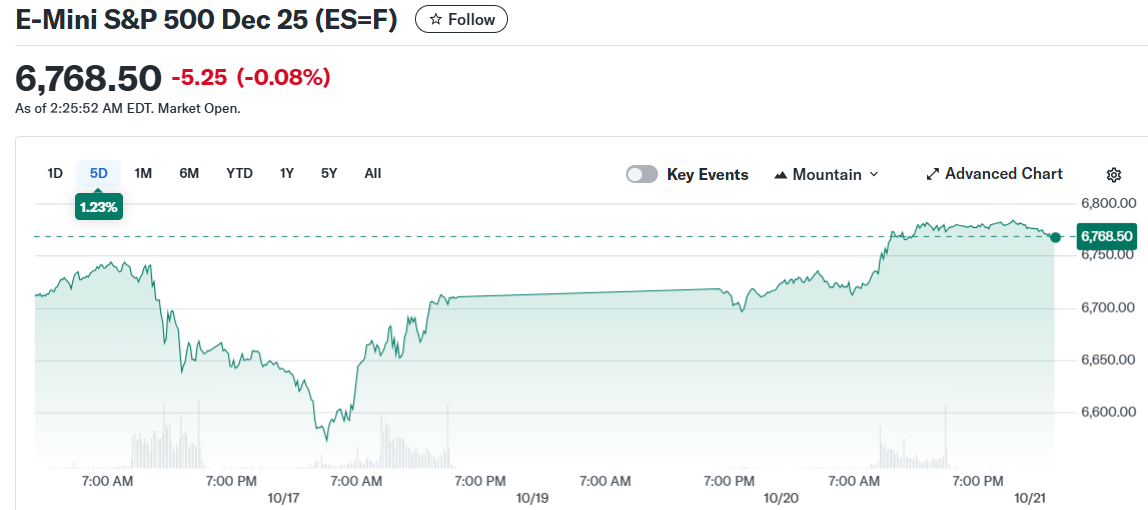
President Trump stated he expects to reach a fair deal with Chinese President Xi Jinping at a meeting later this month in South Korea. This raised hopes that trade tensions might ease. However, the federal government shutdown continues as the third-longest in U.S. history.
The Federal Reserve is expected to cut interest rates by a quarter-point at its late October meeting. Friday’s CPI report will be critical for shaping that decision. If macro pressures ease and ETF flows rebound, traders anticipate a slow recovery into late 2025.
The post Why is Crypto Down Today? appeared first on CoinCentral.





