TL;DR
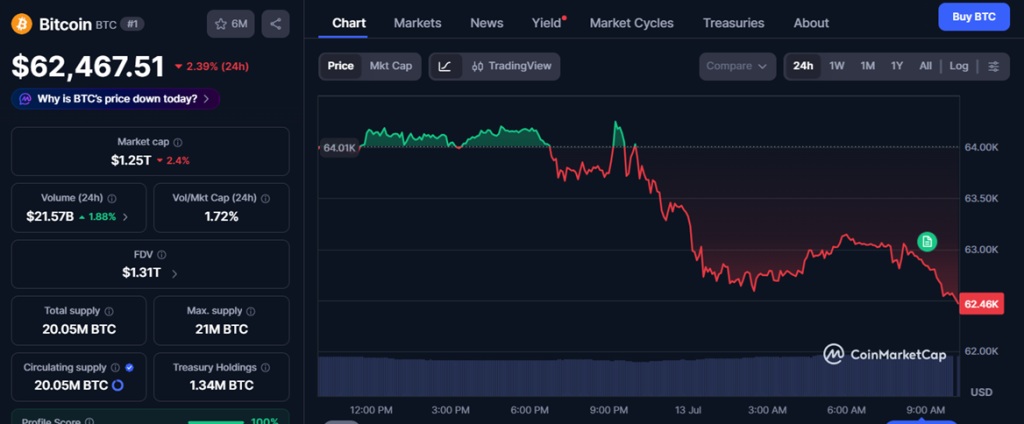
Bitcoin withstood a week of cross pressures without surrendering its operating range. Between July 7 and 13, 2026, BTC held within a $3,400 corridor, oscillating between $61,300 and $64,700, despite the confluence of three adverse factors: the largest sale ever recorded in Strategy‘s history, the resumption of conflicts in the Middle East and internal divisions within the Federal Reserve regarding the direction of monetary policy.
Spot Bitcoin ETFs in the U.S. recorded $197.4 million in net inflows, marking the first positive week after a rough streak. BlackRock’s IBIT fund led the flows, although the 30-day trend continues to show a contracting market where institutional demand has yet to find its floor.
In terms of cost basis, the aggregate realized price near $54,000 acts as a crucial structural support, while the realized price of short-term holders, sitting near $72,200, represents the most critical resistance level immediately ahead.
The U.S. economy entered the second half of 2026 with sustained growth but constrained by persistent inflation, restrictive rates and geopolitical uncertainty. The drop in oil prices eased immediate energy pressures and gave the Fed room to hold rates without the need for a new adjustment.
Investment in artificial intelligence, consumer spending and a stable labor market are sustaining economic activity, with an annual growth projection close to 2%. At the global level, central banks are redirecting attention from the temporary energy shock toward domestic inflation, growth and currency risks.
With June’s inflation data due on July 14 and negotiations over the Strait of Hormuz still unresolved, Bitcoin presents itself as an asset with high macroeconomic dependency, where July’s seasonal strength remains contingent on incoming data.





