Bitcoin’s mining difficulty fell 10.09% on Sunday, dropping from 138.96 trillion to 124.93 trillion at block height 953,568. Galaxy Research confirmed this is the 11th-largest downward adjustment in the network’s history.
Bitcoin mining difficulty has dropped by 10% and reached its lowest level in 2026
In fact, mining difficulty is now at its lowest since July 2025
Miners now have roughly 11% more Bitcoin per unit of active hashrate pic.twitter.com/Oz4z23foFe
— That Martini Guy ₿ (@MartiniGuyYT) June 14, 2026
It is also the second-largest drop of 2026, behind the 11.16% cut recorded in February. The new difficulty level is the lowest seen since July 2025.
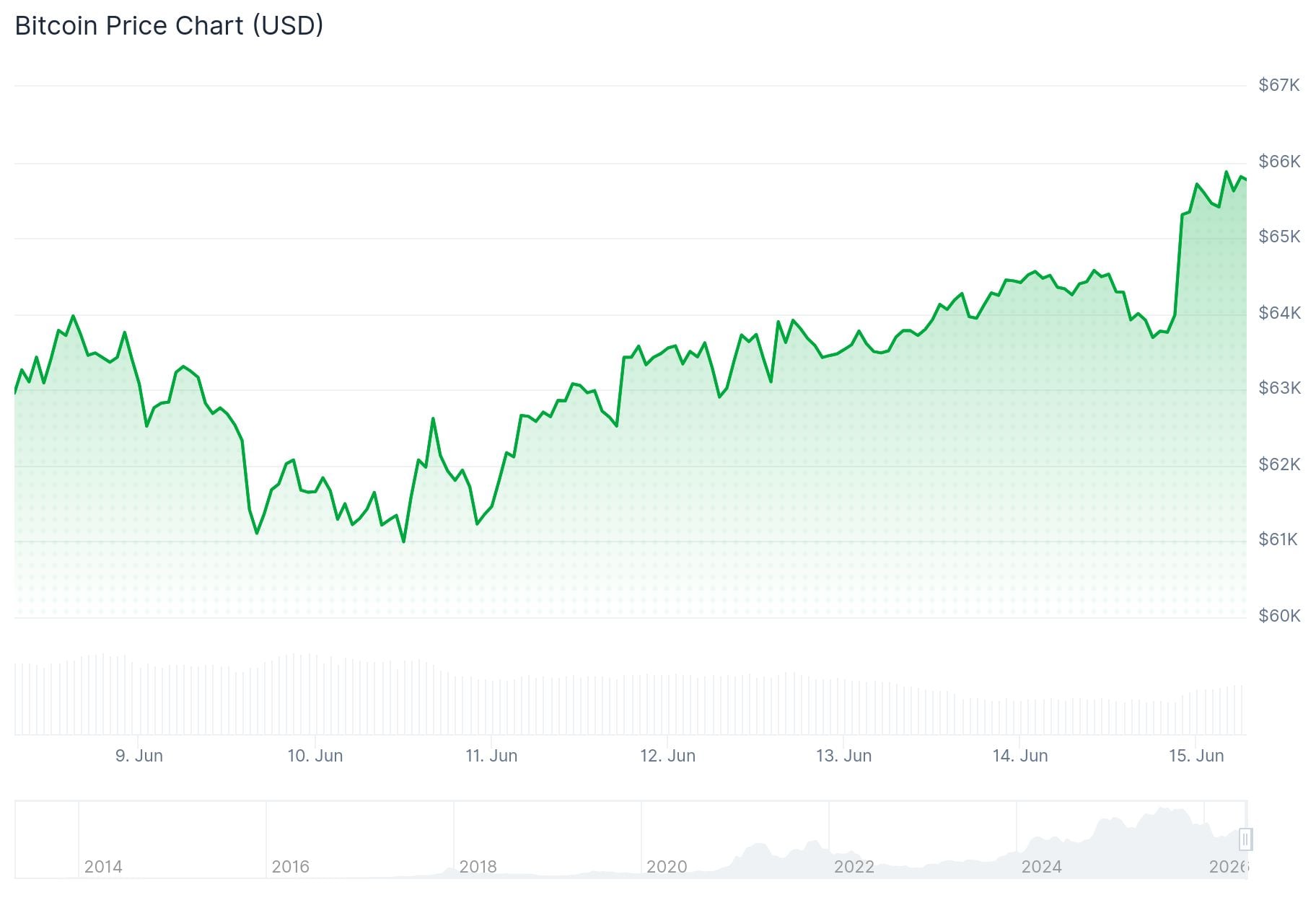
Bitcoin’s price has fallen around 15% in June, pushing it to roughly $63,780. That price decline squeezed miner margins and forced some operators to shut down unprofitable machines.
As machines went offline, blocks arrived more slowly. The previous epoch ran 15.6 days, above the usual 14-day target. That slower block time triggered the downward difficulty adjustment.
Mining difficulty adjusts every 2,016 blocks to keep average block times near 10 minutes. When hashrate drops, difficulty follows.
Total network hashrate now sits at around 886 to 894 exahashes per second. That is down 12% this month and 23% below its October peak, according to Blockchain.com.
The drop means remaining miners face less competition. Each active machine now earns roughly 9% to 11% more Bitcoin per unit of hashrate.
Hashprice, a measure of how much miners can earn per unit of hashrate, rose 13% after the adjustment. It now sits at around $32 to $33 per petahash per second per day, according to Hashrate Index.
That level matters because it pushes more miners toward a gross breakeven point. Efficient, newer machines will continue to operate at a profit. Older, power-hungry machines are likely to shut off.
This is the third downward adjustment of more than 5% in 2026. February’s cut was tied to winter storm shutdowns. The June drop is linked to both price weakness and a structural shift, as some miners redirect computing power toward artificial intelligence and high-performance computing.
Bitcoin’s estimated average all-in production cost sits at around $84,300, according to Checkonchain’s difficulty-regression model. With Bitcoin trading near $63,780, most mining operations remain underwater on a full-cost basis.
The network has started to stabilize. Average block times are back near 10 minutes. The next difficulty adjustment is expected around June 27, with projections pointing to a slight increase of roughly 1.69%, suggesting hashrate has largely stabilized.
Whether difficulty rises from here depends heavily on Bitcoin’s price. A recovery could bring idled machines back online. Continued weakness, or more miners switching to AI computing, could keep that capacity offline for good.
The post Bitcoin Mining Difficulty Drops 10% as BTC Price Slump Forces Miners Offline appeared first on CoinCentral.





