Bitcoin’s implied volatility has fallen to 36%, the lowest it has been in eight months. This means professional traders are not expecting big price moves in either direction anytime soon.
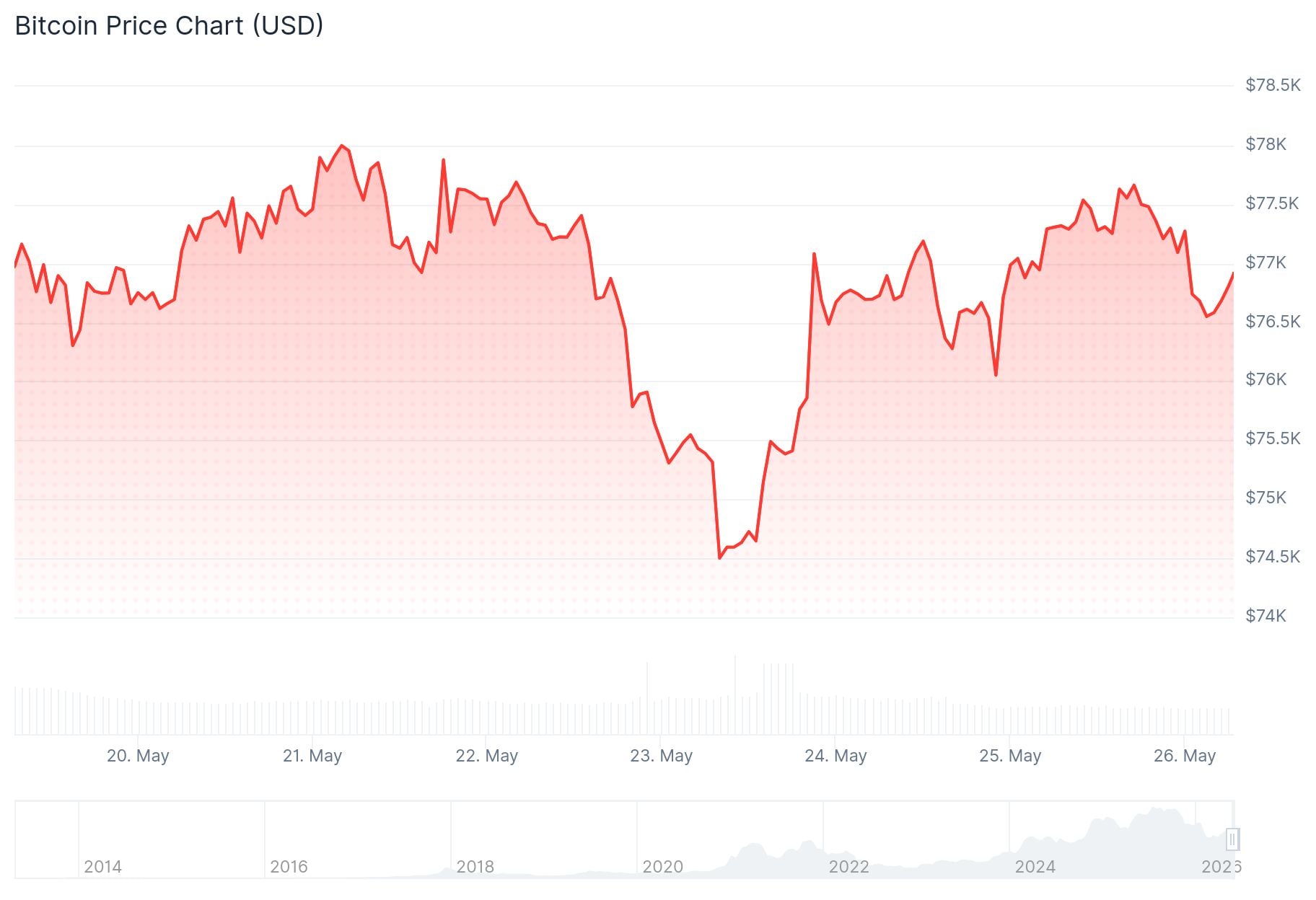
Implied volatility measures how much traders expect an asset to swing. When it drops this low, it usually means the market is in a waiting period. Bitcoin has been stuck below $90,000 for nearly four months now.
Tyler Evans, chief investment officer of UTXO Management, pointed to digital credit products as a key reason for the calm. He said collateralized loans have allowed large investors — including miners and companies building Bitcoin reserves — to hold their positions rather than sell.
One analyst on X, Daan Crypto Trades, shared a direct take on where BTC stands right now. He said Bitcoin is “trying to make a higher low here locally” but needs to get above the low $80,000s region to keep the move from February’s lows going. His read: no confirmation of a real breakout yet.
$BTC Trying to make a higher low here locally.
But to properly break higher and keep this move from the February lows going, it needs to get above that low $80Ks region. pic.twitter.com/u3mW81qG7h
— Daan Crypto Trades (@DaanCrypto) May 25, 2026
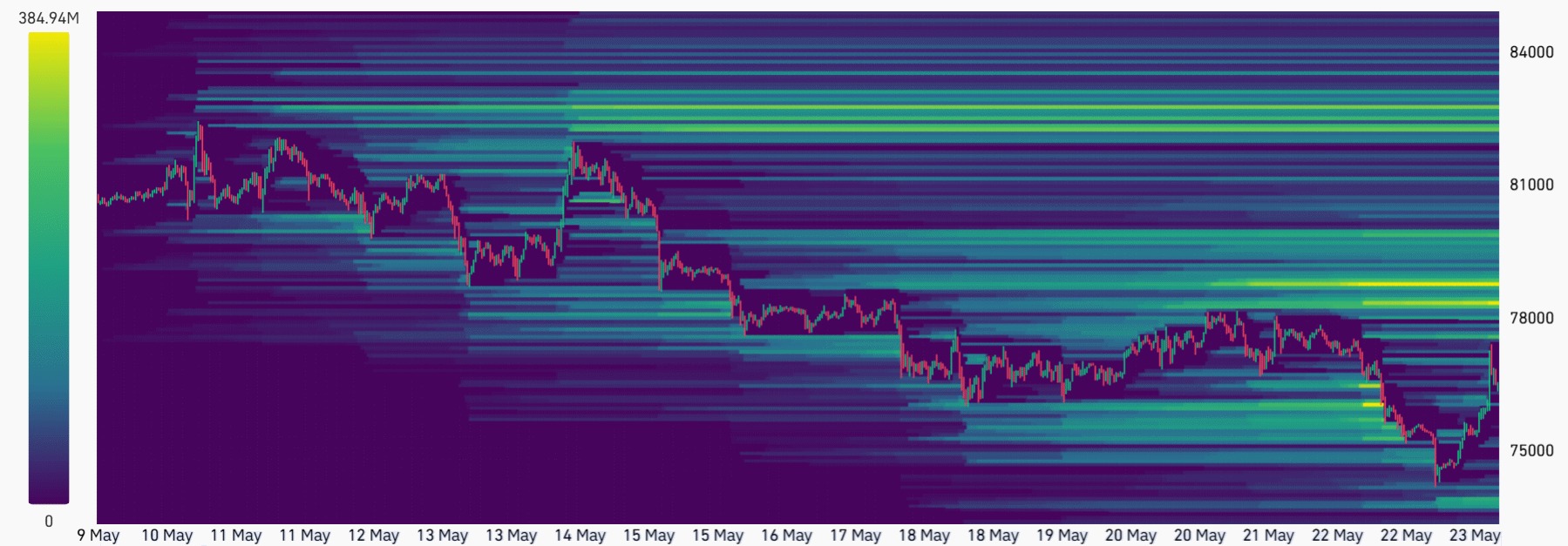
Liquidation heatmap data from CoinGlass shows a heavy cluster of short positions sitting between $78,000 and $83,000. Bears appear to have grown confident after months of Bitcoin trading below $90,000.
Put options are currently trading at a 14% premium over call options, according to Glassnode data. Under normal market conditions, that spread sits between -6% and +6%. It has been outside that range for four months straight.
If Bitcoin pushes above $82,000, that concentration of shorts could get squeezed hard, forcing rapid buying and accelerating the move higher.
On the demand side, the picture looks less strong. Spot Bitcoin ETF outflows have surpassed $1.74 billion, while the Coinbase Premium has turned deeply negative — a sign of weakening U.S. buyer demand.
Binance BTC netflows surged roughly 425% as older coins moved back toward exchanges. Binance inflows climbed from around 378 BTC on May 16 to nearly 1,190 BTC within ten days, with a single-day spike of over 3,600 BTC on May 18.

Bitcoin’s Apparent Demand metric fell to nearly -147,000 BTC, its weakest reading since December 2025. That metric tracks whether long-term accumulation is strong enough to absorb newly issued supply.
Bitcoin briefly dropped 6.2% during the period of elevated inflows. Binance BTC reserves rose from roughly 616,000 BTC to around 632,000 BTC over the past month.
Funding rates have stayed positive despite these weaker conditions, suggesting leveraged long traders remain active in the market.
The post Bitcoin (BTC) Price: Volatility Hits 8-Month Low — A Short Squeeze May Be Brewing appeared first on CoinCentral.





