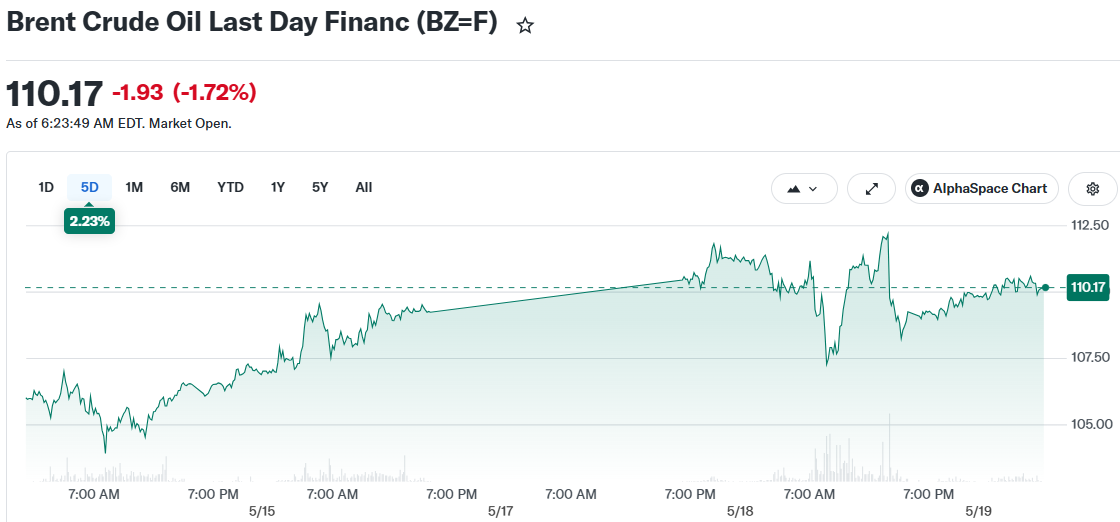
Oil prices pulled back on Tuesday after President Donald Trump announced he had paused a planned military strike on Iran, following appeals from Gulf allies.
Brent crude dropped 1.5% to $110.39 a barrel. West Texas Intermediate fell 0.7% to $103.64. Both benchmarks remain well above where they started the year.
Trump posted on social media that the leaders of Saudi Arabia, Qatar, and the United Arab Emirates asked the US to delay attacks planned for Tuesday. He said “serious negotiations” were now taking place with Iran.
“I put it off for a little while, hopefully maybe forever, but possibly for a little while,” Trump said at a White House event Monday evening.
He added that the US is prepared to strike if an acceptable deal isn’t reached, but he did not set a deadline.
Traders appear to have largely priced in the uncertainty. Analysts say Trump’s announcements are having less impact on markets than they once did.
“These hot air verbal interventions from Trump used to have a heavy bearish impact on prices, but they now seem to have less and less effect unless they are backed by reality,” said Bjarne Schieldrop, chief commodities analyst at SEB AB.
Iran did not immediately confirm that fresh talks were underway.
The market has been watching the Strait of Hormuz closely. The waterway is a key route for Persian Gulf oil exports, and its near-total closure has tightened global supply.
A US naval blockade has left Iran’s Kharg Island oil terminal idle for at least 10 days. That has cut off Tehran’s petroleum revenues and pulled millions of barrels from the market.
Iran had previously barred other nations’ vessels from the strait in the early weeks of the conflict, making it the dominant crude exporter through the waterway at that time. That has since reversed.
Analysts say prices are unlikely to fall sharply until there is a clear path to reopening the strait.
Oil benchmarks are up more than 80% this year and 20% over the past month, reflecting how much the conflict has disrupted global supply.
Separately, the US extended a sanctions waiver on Russian crude oil already loaded on tankers for another 30 days.
Treasury Secretary Scott Bessent said the extension would help stabilize the physical crude market and ensure oil reaches the most “energy-vulnerable” countries.
The previous waiver had lapsed just days before the new one was issued.
As of Tuesday, oil prices remain elevated with no firm resolution in sight on the Strait of Hormuz.
The post Oil Prices Drop as Trump Pauses Iran Strike After Gulf Leaders Appeal appeared first on CoinCentral.





