Oil prices climbed on Wednesday as fresh attacks on ships in two key Middle Eastern waterways kept traders worried about supply disruptions.
Brent crude futures rose 1% to $89.81 a barrel, on track for a sixth straight day of gains. West Texas Intermediate rose 1.1% to $84.08, its fifth consecutive day higher.
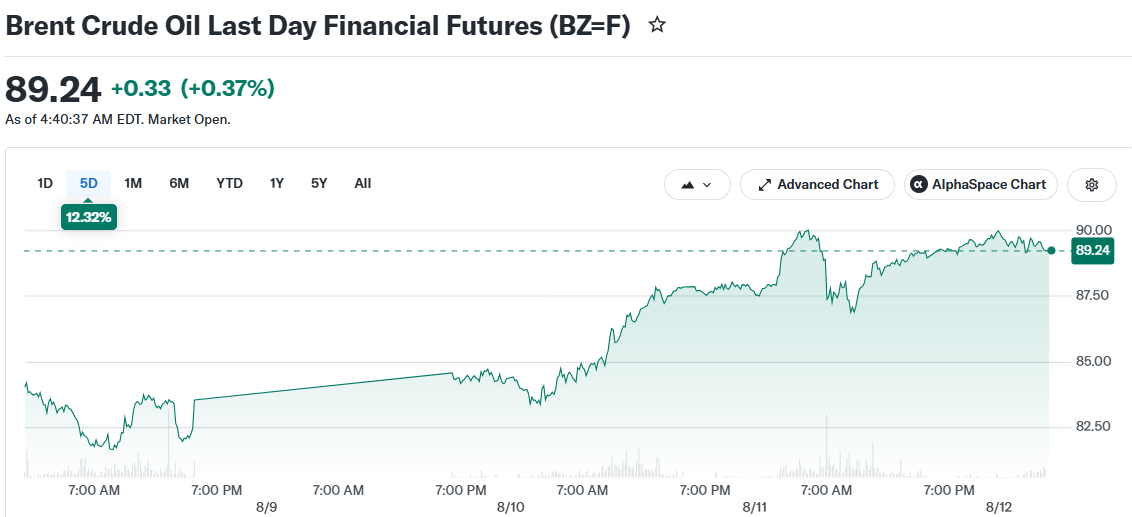
The gains came after the U.S. and Yemen’s Houthi group reported separate attacks on shipping in the Strait of Hormuz and the Bab el-Mandeb Strait on Tuesday.
Both waterways are critical routes for Middle Eastern oil and gas exports, alongside the Suez Canal.
Iran’s top security official said the Strait of Hormuz would remain closed unless the U.S. accepted Iran’s conditions to end the war, including the release of its frozen assets.
🇺🇸 PRESIDENT TRUMP JUST NOW:
"I don't trust Iran. I'm the last person to trust Iran; they've lied to me constantly. We have total control over the Hormuz Strait right now; they don't have control." pic.twitter.com/TPiPdiXr51
— Bull Theory (@BullTheoryio) August 12, 2026
U.S. President Donald Trump has strongly opposed those demands, and little progress toward an agreement has been made.
Shipping data showed just eight vessels transited Hormuz on Tuesday, a one-week low. Before the war, between 125 and 140 ships passed through the strait each day.
Despite the price gains, rising U.S. crude inventories may limit further upside.
Industry data from the American Petroleum Institute showed U.S. crude stocks rose by about 9.1 million barrels last week, far above expectations.
Gasoline inventories fell by 1.5 million barrels and distillate stocks dropped by 596,000 barrels over the same period.
Analysts said the crude build could ease some concerns about supply tightness, if confirmed by official Energy Information Administration data due later Wednesday.
A Reuters poll had actually expected inventories to fall, making the surprise build a factor traders are watching closely.
The U.S. Strategic Petroleum Reserve fell below 300 million barrels last week, dropping 6.1 million barrels to 298.7 million barrels.
That is the lowest level in 43 years, according to Department of Energy data.
President Trump ordered the release of 172 million barrels in March to help offset supply disruptions caused by the Iran conflict.
The reserve was designed to be used in supply emergencies, and the continued drawdown reflects how strained global oil supplies have become.
In Libya, the National Oil Corporation said fires at fuel storage tanks in the Zawiya oil complex were fully under control.
For the longer term, the EIA expects disruptions to Middle East crude supplies to persist through the end of 2027. It forecasts 2026 Brent prices to average $86.81 a barrel and West Texas Intermediate to average $80.88.
The post Oil Prices Keep Climbing as Hormuz Stays Shut and America’s Emergency Reserves Hit a 43-Year Low appeared first on CoinCentral.





