TL;DR
CrediX, a decentralized finance protocol built on the Sonic blockchain, collapsed following the theft of $4.5 million in cryptocurrencies.
The attack took place on Monday, when a hacker transferred the funds to the Ethereum network, where they remain spread across several addresses. Since then, the CrediX team has stopped responding publicly, shut down its website, and abandoned its X account, raising suspicions that they have completely disappeared.
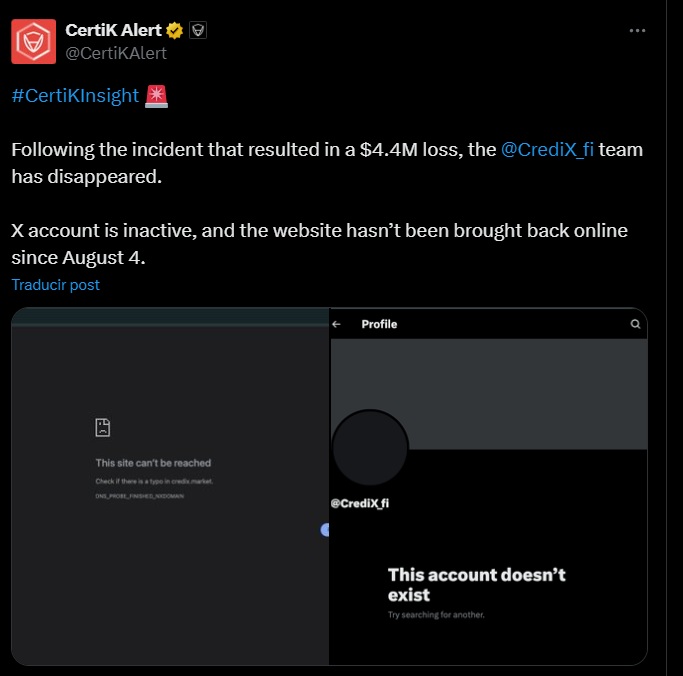
The project’s only recent communication came through its official Telegram channel, which has 1,600 members. There, the team admitted the protocol had been compromised and said it was investigating the incident. Although they initially claimed the stolen funds would be recovered within two days, those promises have not been fulfilled and no further details have been provided to the community.
Stability DAO, another DeFi protocol running on Sonic infrastructure, suffered losses from its integration with CrediX just a week before the hack. The platform, which manages $28 million in assets according to DefiLlama, offered returns of up to 287% annually through its Metavaults, which were impacted by the theft.

Due to the lack of responses, Stability DAO has begun a formal process to file a legal report with authorities. According to a member identified as GodInMaking, they already hold KYC information for two CrediX members and are gathering more evidence. The investigation includes tracing the stolen funds on-chain and working with several specialized firms, including Sonic Labs, the developer of the network both protocols operated on.

The incident serves as a warning to the crypto industry and community about the dangers of investing in platforms that promise extremely high returns without a solid security track record. Independent analysts note that products with disproportionate yields, such as Metavaults, carry a high likelihood of technical failures or exploitable vulnerabilities.
The CrediX and Stability DAO case joins a series of recent incidents that call into question the viability of certain DeFi proposals, particularly those that prioritize rapid liquidity acquisition without clear protective measures for users





