TL;DR
Crypto payment cards set a new all-time high on July 20, 2025, when users spent $36.82 million in a single day, according to data from the tracking platform Paymentscan.
The record stands out not only for its magnitude but also for the context in which it occurred: Bitcoin and the broader market were operating in a fear zone with no clear trend, indicating that the activity was driven by real use rather than speculative euphoria.
The daily volume of crypto cards tripled over the past year, rising from around $10 million to current levels. Two card programs concentrate most of that capital flow: KAST and RedotPay, marking an increasingly wide gap compared to the rest of their competitors.
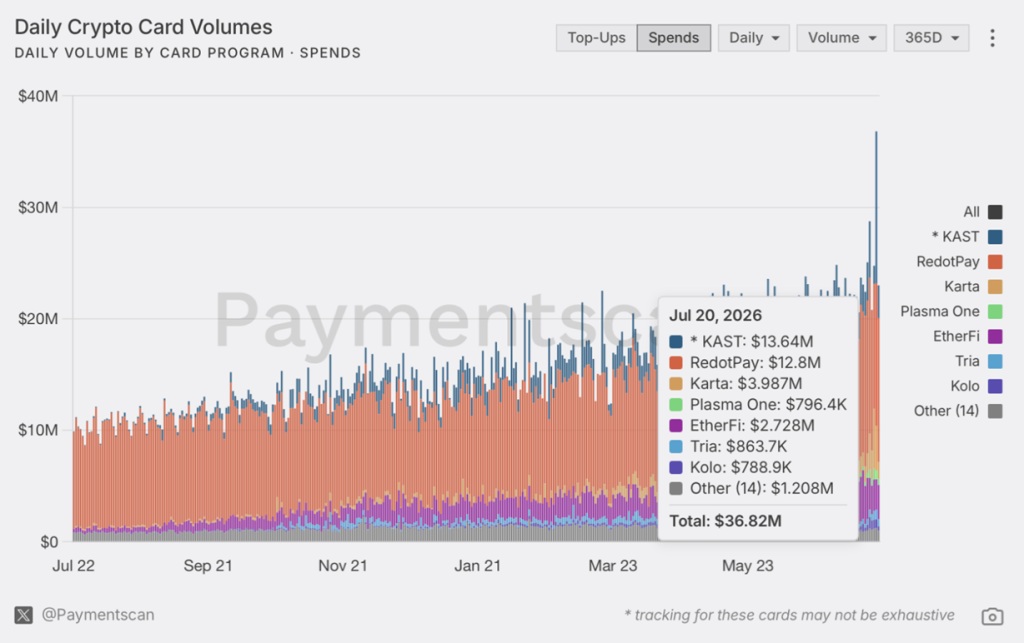
Spending growth in an apathetic market reflects a consumption habit rather than situational enthusiasm. Users load stablecoins and use them to buy goods and pay for everyday services, which turns card volume into a direct indicator of money leaving the crypto ecosystem and entering the real economy. When that metric rises without prices following suit, the message is easy to read: adoption is advancing on its own terms.
Two structural factors explain the acceleration in activity and the success of the cards. The first is the passage of the GENIUS Act in July 2025, which for the first time provided a federal framework for stablecoin issuers in the United States and enabled the growth of companies that had until then been operating with considerable caution.

The second is the infrastructure of Visa, which processes KAST and RedotPay transactions at approximately 150 million merchants worldwide. For users in emerging markets without access to US bank accounts, a stablecoin backed by these networks serves the function of an accessible checking account.
KAST recorded approximately $13.64 million against RedotPay’s $12.8 million. However, this did not represent a real shift in sector leadership. The platform is running a points campaign that rewards card usage ahead of its token generation event scheduled for the fourth quarter, which incentivizes users to concentrate transactions within short periods.





