TL;DR
deBridge has completed the integration of Tron into its interoperability infrastructure, allowing real-time transfers of USDT and other assets between more than 25 blockchains, including Ethereum, Solana, and BNB Chain.
The connection supports low-slippage swaps with protection against maximal extractable value (MEV) and allows users to settle complex cross-chain operations in a single transaction through deBridge’s APIs.
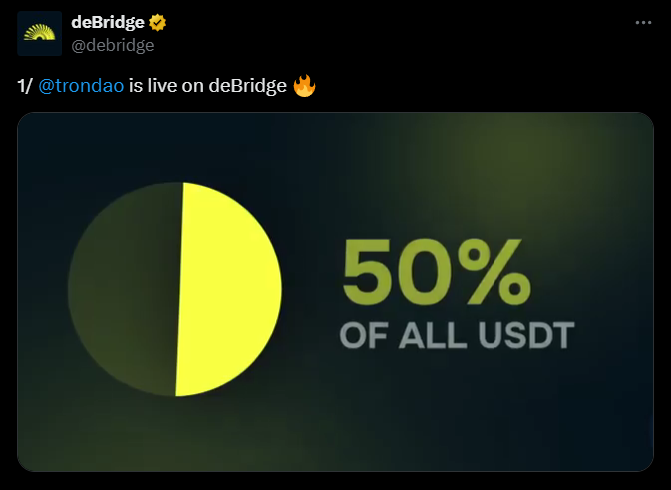
Tron currently hosts one of the largest pools of stablecoin liquidity in the market. According to recent data, it holds $81.4 billion in USDT, nearly half of Tether’s total issuance. This liquidity is now linked to the multichain ecosystem, opening new circulation routes for stablecoins and improving efficiency in cross-chain capital management.

deBridge’s infrastructure does not rely on wrapped tokens, a common mechanism in other bridges that often introduces security risks. Instead, it uses a model based on direct asset custody, authenticated messaging, and fast settlement. This architecture is designed to ensure speed without compromising security, which is crucial for high-volume transfers.
With this integration, Tron expands its role in decentralized finance as a channel for liquidity and applications. The network has more than 327 million active accounts and processes over $23 billion in daily transfers, making it an attractive ecosystem for developers who want to connect decentralized applications with other chains. deBridge also offers its interoperability platform as a subscription-based service, enabling the connection of EVM- and SVM-compatible chains to Tron without relying on token wrapping or liquidity fragmentation.

Tron also benefits from low fees and a mobile-friendly wallet infrastructure, which is critical to driving adoption in emerging markets. The new connection with deBridge strengthens this advantage by enhancing accessibility and versatility





