TL;DR:
The Ethereum network surpassed its own all-time activity records during April 2026, with an average of 1.3 million transactions per day according to CryptoQuant data. The usage level breaks the highs recorded in February, driven primarily by ETH transfers, USDT payments and smart contracts with high gas consumption rates. This combination of unprecedented activity and low token prices creates an unusual divergence between blockchain usage and the valuation of its token.
Network fees are at all-time lows: regular transactions cost less than $0.01, while swaps on decentralized exchanges and lending operations sit at $0.11. This drop in usage costs does not fully explain the increase in traffic. Part of the transactions come from contracts linked to malicious addresses that take advantage of reduced fees to seed addresses across the network, generating noise in organic activity metrics.
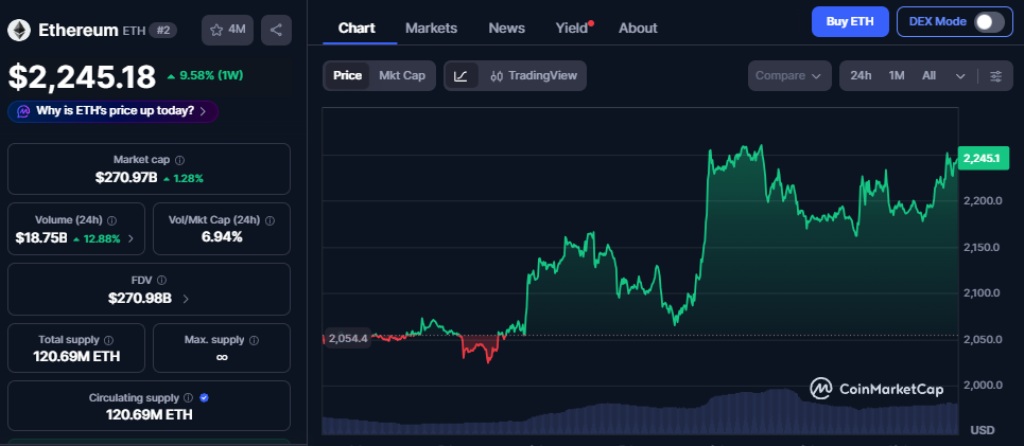
Despite the volume of transactions, Ethereum remains stable above $2,200 but without clear signs of a bullish breakout. The market sentiment index reflects extreme fear according to Gate data, although analysts observe in on-chain indicators potential undervaluation signals in ETH. Elevated activity helps keep liquidations in DeFi protocols low, reinforcing ecosystem stability without generating immediate speculative pressure.
According to CoinMarketCap data, Ethereum (ETH) trades at $2,245 per token. It registers a gain of nearly 10% over the past week and a rise of 1.55% in the last 24 hours. Its volume grew 12.5% and surpasses $18.7 billion.

The percentage of ETH in staking reached a new all-time high: 31.2% of the total supply is locked in the Beacon Chain contract. Among the entities that moved funds into staking in recent days are Bitmine, the Ethereum Foundation, Grayscale and Gate.
The annualized reward rate stands at 2.9%, although some staking services offer higher yields through their own structures. The validator queue exceeds 2.9 million ETH in waiting, reaching an average entry time of 51 days. The network, meanwhile, continues to be inflationary with an annualized issuance rate of 0.83%.





