TL;DR
Ethereum took another step toward rolling out its upcoming upgrade, Fusaka, after successfully completing its first test on the Holesky testnet. This upgrade comes just a few months after the implementation of Pectra and aims to lower costs for institutions and validators on the network.
Fusaka introduces PeerDAS, a feature that lets validators check only part of the required data instead of entire chunks known as “blobs.” This optimization is designed to reduce operating costs for both layer-2 networks and validators, making Ethereum’s infrastructure more efficient without compromising the chain’s security or integrity.
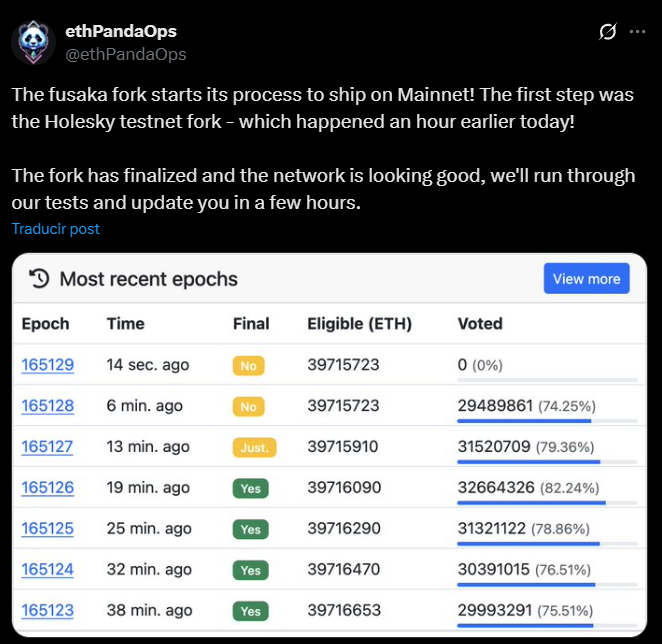
The Holesky testnet, launched in 2023, has been central for trialing new implementations since its validator setup closely mirrors that of mainnet. However, in recent months Holesky has started showing signs of age and reliability issues. Fusaka will be the final upgrade the testnet receives before its scheduled shutdown, planned for two weeks after the upgrade goes live on mainnet.

The next test runs are set for October 14 and 28, after which Ethereum developers will confirm Fusaka’s mainnet launch date.
With this upgrade, Ethereum aims to optimize its network for institutions and large-scale projects by making data verification more efficient and cost-effective. The upgrade also opens the door for broader use of layer-2 networks and decentralized applications, further cementing ETH as the leading platform for high-performance blockchain solutions.

The community and developers will closely monitor the upcoming tests to ensure Fusaka meets security and efficiency standards before its official release





